“Does that thing really work?”they all ask
Issue 41 : Mar/Apr 2005
While dockside, I suspect that sailors get a fair share of peepers: dockwalkers fascinated by the curiosities inherent in sailboats. One of my favorite pastimes while down below is eavesdropping as others stop to comment on the features of my boat. When the sailing bug bit us three years ago most folks marveled at the size of our 1969 Columbia Challenger (the tiniest boat in the marina), especially when they learned two adults and an infant spent every summer weekend and more anchored out on it in the Apostle Islands wilderness.
Since then we have graduated to a 1974 Islander 30 with a bit more living space. These days, the feature that attracts the most attention is not part of the boat at all, but rather our solar cooker. This being one of my most beloved boat gadgets, I’m usually inclined to pop through the companionway and develop a conversation with commenting visitors.
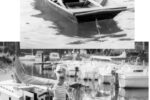
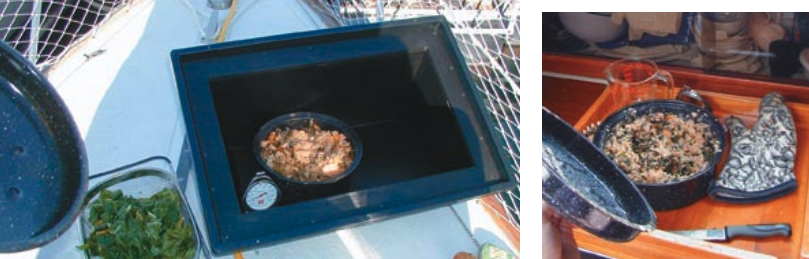
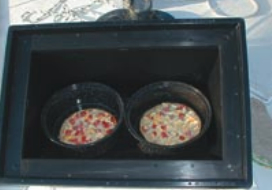
Some of these conversations become more animated and involved than others, but they usually begin with, “Does that thing really work?” pointing at the trapezoidal black box. “It sure does,” I respond, glancing at the thermometer. “See, it’s up to 200 now.” Degrees Fahrenheit, that is. Then I explain that typical cooking temps are around 220°F. “What can you cook in there?” Just about anything, though I find the cooker is best suited to grain-based casseroles. Anything you might prepare in a slow cooker or pressure cooker would be a good candidate for a solar meal, and we have even enjoyed such delicacies as solar pizza and solar s’mores. Solar-cooked food is more nutritious and naturally flavorful because the slow and gentle process retains more vitamins and minerals, and the tender result is easier to digest.
Mission work
Sometimes, the visitors’ stories are more interesting than ours. We ran into a friendly National Park Service volunteer who had used the same cooker model while doing mission work in South America. A dockwalker shared a tale of how Roman soldiers used parabolic lenses to cook their food because they couldn’t carry enough fuel for the gigantic military’s culinary requirements. Usually, though, it is I who blather on about my adoration of the cooker and, if my audience is held captive long enough, I might offer a smell or a taste as I check on my concoction.
Sailors are already familiar with the concept of harnessing free energy for their own benefit. To them, using solar energy to cook food ought to be a no-brainer, and it explains why fellow sailors are drawn to the black box atop our deck. I became aware of commercial solar cookers long before I became a sailor, and I have friends in southerly areas of the United States who use them regularly.
I dreamed of experimenting with solar cooking at my Minnesota home. Ever the DIY wannabe, I was determined to construct my own solar cooker based on Joseph Radabaugh’s design described in his book Heaven’s Flame. But life (and sailing) got in the way, and my solar cooker never materialized.
I met the folks from the Solar Oven Society in 1999 at a renewable energy fair. I saw their simple, low-cost cooker on display and learned about their mission to spread solar cooking to developing countries where the use of cooking fires has led to deforestation and contributes to health problems. But it wasn’t until I began spending a good portion of every summer weekend hunched over a flame in my tiny humid galley that I connected the dots. One quick trip to the Solar Oven Society’s office and about $100 later, I was the owner of a lightweight, durable SOS Sport. Cooking on the boat never felt so good.
When the dockwalkers ask how it works, I tell them it’s simple: put the food into the black pot, set the pot inside the cooker, clip the lid, and point it at the sun. The principle is the same with any solar “box-style” cooker design. The sunlight that is transferred through the clear lid and absorbed by the black interior and dark pots is converted to heat energy. The longer heat rays are unable to pass back through the clear lid, and insulation in the box walls increases retention of heat in the oven. Think about your car on a sunny day in an asphalt parking lot.
Benefits
Here are some benefits of the SOS Sport design:
Weather resistance. The SOS Sport is more suitable for boating than the cardboard cooker I once considered building. The lightweight plastic housing, made from post-consumer recycled soft-drink bottles, stands up to a beating that would turn a homemade cooker to mush. I have left the cooker out in the rain and, since the closed-cell foam insulation does not absorb moisture, all it takes is a few minutes turned on its side to drain. Before our cooker became a permanent fixture on the boat, we carted it back and forth between Lake Superior and Minneapolis, tied to our roof rack. Although stowage could be a bit cumbersome if you are short on space, we have a locker that perfectly contains the cooker. I sewed a quilted, elasticized cover to protect the lid from scratches.
Freedom for the chef. Unlike most other commercially manufactured solar cookers, the SOS Sport does not use reflectors (shiny trapezoidal attachments that focus more of the sun’s energy into the box). This design ensures the temperature will remain low enough to avoid burning and scorching. It also allows for leeway in cooker orientation. If you set the cooker out in the morning and point it in the direction of noonday sun, you can return in the evening without having to make any adjustments. (Baked goods are an exception. Baking is best done in the middle of the day in a preheated oven. Breads, cakes, and cookies can dry out more than desired if left too long.)
Convenience. The Sport comes ready to use, equipped with two black enamelware pots, an oven thermometer, a water pasteurization indicator, and an informative cookbooklet to get you started.
Cooking guidelines
The novice solar chef should adhere to the modern adage to “just do it.” Get some food into the sunshine and see what happens. After a meal or two, you’ll be hooked. If you don’t already have a favorite grain-based casserole recipe, start with a single grain or small pasta. Some of the fluffiest, most tender rice that ever graced my buds came from my solar cooker with almost zero effort or attention.
Pre-cooked rice can be used as a base for fried rice or topped with stir-fried or sautéed vegetables that have been cooked over a flame. Small pastas like couscous or orzo can be stirred into salads. If nothing else, fill a pot with water and pre-heat it for soup or pasta. Anything you can do to reduce the amount of cooking heat in your cabin on a hot day will make for happier campers. (Although you could cook larger pastas in the solar box, the inattentive solar chef faces the risk of passing through al dente into the realm of bloated-noodleland.)
Use dark pots and tight-fitting lids. Black, green, brown, and blue absorb more energy. Food-safe flat black grill paint can be used if your pot or jar is not already black. Pots that have been blackened over a campfire may be a good choice. Lids should fit securely to contain moisture. Water vapor that escapes the pot may condense on the clear lid of the cooker, reducing the amount of solar radiation that can be transferred into the cooker.
Incidentally, add less water. Plain vegetables, fruits, and meats do not need additional water. They already contain plenty of moisture for the gentle cooking of a solar oven. Less water is needed for cooking beans or grains than the typical stovetop method. When converting a conventional soup or stew recipe, try using about 20 percent less liquid. For plain (pre-soaked) beans, start with just enough water to cover them, and add more later if necessary. For plain grains, I generally have good results using pressure-cooker guidelines recommended by Lorna Sass. She includes handy reference charts in her cookbook, Great Vegetarian Cooking Under Pressure.
Mornings are better
Start early in the day. Unless you are in an arid or semi-arid climate, the morning hours are generally better cooking hours than afternoon hours. Dew and humidity evaporation throughout the morning often result in afternoon clouds. Also, during the morning hours the cooker will be exposed to increasing energy as the sun rises in the sky, as opposed to decreasing energy as the sun sets.
I find it is advantageous to prepare the day’s meals in the morning, when my energy is high and my crew (a moody toddler) is generally in good spirits. After an exhausting day of sailing or playing on the beach, it is a relief to pop the lid off the cooker and enjoy a warm meal with minimal effort.
Keep an eye on the sky and the thermometer. When sailing, if the wind isn’t blowing, you either start the motor or drift. When cooking, if the sun isn’t shining, you should finish off with a flame or risk bacterial contamination. If weather conditions allow the oven to cool off below 150°F, there is the danger of bacterial growth, and food may not be safe to eat. This is true for all methods of food preparation and is not unique to solar cooking. Food left in this temperature range for two hours or longer can incubate bacteria. But don’t let safety concerns scare you away. Sailors, who weigh many risks while under way, are capable of solar cooking. If the food has cooled off to unsafe temperatures, reheat the food over a flame to kill off any bacterial contamination.
Played loosely
I admit to having played these rules quite loosely. Where we sail, a morning that makes a partly cloudy appearance often turns out to be an overall sunny day. I have learned that not putting the cooker out in the face of a cloudy morning means risking a lost solar dinner opportunity. At the edges of the Great Lakes sailing season, when nighttime temperatures dip to near 40°F, there have been stretches when I left an unfinished dish on deck in the cooker overnight and through the next cloudy day before I gave up and simmered it on the flame. Since we follow a macrobiotic diet free of most animal products, I don’t need to worry quite as much about contamination. If meat, fish, or eggs were on the menu, I would adjust my practices. Use your common sense and concern for the safety of the people you feed to judge your solar-cooking choices. One trick to take advantage of even the slightest possibility of sunshine is to set the cooker out with a pot of water. If the sun appears and the cooker heats up, you can add the remaining soup/stew ingredients later, or you can use the pre-heated water for a stovetop version or make coffee, tea, or cocoa instead.
Cooking in port
Cooking at the dock or marina is much the same as cooking at home in the yard. However, at the edge of a dock, the wind may play a more significant role in cooking time. Wind carries heat away from the cooker, diminishing performance. It is important to handle the lid carefully and remember to clip it on — whether at dock, at anchor, or under way — as the wind can easily lift it off the housing. When you’re checking food, the lightweight lid has enough windage to be torn from your hands and blown overboard in high winds. Curious or hungry wildlife may be another reason for keeping the lid clipped on. If we are in an area where bear-safe practices are encouraged, I never leave the cooker unattended. Keep sunglasses, hotpads, stirrers, and extra seasonings handy near the cooker. The more time you spend with the lid off and the pot uncovered, the more time your meal will need to cook.
Cooking under way
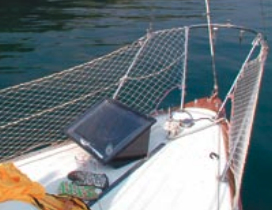
“Stay on the boat” is our first rule of crew safety, and it applies to the solar cooker as well. We keep the cooker on the boat by securing it with bungees. We have considered installing a grill mount and constructing some sort of table to which we could attach and rotate the cooker. This would keep it off the deck and out of the way. But we have found that having it on deck is not an imposition, and the flexibility of the bungee system allows us to follow the second rule of solar cooking under way.
The second rule is, “Keep the cooker in the sun.” We can move the cooker about the deck as necessary and almost always find a toerail or something to which the bungee will connect. Typically we strap the cooker forward or to either side of the companionway hatch, switching sides as we tack if the sun is forward or abeam. If tacking is frequent and the sky is clear, the cooker often retains enough heat on the shady tack to avoid moving it at all.
The third rule is, “Keep the contents in the pot.” The heeling motion of a sailboat offers a unique challenge to solar chefs. If the pot leans enough to leak, the moisture will condense on and fog up the clear lid. This will reduce the amount of solar radiation that can reach the interior of the cooker. I have toyed with the idea of fabricating some sort of clamp for the Sport’s enamelware pots, similar to what you see on the glass jars that hold fancy scented candles. I have also considered painting a couple of old pressure-cooker pots black, as they have gasketed lids that close securely. But for now, we crisscross two tiny bungee cords over the lid, and it usually works just fine, coupled with a little supervision when the boat is severely heeled.
Cooking at anchor
Swinging on the rode provides the greatest challenge to the nautical solar chef. If conditions are such that the boat follows a wide arc, it can be difficult to orient the cooker so it faces the sun more than 50 percent of the time. You might have better luck if you can stabilize the boat with a riding sail, but that won’t help in the case of a wind shift. Solar cooking at anchor requires a more attentive chef. Unfortunately, the anchorage is where chefs are more likely to be absent, participating in adventures ashore. It’s best to plan for quick-cooking meals that can be easily finished at the stovetop if necessary.
Thank you to Sailrite Enterprises, Inc., for providing free access to back issues of Good Old Boat through intellectual property rights. Sailrite.com