C&C Redwing plays it both ways
Issue 10 : Jan/Feb 2000
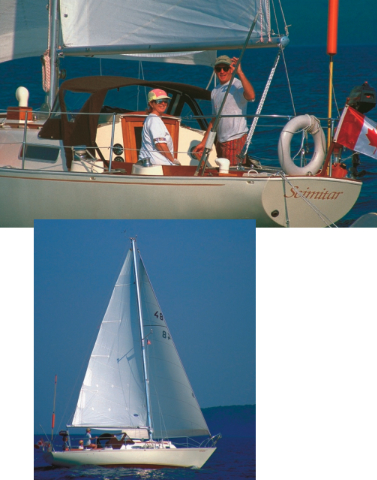
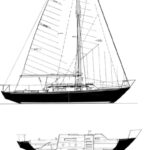
Whether you’re a racer or a cruiser or a racer/cruiser (like Bill and Nancy Leonard in the previous article on Pages 4-7), the C&C Redwing is just right. Brian and Joanne Novak are cruisers, new to sailing, who were captivated by the Redwing and are getting to know her inside and out as they refurbish and sail her. At the other end of the spectrum, Andrews Hooker has been sailing and racing aboard his Redwing for the 30 years she has been in his family. His father bought her from the factory in 1969. Since 1986 she has been Andy’s restoration project and racing yacht.
Brian and Joanne are turning Scimitar (so named, we suspect, for the unusual shape of the rudder) into a cozy home for their cruises on Lake Superior. Since buying this 1968 Redwing in 1997, they taught themselves to sail, as Brian says, “through trial and error.” During a couple of cold Thunder Bay, Ontario, winters, the two attended Canadian Power and Sail Squadron boating and piloting courses.
Naturally, the most advanced course is out there cruising, and they did not delay this practicum. During their first season, they began longer cruises along Lake Superior’s north shore, around Isle Royale (where they easily could have met Bill and Nancy Leonard — we first saw both Redwings during our own cruise to Isle Royale in the summer of 1998) and farther south across the big lake to the Apostle Islands at the northern end of Wisconsin.
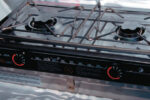
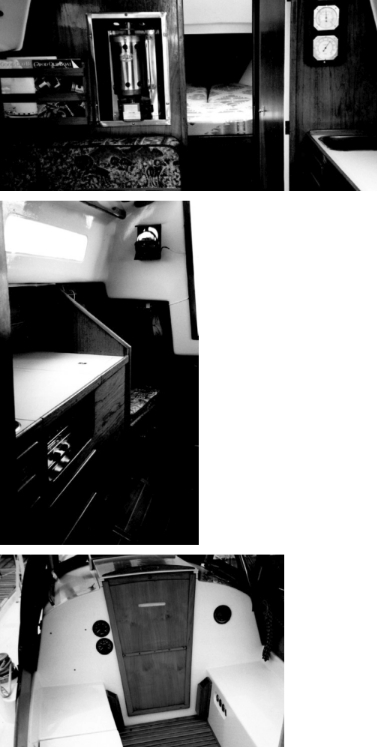
Their cruising and seamanship courses have been mixed with elbow grease and sweat equity. They have completely sanded and refinished all exterior teak, revarnished all interior teak, constructed a cockpit floor of white cedar, reupholstered the cushions, built a variety of teak racks and holders, and installed a CD player and speakers. They also sanded the deck and interior surfaces with 150-grit production paper and painted these surfaces with Interlux Yacht Enamel rolled on and brushed out, and they replaced the flameproof propane stove surround with 1/16-inch stainless steel plating.
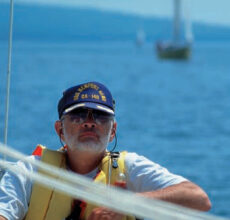
Andy Hooker came of age with Battlestar Pegasus, or Pegasus for short (with the asterisks suggesting stars for “Battlestar”). Like the Novaks and the Leonards, Andy’s boat name draws on the boat itself. In this case, the wings of the flying horse are, you guessed it, red. Since his mother was an equestrian, the red-winged horse seemed appropriate for the family. This boat, primarily used for racing on Lake Ontario, is rigged and fitted out with a flourish. A resident of Youngstown, N.Y., Andy is president of the Lake Yacht Racing Association. In spite of that status, he has to win each LYRA race fair and square. Pegasus is set up with winning in mind.
“It’s a real pleasure to sail a pretty boat, and more so to pass a newer boat while racing. At the dock, people remark what a pretty old boat she is, but it is quite a ‘neck snapper’ when this good old boat goes sailing past them,” he says. “It’s good to win races. It is better to win comfortably in a pretty boat. It is great to kick butt in a good old boat.”
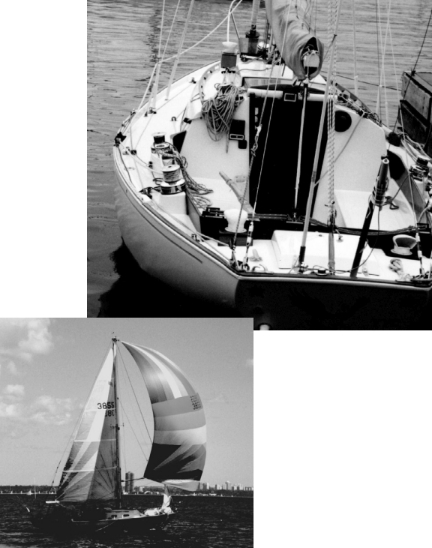
By the time he purchased Pegasus from his father, Andy says he had “a very good idea of improvements that needed to be made . . . time and wallet size dictated progress.” In his zeal, only the keelbolts, V-berth and starboard interior have been left untouched.
Although his wife, Pat, selected the material, Andy did the reupholstering, adding convenient storage bags and a strap to hold the cushions out of the way when the belowdecks space is more important for such operations as folding spinnakers. He added backing plates for the stanchions, but later adopted an unconventional approach to this subject, eliminating lifelines altogether. Andy says, “On our first race after Awlgripping topsides, deck, cockpit, and cabin, the lifelines had not been installed yet. The crew enjoyed not having to ‘skirt the jib’ with every tack. While admiring her on the mooring after the race, we all concluded that she looks much cleaner without the lifelines. They have remained in my garage ever since, with no crewmembers going overboard.”
Like the Novaks, Andy created shelves, added speakers, and redid floors, installing teak-and-holly flooring and replacing floor stringers. He removed the stove, installed an electric pump in the sink to drain the icebox, and added refrigeration. He replaced the companionway hatchboards with a solid teak hatch (modified from a Catalina). The sliding hatch at the companionway has another novelty. Made of two pieces of 1/4-inch Lexan, it has the current racing instructions sandwiched in between for quick reference.
All mainsail control lines are led aft, and cleats and leads are located for function and ease of use by a racing crew. He even replaced the hinges on the port cockpit locker with a piano hinge, so jib sheet tails don’t get pinched inside when the locker is opened.
Andy’s tiller and rudder have been remade. He explains, “A few years ago while playing in the whirlpools upstream in the Niagara River, I ‘found’ the foundation to the old Lewiston-Queenston Bridge while traveling at 13 knots over the bottom in a 7-knot back eddy. Needless to say, it destroyed the rudder and snapped the tiller. I replaced the rudder with an elliptical rudder I made, giving better downwind control. As the original 1 1/2-inch rudderstock bent in the incident, I went to a 2-inch rudderstock and Harken rudder bearings. This necessitated replacing the rudder tube. The tiller I laminated out of 18 pieces of ash.
With these steering improvements, I was able to fly down the lake at 10 knots with the chute up while enjoying dinner. The elliptical rudder has the same surface area as the largest of the four rudders designed for the Redwing 30 by C&C.”
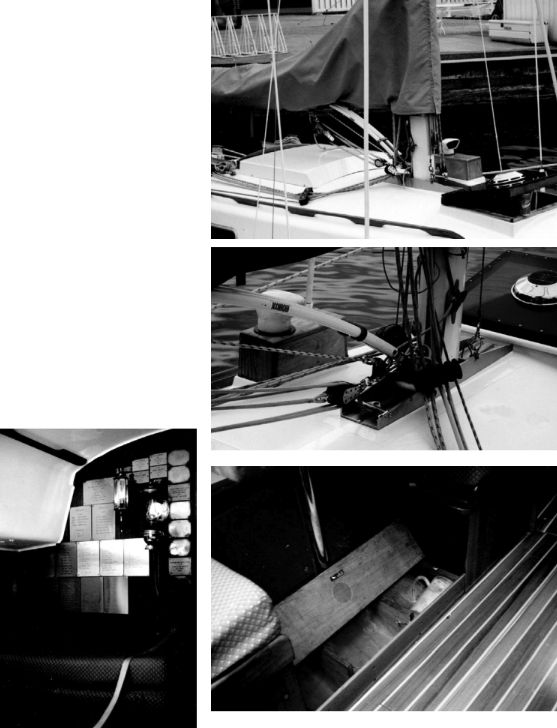
Neither Pegasus nor Scimitar is equipped with the compression post which is on Blackbird, a boat manufactured in 1970, a year after Pegasus and two years after Scimitar. Like Blackbird, Pegasus has had to have her mast step reinforced, but Scimitar, perhaps because she was not raced often, is still using the original step without a problem.
Andy concludes, “While Pegasus is raced extensively, her improvements make her very easy to sail and trim quickly when I’m out for the occasional pleasure sail or delivery. She handles all sea conditions like a lady, being very seakindly due to her displacement. The 7-foot 3-inch long cockpit seats allow for ample seating when out sailing. And who wants to be down below when you’re sailing?”
Thank you to Sailrite Enterprises, Inc., for providing free access to back issues of Good Old Boat through intellectual property rights. Sailrite.com