Change that awkward throttle and gear placement
Issue 45 : Nov/Dec 2005
Some sailboat traditions deserve to die. Among them is the placement of the auxiliary engine controls down around the ankles of the helmsman. Bending over to operate the shift lever/throttle and stooping out of sight of the crew screaming from the bow does not make for handy or safe navigation. In crowded or windy conditions, special problems arise. The appearance of pedestal steering on virtually all new auxiliaries over 28 feet has almost annihilated that tradition as the controls are now mounted on the pedestal. But those who prefer tillers to wheels and whose cockpit wells are up against the cabin can improve upon the tradition for ease and safety, not to mention peace with the foredeck crew.
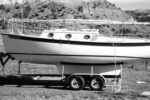
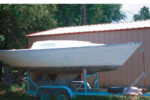
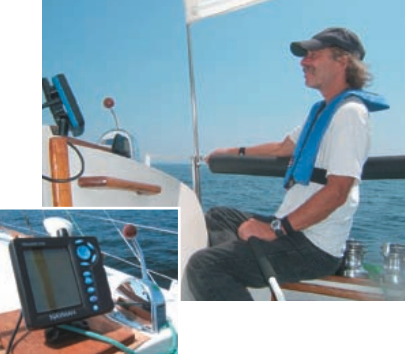
I took the opportunity when repowering my Bayfield 29C with a stronger auxiliary for the ocean inlets on the northern Massachusetts coast to move the engine control to the top of the coachroof. There I can tweak the power with my right hand, keep a firm grip on the tiller with my left, and devote full attention to whatever else may require my response. In a sloppy seaway, as in the Merrimack River inlet with an outrushing tide against a strong easterly, I can alternately hang on to a grab handle right behind the engine control.
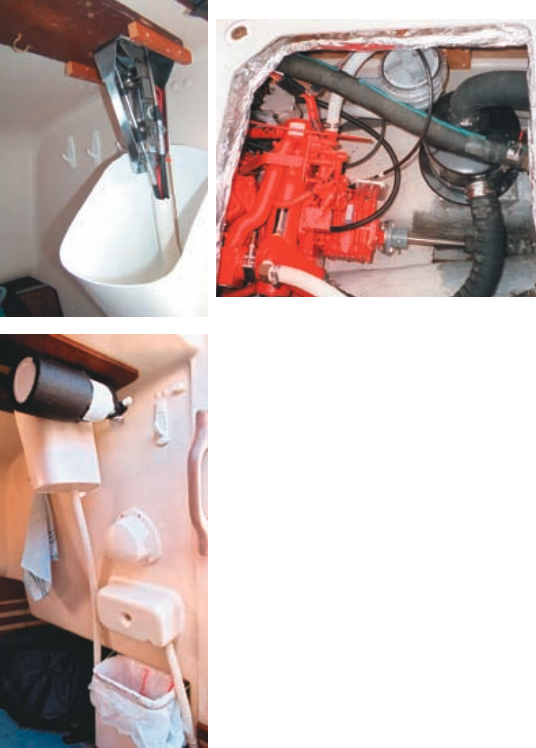
The new control is a standard single-lever powerboat item. In the Bayfield 29C I’ve located it where a winch used to be. The galley headliner beneath it already had teak panels covering access ports for superfluous winches. The control’s hardware extends downward about 9 inches, below which the shift cable and throttle cable must be led down to the engine.
I did the control installation in a day, cutting through the fiberglass with a reciprocating saw (the type orthopedic surgeons use) and a tapered hacksaw blade (just the blade). The cables were passed through 1-inch sanitation hose into the engine compartment, where long bends led them to their separate destinations. I needed to make a longer bracket for the shift cable. The control hardware is covered by a slightly modified plastic wastebasket, attached with four screws to blocks on the headliner plate. Hose and wastebasket were primed and painted to match the cabin headliner.
Now I can easily come up to a buoy with or against a strong current and hold the boat there until secured (we moor bow-and-stern in a narrow tidal river). I’m afforded safety, comfort, and concord with the foredeck crew.
Thank you to Sailrite Enterprises, Inc., for providing free access to back issues of Good Old Boat through intellectual property rights. Sailrite.com