A couple of add-ons eliminate the mess
Issue 78 : May/Jun 2011
When I first changed the oil and filter on my Yanmar 3YM20, I made a mess. The oil filter was completely hidden on one side of the engine and it was impossible to place anything beneath it to catch spilled oil. Fortunately, Pacific Seacraft had the foresight to install a drip tray under the engine or the oil would have ended up in the bilge.
Another problem is the engine has no drain plug for the sump. The oil must be removed by sucking it out from the dipstick tube. However, the diameter of the dipstick tube is only about 3⁄8 inch so only a very thin pipe will pass down it. It’s an ineffective way to remove old oil, even when it’s hot, although I did learn a canny way to make this easier. The trick is to put a larger pipe over the entire dipstick pipe and suck the oil up through the dipstick pipe itself. Obvious really. What’s not obvious is the small hole at the top of the dipstick pipe that should be blocked before you can do this; that can be achieved with some electrical tape.
A permanent pump
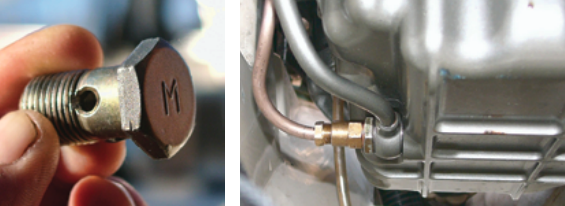
Some engine manufacturers fit an oil pump to the engine for extracting the oil. Yanmar does not and, because there is no sump drain plug, it is not possible to simply replace the plug with a pipe fitting. On the Yanmar, the dipstick pipe goes to the lowest part of the sump and is attached with a banjo bolt. The simplest solution is to have a thread tapped into the end of the banjo bolt and fit a sump pump to that. Luckily, my local Yanmar dealer was able to make a system for me that I could bolt in place. It uses copper pipes, not hose, and is a very solid-looking installation. The copper pipe leads to a hand pump mounted on the front of the engine where it’s easy to operate.
A remote filter
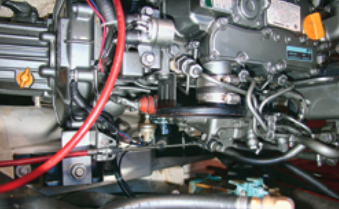
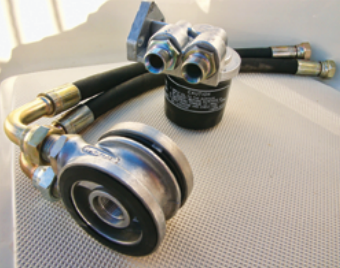
I solved the oil-filter issue with a remote-filter kit. I replaced the filter with an adaptor, from which two pipes lead to the filter housing, which can then be placed in a more convenient location. A great advantage to a remote filter is that it can be used to turn a horizontally mounted filter to vertical, which makes changing the filter noticeably less messy. Furthermore, if the right filter for your old or obscure engine is hard to find, you can change to a more available one.
The most logical and accessible place to locate an oil filter seemed to be at the front of the engine, so I had a stainless-steel bracket made up. This mounted to the engine using a couple of the sump bolts. The new position of the filter is lower than before and the disadvantage is that there is always oil in the pipes, so they need to be drained before the filter can be removed. The best way I have found to do this is to drill a hole in the bottom of the filter and let its contents drain into a container. I can then remove the filter and replace it. Because the filter is now so accessible, it’s very easy to do this.
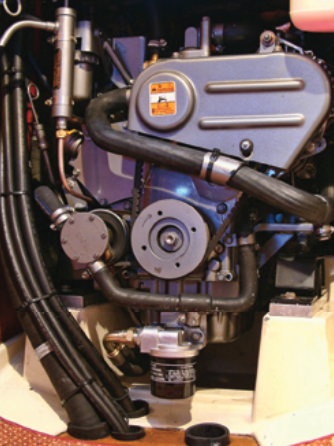
The whole remote-filter assembly cost about $120. Many options are available to allow for all kinds of mounting arrangements to suit your needs. Pipes are available in 6-inch increments up to 2 feet long. There are no negative effects on the engine. Indeed, the pipes may even cool the oil slightly and the added volume of oil can’t hurt either. However, if you have a new engine under the manufacturer’s warranty, fitting a remote oil filter will void the warranty. To be on the safe side, I waited for my warranty to run out before fitting the remote filter. The engine has since done about 900 hours with no ill effects.
In the Mediterranean, where we cruise, we motor a lot and sometimes have to change the oil a few times a season. Before I made these two modifications, it took me at least an hour to change the oil and filter. It now takes about 15 minutes. I won’t say changing the oil has become a pleasure but, compared to how it was before, it’s a vast improvement.
Benjy Benjamin loves sailing, making things in wood, and photography, and sells dinghy plans at . He lives aboard Doolittle, a Pacific Seacraft Dana 24, with his partner, Celia, near St. Tropez in the south of France. He works on classic yachts to fill the time when not exploring the Med.
Thank you to Sailrite Enterprises, Inc., for providing free access to back issues of Good Old Boat through intellectual property rights. Sailrite.com