Now it’s easy to get to the pump strainer
Issue 51 : Nov/Dec 2006
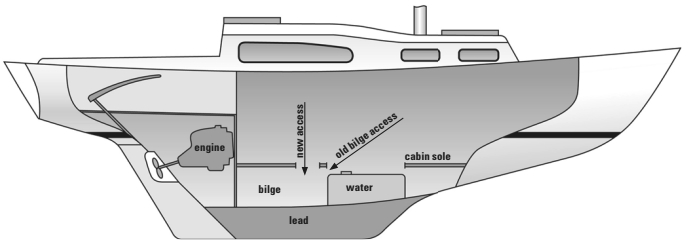
On my 1973 Bristol 30, bilge access was not very good. When I purchased the boat, there was only a Whale Gusher 10 pump in the cockpit connected to a strainer in the bilge. Later I realized the pump needed to be rebuilt.
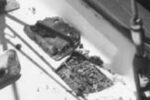
Reaching the strainer (or even seeing it) was tough. The access through the cabin sole panel was on a sharp angle. The floor panel was positioned nicely over the water tank but not directly over the bilge.
I had rebuilt the entire boat, so why not cut one more hole? I cut another foot into the length of the cabin sole access hatch. The piece I cut out was at the foot of the companionway. Rather than make a whole new 4-foot long piece, I made an additional cover for the section I cut out.
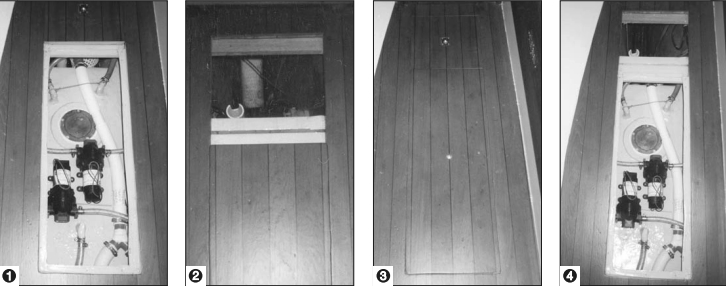
My cabin sole is teak blackline 1⁄4-inch plydeck. Since I was not replacing the floor at $400 a sheet, and the piece I cut out was not reusable, I laminated 1⁄4-inch teak ply over 3⁄4-inch marine plywood. This made a very substantial floorboard resting on oak cleats screwed to the underside.
The last trick was to match up the black lines. A permanent marker worked perfectly for this. I drew the lines using a straightedge with the board in place, added four coats of varnish, and a brass fingerpull, and you can’t tell the difference. Now I have direct access to the bilge, my new bilge pump, and the Whale pump strainer. Since I had the wood on hand, the whole project cost me only a day’s labor.
Thank you to Sailrite Enterprises, Inc., for providing free access to back issues of Good Old Boat through intellectual property rights. Sailrite.com