Mayhem begets a teaching moment
Issue 92 : Sept/Oct 2013
It’s amazing how fast things can change on the water. How does that salty expression go . . . that sailing is 99 percent boredom and one percent sheer mayhem? I’m not sure I have it exactly right; I’m still relatively new to this. Either way, my one percent came early in my sailing career on an otherwise calm day that turned on us blindingly fast. Experiencing this exhilarating and terrifying event so early on has made the rest of my sailing almost anticlimactic. Which, by the way, is not a bad thing.
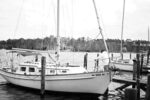
It happened on our second trip out on our boat, Cruzan Time, a Cal 27. My girlfriend, Rachel, and I, along with our partners in the boat, Carsten and Amanda, had just bought her. It was mid-September on St. Croix, U.S. Virgin Islands, and hurricane season was around the corner. Good weather appeared to have finally come our way on this particular Saturday. Rachel and I were new to sailing, while Carsten and Amanda were well experienced.
We figured we’d take Cruzan Time out for a nice, calm sail out to Buck Island, not far off St. Croix, where we would anchor and spend the afternoon basking in glory on the deck of our new boat. And it all went perfectly according to plan — until it didn’t.
The wind tends to come out of the east and, after anchoring in the lee of the island, we sat back and enjoyed ourselves. A few other boats were out — one other sailboat anchored 50 yards north of us and a 100-foot motor yacht to our southwest trailing a large tender. There were also three kayakers who’d made the mile-and-a-half paddle out to the island.
A change in the weather
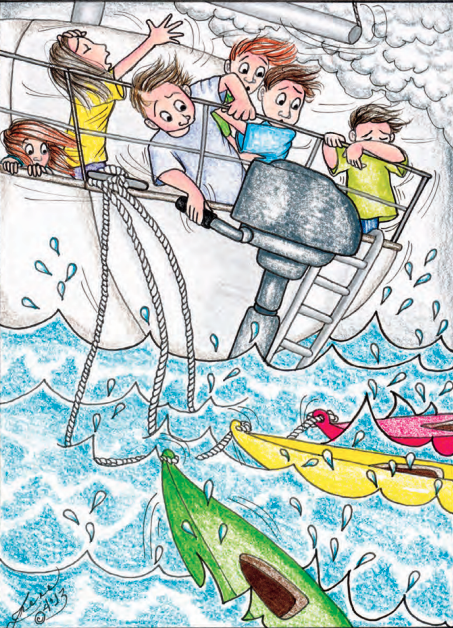
After we’d been at anchor an hour or so, the sky to the south turned gray. One of the kayakers, Michael, who was a friend of Carsten’s, swam out and asked if they could catch a ride back to St. Croix with us since there were ominous-looking clouds looming. Carsten told them to hurry.
The wind picked up quickly and shifted to blow out of the southwest. All the boats swung on their anchors, so the other sailboat was now astern of us and the monstrous yacht was off our starboard bow. The kayakers had made it out to the boat and were boarding our transom ladder. Carsten was tying the kayaks off to an aft cleat when the first sign of trouble surfaced in the form of a question that quickly became a statement.
“Are they drifting toward us?” Amanda asked, pointing at the motor yacht. “Wait! They’re drifting toward us!”
We began to yell at the yacht’s crew. The 100-yard gap quickly shrank to a 50-yard gap. The crew began to fuss about on deck and finally moved the boat off, but not before it swung across our bow.
We’re not positive whether they dislodged us when they came across our anchor rode, but after they crossed our bow, the yelling shifted from our boat to the sailboat off our stern. It was now our boat that was dragging anchor.
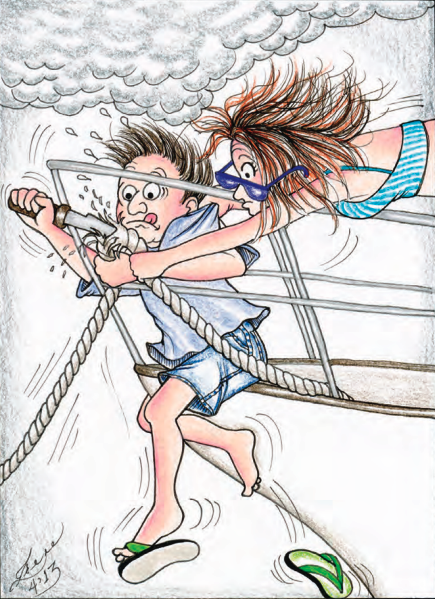
Carsten engaged our outboard while Amanda and I ran to the bow and began trying to pull us over the anchor. The wind and sea had picked up significantly and we heard shouts from the other boat directing us to cut the anchor. We tried to pull ourselves closer, but we weren’t making any headway with our 15-horsepower motor. Complicating matters, the kayaks’ lines threatened to foul the motor, so Carsten released them. A couple of the kayakers began raising the mainsail as the shouts from the boat behind us grew in intensity. What had started out as ridiculous — we’re not cutting loose the anchor! — quickly became reality.
“Cut the anchor!” cried Carsten.
Desperate measures
I was stunned for a second. But Rachel quickly found a knife that would work and passed it up to me. Without really processing things, I sawed through the line. We fell off hard. The main had been raised and I ran back to the cockpit where they were raising the jib.
But there was a problem: we were on port tack heading for a coral reef and moving quickly. I was on the starboard jibsheet. As we tacked, my inexperience showed and I released the sheet too early. The wind, now probably approaching 30 knots, pushed us back and prevented the tack. We sheeted in and tried again, the reef closer and closer. Still unaware, I once more released early and the tack failed again. We sheeted back in, but this was dire now. There was no room for error.
Carsten had seen my mistake and quickly told me what to do.
“We have to make this one, guys!” he shouted.
We were now past the marker, the reef lay just ahead, some coral heads likely jutting up somewhere below us. All this was not fine. It was the opposite of fine.
“Coming about!”
This time, I waited for the sail to backwind and push us across and only then did I release the sheet as we came about onto the starboard tack just in time. And then, all of a sudden, although the fight was nowhere near over, we were fine again.
Carsten and Amanda worked the cockpit with two of the kayakers while Rachel calmly talked down the hysterical third kayaker. I went below to prepare the spare anchor. By the time I reemerged, we were headed toward a safe harbor.
A crew coming together
Our team quickly learned from the incident we could trust each other — baptism by mayhem. We fell into roles without question and made it work. We were slightly rattled but also hopeful and confident, having made it together through such a defining moment so early in our joint ownership. And we were ready for a whole lot of the 99 percent.
Daniel Shea lives on St. Croix. Originally from Cincinnati, he didn’t start sailing until he moved to the island and bought Cruzan Time, a Cal 27, along with his girlfriend, Rachel, and two friends, Amanda and Carsten, who, thankfully, knew what they were doing and were able to teach him the craft.
Thank you to Sailrite Enterprises, Inc., for providing free access to back issues of Good Old Boat through intellectual property rights. Sailrite.com