A hierarchy that puts the coolest at the bottom
Issue 109 : Jul/Aug 2016
When sailing our 1978 Hughes 26 up and down the Strait of Georgia between Vancouver Island and the mainland, we rely on ice in our icebox to keep our fresh food edible. Refrigeration is a wonderful thing, and I sometimes envy sailors who have it, but we like sailing the boat, and running the engine to power a cooling system seems counterproductive. Also, cooling systems are expensive and can require costly repairs.
Some issues arise, however, when cooling with an icebox. Food quality can sometimes be suspect, the drain can plug, items get lost in the bottom, and the bilge is always wet. With a little care and planning, you can eliminate these concerns.
Begin with the box
As a first step toward improving our icebox I lined the bottom of the box with foil-covered insulation from a building-supply store. I taped over the cut edges of the slabs to prevent bits of insulation from falling off. As well as adding insulating value, the foam protects the fiberglass box if I should happen to drop a heavy block of ice into it.
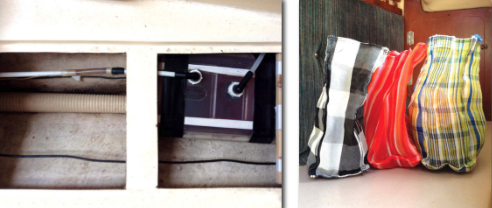
To do away with a wet bilge and stray odors, I extended the icebox drain hose to the top of a lidded plastic box I installed in the bilge. A drain hose in the bottom of the box leads to a pump that empties the meltwater into the sink drain, from where it drains overboard. A vent line fitted to the top of the box ensures the icebox will drain efficiently. Because there is no pressure in the system, almost any plumbing hardware will work. Our modest-sized container holds about 12 hours’ worth of ice melt. It was easy to make activating the pump switch each morning and evening part of our shipboard routine.
So nothing nasty grows in the meltwater container, I occasionally pour a cup or two of bleach down the icebox drain, followed by a fresh water blast from a dock hose.
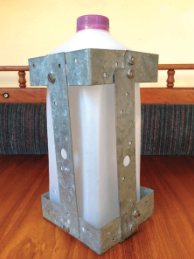
Milk is a necessity for us, but it was a real pain returning the container to the icebox. Invariably, some other items would fall into the space vacated whenever we removed the container. To prevent this, I fashioned a cage out of galvanized tie straps from a building supply store. The cage is fastened together with stainless-steel nuts and screws. Situated in the front corner of the icebox, the cage is robust enough to withstand being bumped and squeezed by heavy ice blocks. The metal also conducts the cold to the milk very efficiently.
No wet labels
We do not want any labels getting wet from being in contact with the ice; it takes a very small amount of debris to start a blockage in the drain. We remove all meats from their original packaging and seal them in plastic bags with zip-closures. Where possible, we remove labels from containers or transfer the contents to generic containers. We inspect fruit and vegetables for the little sticky labels that are so very clever at finding their way to the drain hole. Even labels that appear very secure will begin to disintegrate after a few days’ contact with wet ice.
A pecking order for packing
We have learned over the years that where and how foods are stowed in the icebox affects their useful life. We also pack the box in a way that allows us to find everything quickly.
To extend the life of fresh meats, we freeze ahead of time all but what we will use in the next day or two. These frozen portions extend the life of our ice. We usually freeze an extra container of milk and one of butter for the same reason.
To load the icebox, we place all the frozen items at the very bottom where they will stay frozen the longest. It’s a good idea to make a mental or even a written note of where each item is placed — it makes it easier to dig out the pork chops four days later. We place the main blocks of ice on top of these items.
Next in are foods that must be kept very cold. This includes the mayonnaise, the meat for the first night’s supper, the milk in its cage, and perhaps the cold cuts for sandwiches. Cold cuts store nicely if they are placed flat in zipper bags and slid down between a block of ice and the side of the icebox, where they stay cold but are still accessible. Any leftover ice chunks can be strategically placed around these items.
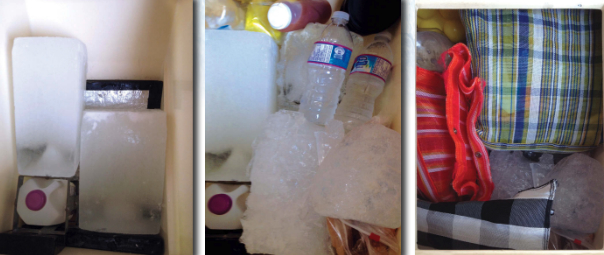
Finally, we have three inexpensive plasticized shopping bags with the handles cut off. We pack them with items that are not so temperature-sensitive. These include barbecue sauce, mustard, butter, jam, leftover canned peaches, vegetables, fruit, and so on. We could probably fit all these items into one bag, or even scatter them on top of the previous layer, but separating them into three smaller bags makes it easier to fit them into open spots and keeps the contents from getting lost among the ice blocks.
Our bags are different colors. We know, for example, the cut celery sticks are in the green vegetable bag and the jam is in the black condiment bag. Also, when the time comes to remove those pork chops from the bottom of the icebox, it’s a simple matter to remove the bags and set them aside, rather than removing numerous individual items. We also store our eggs in the top layer, in a plastic campers’ egg box for protection. Many seasoned sailors do not refrigerate their eggs, but we feel better keeping them cool.
Top up with ice
It’s best to fit in as many blocks of ice as you can at the beginning. You don’t want so much ice that your provisions won’t fit, but neither do you want a large volume of empty space.
Avoid ice cubes except as a filler because they don’t last very long. While cruising, add a block of ice whenever you have the chance. An icebox works most efficiently with a full load of ice.
Arlie and I have been sailing on Smooth Moves for almost 20 years. We eat very well from the icebox. Food waste from spoilage is virtually non-existent, the bilge is dry and odorless, and maintenance is minimal.
Paul and Arlie Clegg sailed their Hughes 26, on Georgian Bay, Ontario, for several years. In 2003 they moved across the country to Vancouver Island, bringing Smooth Moves with them. They have since been sailing out of their home port of Nanaimo, British Columbia.
Thank you to Sailrite Enterprises, Inc., for providing free access to back issues of Good Old Boat through intellectual property rights. Sailrite.com