Five stages from taking the bait to being truly boated
Issue 91 : Jul/Aug 2013
1. The beginning
It might have been Swallows and Amazons . . . or the thought of small animals in a beautiful pea-green boat . . . or two sawcuts making a pointy end in a short board . . . or watching Bing Crosby capture Grace Kelly’s heart as he sailed the True Love on an MGM backlot. But even as illusions fade and disappear, overrun by life’s practical matters, some few lodge in our hearts and become dreams — some half-cocked, some full-fledged to be carried for the rest of our lives. Unless something triggers a lurch into reality. Something like . . .
2. A boat
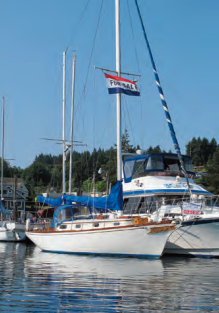
Suddenly, there she is with a “For Sale” sign swinging below the boom. It’s love at first sight, for better or for worse. A quick telephone call and the owner appears. You climb aboard and slide open the hatch to an unfamiliar bouquet of stale air, mildew, and damp cushions. A barrage of blarney from the seller goes largely unheard. You’re wallowing now in the second stage of a growing addiction. You feel like Michelangelo staring at a stone, unable to chisel fast enough to get at the fine art inside.
She’s a beauty. Shiny and white with a handsome blue stripe running just along that pretty sheer. You have a picnic in the cockpit and watch the kids exploring nooks and crannies. Sailing her will come sooner or later, but the important thing is that she’s yours! Well, almost. Getting to feel that she’s really yours will take a little longer.
3. Getting to know her
There’s a steep learning curve in the third stage, so steep that most dreamers slide off somewhere along the way. Patience and resolve will be tested as knuckles are bloodied and credit cards swiped at much the same rate. You learn to call parts by their real names — nautical alternatives for “front end,” “left” and “right,” and “the hole in the bottom with all the water in it.” There are ropes to learn, to be held in place by square knots, half hitches, stoppers, and maybe a bowline or two. There’s a knack to keeping her in one place with bow lines, stern lines, and springs. You learn to back away from the dock, hoist the main, and get her to go where you want to go — more or less — when the wind’s blowing from the wrong place, too much, or not at all.
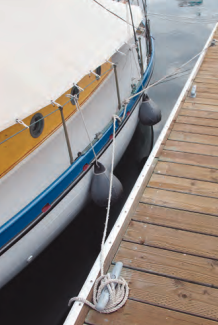
There’s water to be boiled and beer to be kept cold and you struggle to start an unfamiliar, mulish, and sometimes dangerous engine. You learn to step lightly — one hand for yourself and the other for what has to be done — and there’s always something to be done. You live with a combination of anxiety, halting indecision, and regular frustration punctuated alternately by bliss and not a little fear until . . .
4. The Dream takes over
This is the point at which it’s not what you want but what the boat wants that matters. Time and money are spent as needed. In the eyes of the unacquainted, you’re acting unpredictably and recklessly. You subscribe to one or two sailing magazines (if you’re reading this, you’re well on the way to being hooked).
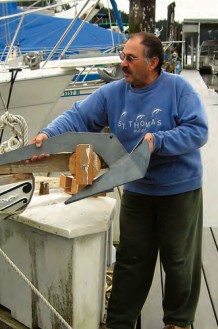
You get to know her dings and dents, stress cracks in gelcoat, and the disheartening sight of bubbled varnish or blisters just above the keel. But you take pleasure in setting it all to rights (more or less) while learning to be patient with yourself and internalizing the art of compromise.
You spend hours and days looking for just the right fabric for those cushions and finding just the right picture to hang in just the right spot. You peruse the secondhand boat-gear shops looking for just the right cabin stove, not only as to type and cost but also with an eye to how it will look in your increasingly comfortable — and personalized — saloon. You learn to drill holes in plastic and how to fill them . . . and how to live with your mistakes. There are occasions of believing a boat 2 feet longer will be a universal cure to all problems, real or imagined, afloat or ashore. These spells persist until you become . . .
5. Well and truly hooked
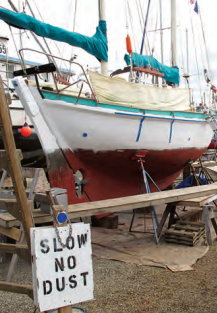
The mature addiction takes many and diverse forms. Some sailors see their boats as others do their gardens: asleep in the winter but blooming in the spring, not with apple blossoms and buttercups but rather with fresh coats of bottom paint, a more or less dry bilge, and a spanking new impeller blade. Work is never finished, but the reward is a satisfaction that cannot be bought or easily gotten. Some may feel compelled to build a dinghy in the spirit of the mother ship, to make something with their own hands to pay back the joy over many years.
The truly hooked think about boats almost as much as they think about anything . . . or ever have. They read cruising narratives, novels of the sea, and the history of yachting for the sheer pleasure of it. They work Joshua Slocum, Donald Crowhurst, and John Guzzwell into conversations with non-sailors. Many are as happy at anchor on a rainy day as they are under a full press of sail.
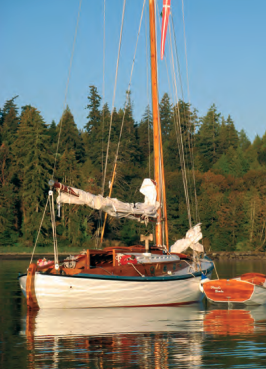
Boats help addicted skippers make sense of the summer and the great outdoors. They are reminders of a more natural world. They keep us from being preoccupied with the routine and necessary pleasures of life ashore and of the constant struggle to obtain them. Those of us who are well and truly hooked on boats are incomplete without them.
Richard Smith, a contributing editor with Good Old Boat, is an architect. He specializes in designing and building very small houses and has built, restored, and maintained a wide variety of boats. He and his wife, Beth, sail their Ericson Cruising 31, Kuma, on the reaches of Puget Sound.
Thank you to Sailrite Enterprises, Inc., for providing free access to back issues of Good Old Boat through intellectual property rights. Sailrite.com