A little tender loving care brings longer trouble-free life
Issue 34: Jan/Feb 2004
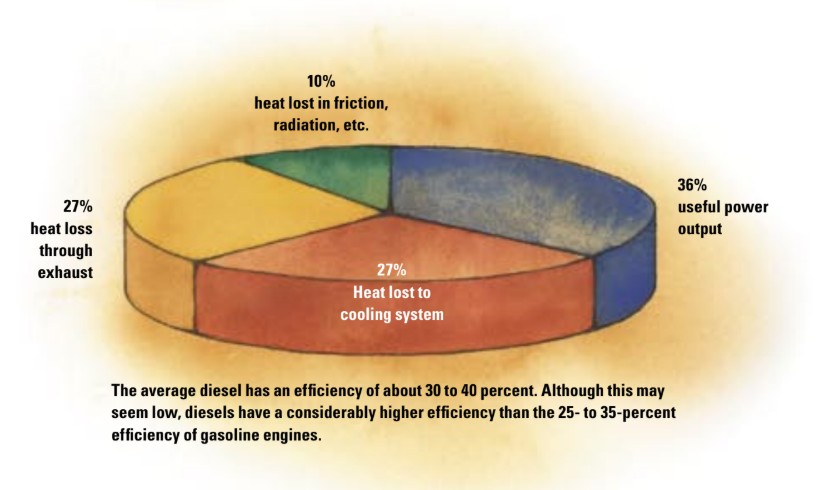
DIESEL ENGINES ARE NOW THE ENGINES OF CHOICE FOR auxiliary sailboats, and with good reason. They have a superior record of reliability, use a safer fuel, produce fewer hazardous exhaust pollutants, have better fuel economy, and are nearly immune to the moisture that plays havoc with the complicated high-voltage spark-plug system of their gasoline counterparts.
Even though, in many ways, the operation of a diesel is easier to understand than that of a gasoline engine, many owners tend to look at it as mysterious. But with a basic understanding of its operation, coupled with tender loving care, a diesel auxiliary engine can provide years, or decades, of trouble-free service.
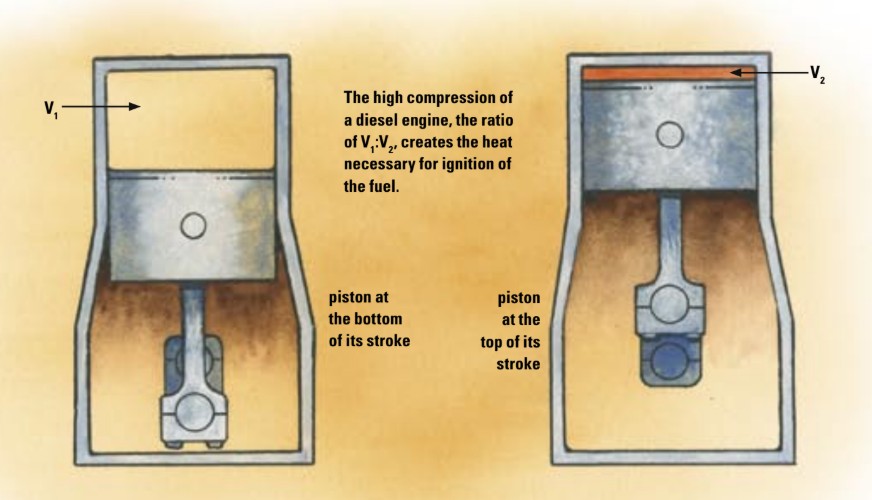
When Rudolf Diesel first patented his namesake in 1892, it was a revolutionary idea in internal combustion engines. His engine used the principle of auto-ignition of the fuel. The idea of his engine, based on the work of English scientist Robert Boyle (1627-91), was that you could ignite the fuel in the cylinder from the heat produced by compressing the air inside the cylinder. In modern diesel engines this compression is usually in the range of 16:1 to 23:1; that is, the air in the cylinder is compressed to 1⁄16 to 1 ⁄23 of its original volume. This raises the temperature of the air in the cylinder to between 800 and 1,000 ̊F. At that point, diesel fuel is sprayed into the cylinder through an injector. Since diesel ignites at about 500 to 660 ̊F, it will immediately catch fire.
Compression, then, is the key to a successfully operating diesel, and to meet the stresses of this compression a diesel engine must be built stronger and with closer tolerances than a gasoline engine. This increases the weight and cost of a diesel engine over a gasoline engine of similar horsepower.
Little maintenance
Diesel engines have a remarkably long life and reliability and require very little maintenance. But that minimum maintenance is of utmost importance in sustaining their long, trouble-free life span. A diesel requires clean fuel, clean lubricating oil, and a clean air supply. Owners of diesel engines should be almost fanatical in making sure these cleanliness standards are met; otherwise, the result is shorter trouble-free operating hours and expensive repairs.
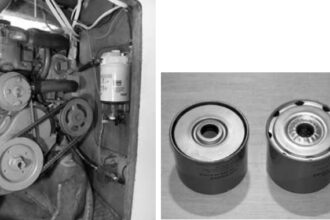
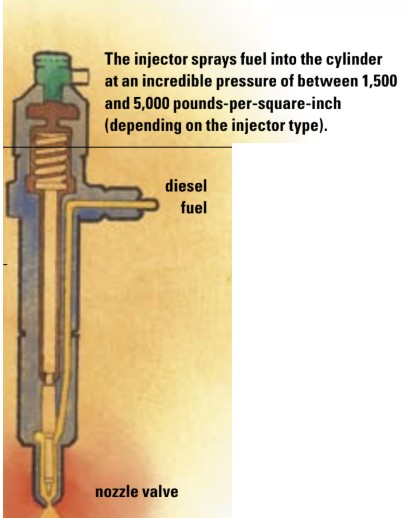
The injector on a diesel engine is the most precisely built, expensive, and critical component in the engine. Even microscopic amounts of dirt, water, or bacteria in the fuel supply can ruin the injectors and score the engine’s cylinders and pistons. Clean fuel, treated with a biocide, filtered while filling the tanks, and filtered again by regularly changed primary and secondary filters, is a requirement that can’t be neglected. It has been estimated that 90 percent of all diesel engine problems are the result of contaminated fuel, so maintaining a clean fuel supply is one of the most important jobs for the diesel owner.
Clean lubricating oil is also essential. Lubricating oils for diesel engines have a prefix “C” (“compression” is a good memory aid), while gasoline lubricating oils use the prefix “S” (“spark” is a good memory aid). Using the correctly labeled oil in a diesel and changing it frequently are vitally important. Changing the oil often, while the oil is hot, is a job that should be done more often than in a gasoline engine.
Accelerated wear
And don’t neglect the air filter. If dust particles pass through a ruptured air filter, they can score the piston and cylinder walls, accelerating wear and resulting in costly repairs. To prevent a ruptured air filter, it should be changed in accordance with the engine manufacturer’s schedule.
Diesel engines like to work under a load. Operating a diesel under low load, such as running the engine for just charging the battery, creates more carbon than normal. This carbon then gums up the piston rings and coats the valves and valve stems. With little load, the engine runs cool and water condenses inside the engine, combining with sulfur in the diesel fuel, and resulting in sulfuric acid that attacks the engine’s internal surfaces. So, low-load, low-temperature running should always be avoided.
But even for well-maintained diesels, after years or decades of operation, cylinder walls and piston rings eventually become worn and fouled with deposits, and internal parts become attacked by acids, so that they no longer make a good seal. Valves and valve-seats also become pitted and fouled and don’t seal properly. Thus, it becomes much more difficult to get the compression necessary to create the required heat for ignition, especially when the engine block is very cold and rapidly saps away this heat. Injectors also will have become worn and inefficient, compounding the problem. For the owner of an old diesel, difficulty in starting, especially in cold weather, is usually a harbinger of some major repair problems.
Nevertheless, in exchange for regular care with the fuel supply, lubricating oil, and air intake, your diesel auxiliary will repay you with long years of reliable and trouble-free service.
Thank you to Sailrite Enterprises, Inc., for providing free access to back issues of Good Old Boat through intellectual property rights. Sailrite.com