Issue 4 : Jan/Feb 1999
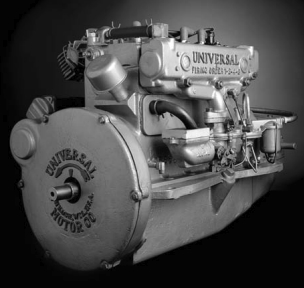
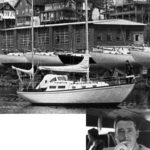
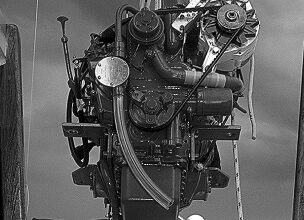
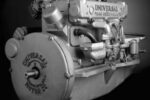
There it was: covered in rust and grime, cowering in the engine compartment of the 1961 Pearson Ariel in which I was interested. I asked the yacht broker if it ran, and he said, “Yea, last year. Try it.” I did. Nothing happened — not even a squeak. Thus began my association with a venerable, antique, 1979 Atomic 4, “the little engine that can.”
The battery was dead, and hand-cranking was not an option. I considered the engine to be a candidate for anchor status. Somehow the Atomic 4 convinced me to give it one last chance.
My rock-bottom offer for the Pearson Ariel containing the Atomic 4 was accepted. I immediately commenced to soak the plugs in WD-40 and let them sit for a few days. Two days later, I was able to remove the plugs and tried to rotate the engine by hand. No luck. It was frozen. I poured the better part of a quart of “Marvel Mystery Oil” into the cylinders, replaced the plugs loosely and went home.
Four days later I returned to the boat with a new battery, rags, and wrenches. I removed the plugs, covered the cylinder head with the rags to contain the oil I hoped would be expelled from the cylinders if the engine turned over, hooked up the battery and pushed the starter button.
WOW! It turned over in a rush, sending oil all over. But it was good oil and a good beginning. Over the next week I changed the oil; checked the water supply; drained, cleaned, and refilled the fuel tank; and changed the fuel filters. When I pushed the starter button, I heard the little engine try, but still it wouldn’t start. I removed the carburetor, disassembled and cleaned it out, and tested the electric fuel pump. No fuel. The pump was not operating.
Off to the NAPA store for a new electric fuel pump. (The engine had been converted to an electric fuel pump by a previous owner). Back in the engine compartment, I reinstalled the carburetor, installed the new fuel pump, and tried again. Success. The engine started and ran well. It was going to be better as an engine than as an anchor after all.
Has it continued to run? Yes, but not always, and that’s the point of this article. With everyday simple mechanical skills, the knowledgeable help of a White Knight in Atomic 4 Bronze (Don Moyer), and a lot of faith in the basic design of this simple old engine, a long relationship of faithful performance can be achieved with the “little engine that can” most of the time.
For 11 hours, after the initial starting sequence, the “little engine that can” pushed my new Pearson Ariel home. The next challenge for the engine was to take the Ariel to the shipyard. Fate gave us 20 knots of wind on the nose for the 10-mile run to the yard. We did it at night, since my job interfered with a daylight delivery. The Atomic 4 pushed valiantly through the steep chop with the decks running water and the deck drains running into the self-bailing cockpit.
This was the night I discovered the secret of the large, chrome shift lever that rises totem-like from the cockpit sole. Since we had just purchased the boat and this was only our second trip, we wanted to be ready to take the engine out of gear if it faltered. It never occurred to me that the sea was not so slowly filling the bilge through the shift lever hole when a wave drained into the cockpit. After making harbor and feeling really good about the performance of the engine, it was a shock to step into the cabin and into knee-deep warm saltwater.
Panic ensued until I realized that the sea water, had run through the shift hole, landed on the copper double wall exhaust pipe, was heated and then filled the bilge, and the Atomic 4 had kept running through it all! The bilge pump emptied the bilge, the engine continued to do its best, and a successful voyage was completed. It was a good thing it wasn’t a 20-mile trip, or we would have sunk!
In the morning the boat was hauled, blocked, and washed. The next day was Saturday, and I arrived, full of enthusiasm, to find that the rudder looked like a shark had taken bites out of it, and the bronze seawater engine intake thru-hull was a bright pink. With a gentle tap of my hammer, the fitting disintegrated. I guess God looks out for middle-aged fools who love old boats.
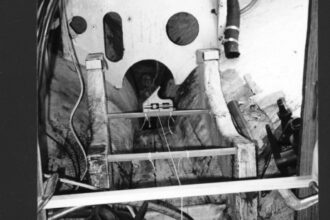
Over the next four weekends, I dug a hole in the earth so I could remove, repair, and reset the rudder. I replaced the thru-hull, painted the bottom, and cleaned everything up. The Atomic 4 seemed to be watching it all and smiling at the two 30H gelcell batteries now sharing its compartment along with new wiring and selector switch. Launching day finally came, and the Atomic 4 took the Ariel home.
Several weeks later, the bilge again began to fill with warm sea water on a return trip from the offshore barrier islands. I had learned to close the shift hole when offshore, so that wasn’t it. This time it was the original double-walled copper exhaust line that had corroded through on the underside (where you cannot see it) and was merrily discharging its cooling water into the bilge. With the engine off and the bilge pump on, we sailed home and right into the slip! (A slip which we had specifically selected, by the way, just in case we ever needed to sail in and out. The ability to sail from and to the slip would allow us to keep sailing when the Atomic 4 needed an overhaul.) The Atomic 4 was down again, but not out.
I removed the entire old exhaust line and sold it for copper scrap, replacing it with a stainless steel mixing elbow and wet exhaust line. The mixing elbow was a gift from a friend who repowered his boat with a diesel. (Beware of gifts of used parts!) Two weeks later there was water in the oil. At this point, I was thinking, “Enough is enough!” I pulled the engine and sent it to the “mechanic” at the local shipyard for cleaning and repair. It was returned in two weeks pronounced “fixed.” I reinstalled it, only to see the problem recur. (I’m tenacious, but smart?) This time the beautiful stainless steel elbow had a hole between the mixing chamber and the hot side which allowed the cooling water to back up into the engine when the engine was shut down.
By this point, I realized that I could make as big a mess as the “professionals” and a lot cheaper, too, so I might as well do it myself. I pulled the engine out for the second time and took it home to the garage workbench. I removed the pan, head, manifold, and peripherals to the short block with internals. I cleaned the oil, water, and sludge from all parts, rinsed everything in diesel fuel twice to be sure all the old oil and water were removed, and reassembled it. Whenever I had a question, I referred to Don Moyer’s Atomic 4 newsletter or the parts book for blowups of the assembled piece.
This time, I rebuilt the exhaust system into a dry riser using galvanized pipe fittings wrapped in 400oF fiberglass batting. I covered the hot-wrapped portion in fiberglass cloth to the point on the down side of the riser where a tee fitting introduces the cooling water into the final wet section of the exhaust system. With that task completed, the engine was reinstalled and ran well for the next year without a problem. As you can see, the bulk of the Atomic 4’s problems reside with its owners, not really with the engine itself.
In subsequent years, we have experienced broken point springs (too long between tune-ups). Then there were cracked fuel fittings which allowed air into the line between the filter and pump. (This was in a river, at night, no moon, 6 miles from home, and the engine only running in 30-second bursts. It was a long night.) There was a stuck float in the carburetor after shutdown (fuel all over). We had an incorrect choke cable which kept the engine running partially choked all the time. And finally, after four years of service, there was a blown head gasket from the old green paper gaskets.
Through it all Don Moyer, the White Knight, patiently answered my many questions, sent parts as requested (no credit cards — send me the check when you get the parts), and helped me keep faith in the little Atomic 4. My boat operates 12 months a year, three days a week or more, if possible, on the Mississippi Gulf Coast and is pulled for a bottom job every three years. The engine gets no rest break — such as fall maintenance or spring tuneup — and yet it keeps going, and going, and going. I do routine maintenance on an annual basis.
Keep the faith, and put the effort into your Atomic 4, and you will be rewarded with a smooth running engine and the satisfaction of a job well done, all by yourself! This is the true story of eight years in the not-so-secret life of a 1979 Atomic 4. I believe I should have at least another 10 years of satisfaction from the little engine that can.
Thank you to Sailrite Enterprises, Inc., for providing free access to back issues of Good Old Boat through intellectual property rights. Sailrite.com