Mother Nature has no respect for job schedules
Issue 83: March/April 2012
If you spend enough time on the water, you’ll have stories to tell: good and bad, hair-raising or hilarious. It comes with the territory. My story was made possible by a combination of factors that, while insignificant individually, morphed into a series of boat-threatening dominoes within a furious five minutes’ time. If anything, this account should once again confirm the notion that, when it comes to boat maintenance issues, the devil lies in the details. The smallest of details. Wherever the boat might be.
First, a little background. I’m a 50-something professional sailboat hobo. A sometime delivery captain, surveyor, buyer/rebuilder and seller of old thoroughbreds, wrench twister, fiberglass fiddler, hands-on rigger, and hired gun for boat owners smart enough to avoid the tasks associated with this laundry list. I still have all of my fingers and most of my faculties intact. So far.
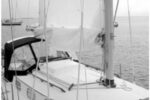
As I write this, I’m on a project that entails the refit of a 47-foot cutter. She was built in 1981 in Taiwan. She is heavy, hand-laid, and tweaked for the charter trade with two staterooms, too much teak, over and under bunk crews’ quarters, three heads, two showers, and a consequent systems diagram that would rival the Apollo space program. After years of sailing and “foot disease” trade-ups, her owner opted for the saner side of boating and purchased a 52-foot trawler with twin screws, central air conditioning, and the accoutrements of the civilized. Smart man. As a result, the cutter is being prepped to be put on the market. This is where I come in. A spring 2010 survey identified a few issues that needed attention, including the rehab of some frozen tapered-plug seacocks. This is a common item on most refit lists and relatively easy to accomplish if the boat is out of the water.
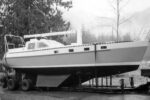
From her home port in Port Aransas, Texas, to the haulout facility in Rockport is a 15-mile run on the Intracoastal Waterway. Rockport has a no-ferns, no-frills, yes-you-can-do-it-yourself yard with a ship’s store that actually stocks a few boat parts. At 47 feet, the boat’s foretriangle is just large enough that a close-quarters stern-to end-for-end at the dock was necessary in order to avoid disassembly of the forestay so she could be hauled out. There were two yardmen on hand. No problem. This was obviously not their first rodeo. She was clear of the water and on jack stands in 10 minutes.
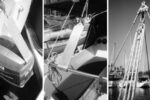
Curb appeal and safety sometimes intersect. In this case, it came in the form of a badly worn wire-to-rope furling line for the genoa. This line was ugly, identified, and put on the to-do list. As is often the case on older furling units (particularly for headsails that exceed 140 percent), the drum size mandates wire at the drum to provide the forestay revolutions necessary to completely furl the sail. Yawn. We’ll get to it. It’s on the list.

A twist(er) of fate
Fast forward 24 hours to the afternoon of January 9. Small craft advisories and a wind/rain combination are forecast for the overnight hours. Not a big deal. The boat is, after all, hauled out and resting on six angle-iron jack stands. The ladder is tied off. Miscellaneous deck gear is stowed or secured. Scuppers are free, sheets cleated. I turned my attention to the seacock rehab. A little heat, a little lapping compound, a little grease, and the end of another day in the romantic life of an old-boat therapist.
But at 4:30 a.m., bedlam! Hail the size of golf balls propelled by 70-plus mph winds is bashing the deck. (I later learn that a tornado touched down one mile to the south of the yard, lifted, and touched down again one mile to the north, wreaking no small amount of havoc including broken masts, shredded Plexiglas of every variety, and a dozen boats blown over). The 47-footer of personal interest to me is chattering on the jack stands and groaning against the force-10 breeze. Tools vibrate off the table in the saloon. This is a deafening Clorox-bottle-meets-Mother-Nature physical event. Violent and impressive. Despite the conditions, however, all is well. That is, until I hear a rifle shot somewhere on the foredeck and note an immediate increase in the boat’s movement.
No hero, but no choice. With a foul weather jacket and headlamp, I survey the foredeck. The wind velocity has stretched the cleated sheets enough to expose a pocket of opportunity to the breeze, and that sliver of canvas has provided enough surface area to translate the force into a side-to-side slapping that sounds like the world’s largest towel fight combined with a vicious hammerhead port-to-starboard jerking of the bow that threatens to jump her off the jack stands. Not good. The fact that the wind is directly on the beam doesn’t help.
Needless to say, the headsail must be furled. Pronto. From halfway between the bow and the cockpit, where the furling line is cleated, comes another rifle shot. The worn-out, on-the-list we’ll-get-to-it furling line has parted. I watch the line scream-slither past me down through the fairleads toward the bow. The wind, of course, takes immediate advantage of this new opportunity and does its level best to deploy the entire genoa. The boat is no longer just lurching from side to side; it is making determined leaps to jettison the jack stands.
Act now. Think! Take decisive action. Simultaneously, be prepared to bail from the deck if the boat succeeds in spitting the stands. Hope for the best.
Releasing the sheets doesn’t have nearly as dramatic an effect as I expect. While both are nearly horizontal before the wind, the pocket doesn’t disappear, it is simply huffed to a different position. There are two reasons for this predicament: the UV cover of the genoa has found a grip around the baby stay and the wire furler lead has jammed between the roller furler and the housing. Perfect.
(Note 1: If you have a roller furling unit that requires a wire lead, make sure the wire diameter is larger than the drum/housing slot. Because s*#t happens.)

An adrenaline moment
In the backs of our minds, we always wonder how we’ll react in certain situations, particularly those that involve some level of danger or one-shot-must-do scenarios. In this case, the issues are clear: the headsail must be released and furled or 20 tons of classic cutter will be on her side within minutes. Great! This thought is followed by a scramble for tools: long screwdriver, 14-inch channel-lock pliers, stainless-steel pry bar, 3-pound sledgehammer, snatch block. Hurry up!
I tie the broken bitter end (rope) of the parted furling line to a fresh length of 1/2-inch spare halyard and tension it with one of the genoa winches, sprint to the foredeck, lie on the deck to get a close look at the furling wire jam. Bang! One perfectly aimed hailstone to the right lens of my reading glasses. I become a one-eyed busy boat desperado.
(Note 2: Don’t buy your reading glasses at the drugstore if you really need them in order to see.)
Freeing up the wire jam is surprisingly straightforward. Adrenaline, leverage, and a sledgehammer make a formidable trio. Even when furled, the headsail continues to flog (thanks to the shredded UV cover) but the boat is once more stable on the jack stands and in no danger of self-destructing. A remedial stop at the sailmaker, a new furling line, and all will be well. With any luck, by the time the sail repairs are completed I should be able to lift my left arm above my head and manipulate something that weighs more than a pencil.
The moral of the story? It’s an old tune: I knew it was dog-eared and needed to be replaced. Look! It’s right here on the list. See?
(Note 3: if the boat has roller-furling headsail(s) and has to be put on the hard, think seriously about removing them while you’re still in the water. This is a hassle but could be a very rewarding preemptive strike and well worth 10 minutes of attention. At the very least, add this idea to your list).
Scott Gordon learned to sail on Lake Champlain more than 30 years ago. His wanderings as a “professional sailboat hobo” have taken him throughout the Great Lakes, the East Coast from Canada to Key West, and throughout the Caribbean. His home base is Kittery Point, Maine.
Thank you to Sailrite Enterprises, Inc., for providing free access to back issues of Good Old Boat through intellectual property rights. Sailrite.com