And we carry their lessons far from the water
Issue 84 : May/Jun 2012
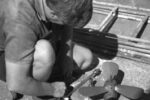
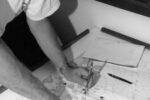
A boat — especially an old boat — is a good teacher. It teaches us how to fix things. We read manuals, magazine articles, and books. I learned to paint by reading the label on the can. Ditto for varnishing. We learn by watching others, asking for help at times when we’re overwhelmed with not knowing, and we improvise a lot when solving the current problem du jour. Eventually, the time comes when we’re able to lend a friend a hand in solving some nautical mystery or other. We practice and we usually get better the longer we do it . . . or we don’t do it very long.
Some sailors spend more time tinkering with their boats than they do sailing, and they love every minute of it. They drive down to the marina on a cold winter morning and fire up the Webasto or build a fire in the Dickinson to get it all warm and cozy below. Changing the oil and filters from time to time or replacing a frayed V-belt or an impeller, cup of coffee and jellyroll at hand, helps acquaint us with our engines, making them a little less enigmatic. Over time, we become somewhat less dependent on a $70-an-hour marine mechanic.
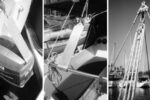
We save a little money and keep the old girl shipshape and in Bristol fashion by learning to take care of the frayed ends of jib sheets, wrapping them with plastic tape, dipping them in gunk, or whipping them with waxed twine so they’ll run smoothly through the blocks next time. It’s the exceptional sailor who doesn’t discover a leak now and again and have to select from a myriad of sealing compounds the right one to keep the water out. Sooner or later, we’ll have to unclog the head or strum box. Or a piece of electrical equipment will fail and we’ll either fix it or do without.
Spending time alone with your boat, making mistakes without anybody watching, doing something wrong, and doing it again and maybe again until you get it right, listening to favorite music or the cries of seabirds . . . for many, this is a morning well spent.
Reaching higher
Most of us come to small boats with an incomplete knowledge of what’s involved in sailing and maintaining them. The range of challenges the sailor takes on is vast. It was while spending days lying at anchor that I learned to bake bread in a pressure cooker and to make jars of tangy kelp pickles. Still others have learned the rudiments of ship’s carpentry by building a bookshelf, a wine rack, or a nifty cubbyhole for charts. This can lead to replacing the crazed acrylic in a deck hatch or converting a quarter berth into storage space.
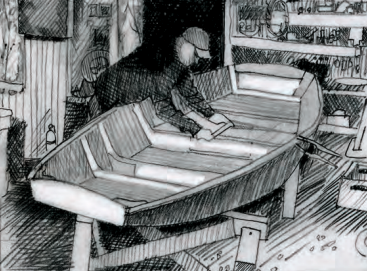
Some of us find that pleasure in sailing has a lot to do with rowing a small boat around a quiet anchorage as well as making less predictable offshore passages. Armed with my motley experience in carpentry projects, I decided one day to build the perfect dinghy. Then another. And another.
I cut side, bottom, and transom panels out of plywood, stitching and gluing them together as Dynamite Payson taught me. I read labels on epoxy cans as I’d done when lining the icebox of the big boat with foam insulation. A little plywood pram led to a more complicated dinghy. A friend helped me cut cedar boards into thin strips that I glued together to make a round-bottomed, strip-planked tender. I haul that little boat strapped to the deck or tow it wherever I sail now. It’s a pretty little thing and I still can’t quite believe I built it.
Keeping our boats in the best possible condition educates us in unimagined ways and we learn to do things well beyond the world of sailing. The confidence gained in replacing the engine oil filter by yourself for the first time, in laying on coats of bottom paint, or cleaning out a blocked strum box can lead almost imperceptibly into areas of unexpected pleasure. In time, fear and loathing of difficult work can be replaced by the good feeling that comes from seeing a difficult job through to the end.
Richard Smith, a contributing editor with Good Old Boat, is an architect. He has built, restored, and maintained a variety of boats. He and his wife, Beth, sail their Ericson Cruising 31, Kuma, on the reaches of Puget Sound. The little dinghy he built is never far behind.
Thank you to Sailrite Enterprises, Inc., for providing free access to back issues of Good Old Boat through intellectual property rights. Sailrite.com