As it flies, it defies flailing sheets and flapping sails
Issue 107 : Mar/Apr 2016
A masthead fly is the truest indicator of the apparent wind direction, but it’s often obscured by either the Bimini or the sails themselves. Staring up at it, you’re distracted from the deck-level view and you’ll get a stiff neck into the bargain. Non-sailing crew, in particular, like to see an indicator at deck level while they’re hoisting sail or anchoring.
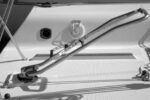
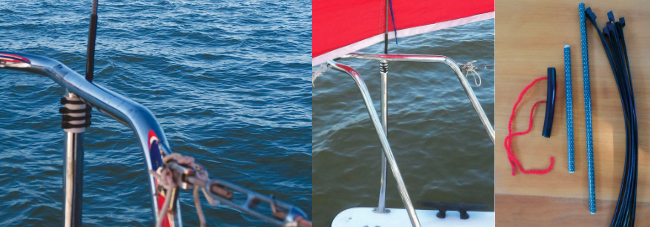
I’ve tried yarns in the rigging, but they’re too close to sails. Commercial vanes mounted on the bow work well on catamarans (either on both bows or under the forestay bridle) and on some monohulls, but they’re delicate and prone to breakage. After some trial and error, I arrived at my robust design, which can be buffeted by sails and raked by sheets without harm. Best of all, these wind indicators cost practically nothing.
Five easy steps
- Cut two lengths of 1⁄4-inch-OD fiberglass tent pole: 8 inches for the upper mast and 5 inches for the support. Aluminum tubing or fiberglass survey wands would do, but tent poles from a kid’s discarded tent are best.
- Cut a 4-inch length of 1⁄4-inch-ID polyethylene airline tubing. Any shorter and it will be prone to kinking when bent over.
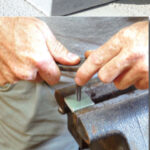
- Press the fiberglass tubing 3⁄4 inch into each end of the airline tubing. If it is not a tight fit, secure it with polyurethane caulk.
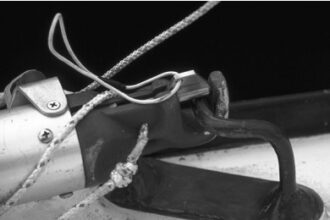
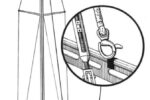
- Lash or clamp the lower end to the railing or other support. Keep the lower fiberglass tube flush with the top of the railing, or sheets will hang up on this rigid portion. Wrap the railing with athletic tape under the lashing or clamp to add friction and prevent slippage.
- With a small cable tie or a lashing, secure a 12-inch length of acrylic or polyester yarn to the top, doubled.
We’ve never broken one of these makeshift windvanes despite 10 years of trying on two boats. We renew the cable ties and yarn from time to time, but the vane has proven unbreakable.
Drew Frye cruises Chesapeake Bay and the mid-Atlantic coast aboard his 34-foot catamaran Shoal Survivor, searching for out-of-the-way corners known only by locals. A chemical engineer by training, 40-year climber and 30-year sailor by inclination, he brings a mix of experiences to solving boating problems and writing about his solutions.
Thank you to Sailrite Enterprises, Inc., for providing free access to back issues of Good Old Boat through intellectual property rights. Sailrite.com