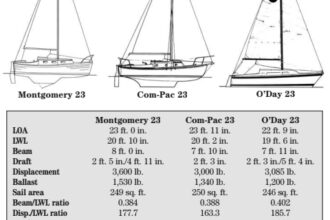
A comparison with three of its rivals
Issue 34: Jan/Feb 2004
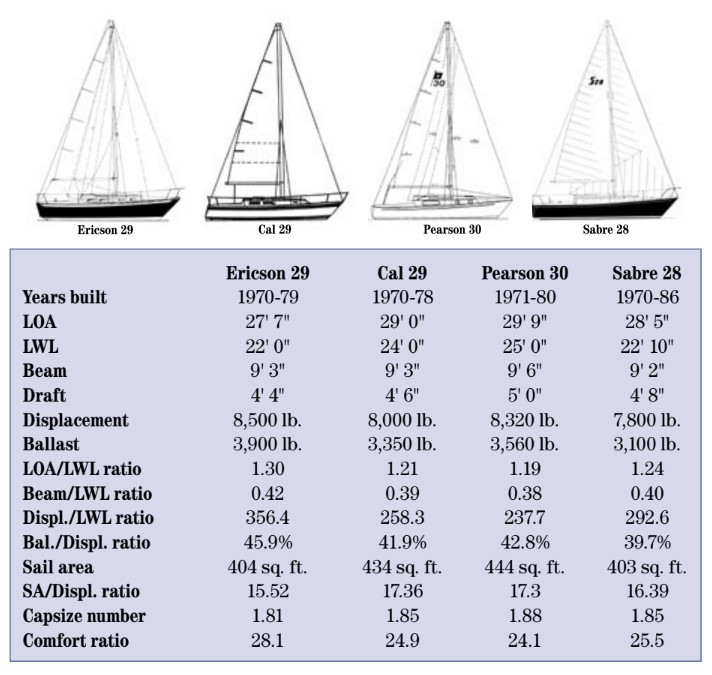
AVID NUMBER CRUNCHERS WILL SEE I’ve added a new item to the table below: the dates the boats were built. I feel this is significant for two reasons. First it’s hardly fair to compare an older boat to a contemporary design. Surely we designers have learned something about performance, comfort, and so on over the intervening years. Besides, fashions change and what was considered generous beam in the 1960s and ’70s is very much on the narrow side today. Also I think it reassuring to know that a particular design had a decent run of life. That indicates that the boat was well received by the buyers for a reasonable length of time and was not quickly dated — as many new boats are — or rejected because of inherent problems of design or construction.
I was pleased to find three boats to compare with the Ericson 29 that were all of the same era, had a good production run, and were alike in many respects, such as beam, displacement, and sail area. This makes it a very interesting group to consider and shows how changes in only one or two dimensions can markedly affect the resulting comparison figures and performance.
For example, the Ericson 29 is 180 pounds heavier than the Pearson 30 but is 3 feet shorter on the waterline. As a result, its Displ./LWL ratio is a very hefty 356.4 compared to the 30’s rather svelte 237.7. Spreading the displacement over a longer waterline definitely reduces wave making and, ultimately, increases performance.
From a performance viewpoint, I feel the Ericson has to be the slowest of this group by a small margin as it is carrying the heaviest displacement on the shortest waterline, has the shoalest draft, and spreads the least amount of sail. Its short waterline might give it an edge in light air, due to having a lower wetted surface, but all in all its figures do not add up to sparkling times around the buoys in average conditions. On the good side, the Ericson’s husky displacement and short waterline should add up to the best motion comfort in a seaway and also give it a slight edge in the capsize number should the owner undertake a long ocean passage.
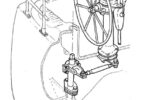
Both the Ericson and the Pearson have their rudders swept sharply aft, a style that was popular in that era. It looks “fast,” but the boats would probably steer better if the rudder stocks were more vertical. That would increase rudder efficiency and ease the problem of an extremely strong helm when backing out of a slip under power.
Given the numbers — and that is all we have to go on — I would say any of these little yachts would make a fine coastal cruiser for a couple or small family. And with a decent Performance Handicap Racing Fleet (PHRF) rating, you could have a lot of fun in club racing as well. There are no extremes of beam. All the yachts have a reassuring ballast ratio and capsize figure. So with intelligent preparation, they could well make a reasonable bluewater passage.
Stainless steel was inexpensive and popular in the 1970s, however, so be sure to have a very thorough marine survey, particularly of the likely failure spots such as the rig, chainplates, keel bolts, rudder stock, and other stainless-steel fittings subject to sea water, before you bid adieu to your friends. Better safe than sorry. Fair winds!
Thank you to Sailrite Enterprises, Inc., for providing free access to back issues of Good Old Boat through intellectual property rights. Sailrite.com