Making that seemingly impossible choice
Issue 32 : Sept/Oct 2003
So, you’re in the market for a trailerable sailboat. Great! There are more than 50 new trailerables currently in production, ranging in size from 14 to 32 feet. The number of models on the used-sailboat market is probably double that.
So how do you choose? You’ll need to define your requirements, expectations, and likes to narrow the field down to just a handful of candidates. One way is to ask yourself the following How, Where, When, and Why questions. Answer them — in as much detail as possible — before you open your checkbook. After having done this, you’ll have a clearer picture of what that “right” trailerable sailboat might be.
How will you use your boat?
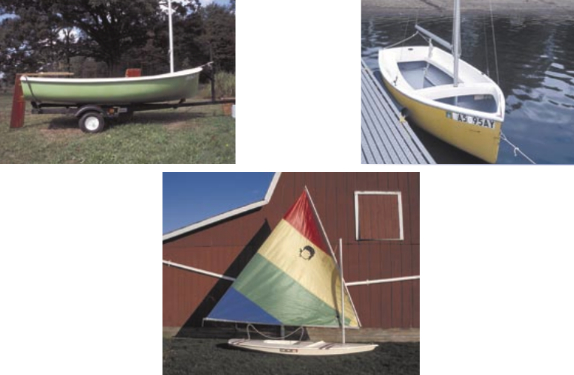
Are you new to sailing and want to learn to sail? Or are you a novice sailor who wants to build a solid foundation of sailing skills for racing? Maybe you’re interested in the close-to-the-water experience or the simplicity of off-the-beach sailing. If so, consider a dinghy, boardboat, or even a small multihull. These boats afford a close “cause and effect” relationship with wind and water, which is an ideal platform for learning how to sail or for building solid sailing skills for racing. These boats are usually simple to rig, launch and retrieve, and easiest on the pocket- book.
If you want a drier boat that will accommodate you and two or three others, plus some gear for a day’s sail, consider the bigger, more stable “daysailer.” These boats traditionally have large cockpits with little or no cabin space. If there is a small cabin or cuddy, it is useful for storing sails, extra gear, and that picnic lunch. Daysailers are perfect for taking the family out for a day’s cruise or honing your sailing skills. Daysailers include both centerboarders and keelboats. While launching and retrieval are relatively easy, rigging can range from the simple to the more complex, with cost directly related to size and complexity.
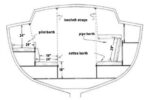
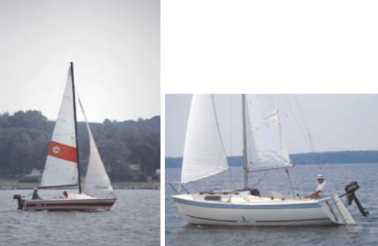
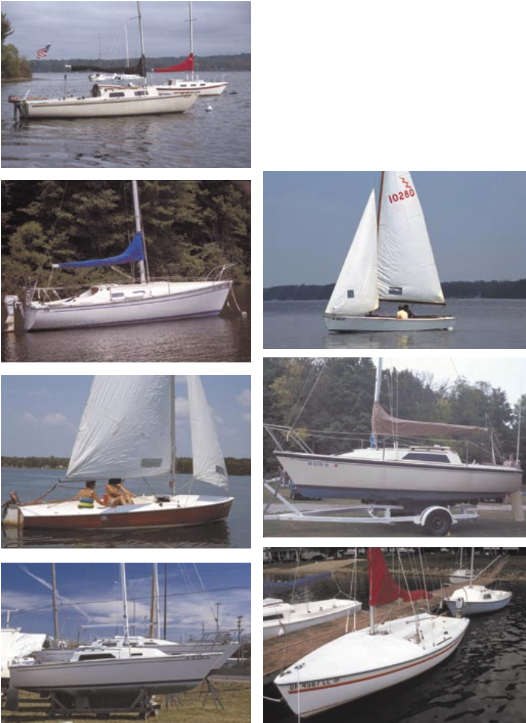
If your goal is to spend weekends or vacations aboard, you’ll need berths, a galley, a head, and somewhere to eat. To accomplish this adequately, you’ll want a “pocket cruiser,” starting around 22 feet in length. These boats may have fixed keels, swing keels, or centerboards.
This type of craft will enable you to daysail, affords liveaboard “creature comforts,” and also allows you to entertain at your dock. You’ll spend more time rigging and at the launch ramp with this type of boat. As is the case with daysailers, the amount of money you’ll spend is a direct reflection of the boat’s size and complexity.
Or perhaps you have your eye on that Wednesday-night race trophy, but your family has other ideas. They want to cruise the coast during next year’s summer vacation. Don’t worry, a performance cruiser may be just what you need. Several pocket cruisers have been designed for this dual role. They may carry a generous amount of sail, sport more aggressive keels, have a longer waterline, and exhibit less wetted surface. While they offer many of the amenities of the pocket cruiser, be prepared to make some sacrifices in comfort (headroom for one). Since this can be considered a variation of the pocket cruiser, your outlay of time and money spent will be similar.
With racing in your blood, speed will be your highest priority. Since speed comes in different sizes, check with your local sailing clubs to determine if there are any one-design fleets or what type of boats are being raced locally. Consider matching a boat type with that of the majority of local racers. You want a boat that fits into a class so you’ll have someone to race against. If you’re really serious, look at the one-designs that can lead to national competitions. As a dedicated racer, prepare to spend time and money tuning and tricking out your boat.
Where will you sail?
Should your sailing grounds be the Great Lakes or coastal areas where sailing conditions are challenging, boat construction quality and size will be of great importance. Boardboats and daysailers are only acceptable close to shore. Larger boats will be more comfortable farther from shore. However, the vast majority of even the largest trailerables are not bluewater boats. Regardless of boat size, pay close attention to the weather and water conditions. Make sure that your sails can be reefed. Also, prepare your craft with a greater level of safety equipment. Backups for VHF and GPS are a good idea. Having charts and knowing how to use them is essential.
Many sailors sail only on a specific inland lake. In relatively protected bodies of water such as these, almost any trailerable sailboat will work fine. Knowing the water depth, the shoreline configuration, and the facilities available will aid you in your selection process. Since you may be tacking more often, consider a smaller boat which will require less effort. Bear in mind that small lakes frequently exhibit changing winds, caused by trees and other shoreline obstructions. This makes these bodies of water great places on which to learn.
If you’re a purist and want to be a true “trailersailor,” make sure that the boat you select is easily launched, retrieved, and trailered. Consider a boat of around 22 feet as being the maximum for these conditions. Also, the type of keel will play a big role here.
Stay away from deep, fixed keels. Swing keels, shoal drafts (with or without centerboards), and centerboard boats go a long way in making launching and retrieval easier. They also offer the best versatility when it comes to thin-water sailing, beaching, and contending with underwater obstructions. How much time you’re willing to spend on rigging is something you’ll also want to address before you buy. If you’re not quite sure what to do, you may want to select a boat based on the body of water you will sail on most, while keeping in mind some of the other sailing destinations you’re interested in.
When will you sail?
One of the main reasons to own a trailerable sailboat is the ability to experience a variety of sailing destinations with relative ease. If you intend to sail on different lakes for days or a week at a time, rigging time may be less important than the size of the boat and the creature comforts it has to offer. On the other hand, if your plans are to daysail different lakes, the amount of time spent rigging should be kept to a minimum. Also, you may want to consider a small boat that will allow you access to shallower bodies of water.
Many trailerable sailboats are trailered only twice a year, once to the mooring or slip and once back for storage. If this is your plan, rigging may be the least of your concerns. You may want to move up to the maximum-sized trailerable.
Why do you want a trailerable sailboat?
The previous three questions deal specifically with the more tangible aspects of how you plan to use a trailerable sailboat. This last question addresses choices that are common but more subjective.
If not wanting to pay slip or mooring fees is your motivation, look for a boat that is quickly rigged, launched, and retrieved. If it isn’t, you won’t use the boat as often, and it will become an expensive liability rather than an enjoyable asset.
Perhaps you want to save on storage costs. True, a trailerable can be stored on its trailer. However, do you have the space to keep boat and trailer at your home? If not, will you need to rent space at a boatyard or self-storage facility?
Yes, you can trailer your boat almost everywhere. But do you have a tow vehicle capable of pulling a large heavy boat? If not, you’ll need to either get a larger tow vehicle or set your sights on a smaller trailerable sailboat.
If you think trailerables are less expensive than non-trailerables, think again. A sailboat is a sailboat, regardless of whether or not it’s trailerable, and new ones are more expensive than older ones.
So it’s all been decided?
You’ve answered the questions, there’s storage space next to the garage, your SUV can pull a Sherman tank, and you and your family have mapped out sailing destinations for the next two years. Sounds like a plan. But before you start touring the boatyards and visiting dealers with checkbook in hand, you might want to give a little thought to a few personal preferences such as: new boat vs. used; wood vs. fiberglass; sloop vs. cutter vs. catboat vs. yawl; masthead vs. fractional rig; motor vs. no motor; 2-cycle vs. 4-cycle vs. diesel; lots of brightwork vs. minimal brightwork; traditional vs. leading edge . . . ah, decisions, decisions. So many boats and so little time!
Thank you to Sailrite Enterprises, Inc., for providing free access to back issues of Good Old Boat through intellectual property rights. Sailrite.com