Refitting a Westsail 42 brings years of happy sailing and a sad goodbye
Issue 36 : May/Jun 2004
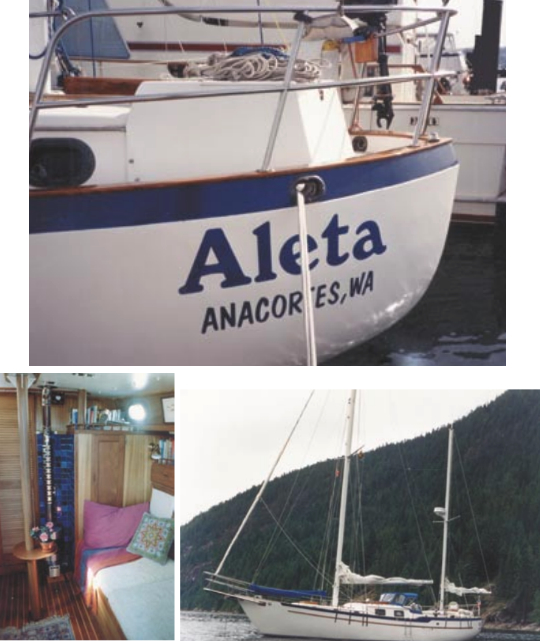
We were two ecstatic people. With our soaring spirits we didn’t mind the cold on that December day in 1987 when we putt-putted out of Squalicum Harbor in Bellingham, Washington. We had big dreams for the 42-foot Westsail we were taking home to Anacortes. It was breezy in the center cockpit without a dodger, and we huddled together at the wheel, toasted our voyage with a glass of wine, and laughed a lot.
We felt so lucky when we negotiated a trade with her owner. We sailed our other boat to Bellingham, pulled into the slip next to our new ketch, tossed life preservers and a picnic lunch into the cockpit, and cast off.
We had sailed a 36-foot sloop for eight years, and it had served us well. She was a fine boat, with lots of excellent features like a fin keel that made her easy to maneuver. She had a simple rig and an easy-care fiberglass deck without a single sliver of teak to sand and varnish. But after living aboard for a year and a half, we had some other features in mind.
My husband, Scott, wanted a beamier, heavier boat with more displacement; I wanted a cabin with ports that allowed us to see what was going on outside. After some careful research and a lot of dock walking, we found her. She had all the things we wanted and more. The ketch rig was a surprise; we hadn’t thought of wanting two masts and another sail. And the teak deck was a bonus, though it needed some work. The entire yacht needed refurbishing, but nothing major.
Queen Aleta
We renamed her Aleta. I remembered that name from my favorite comic strip of my childhood, Prince Valiant. Aleta was the Queen of the Misty Isles. The Queen Charlotte Islands of British Columbia, one of our favorite destinations, are also known as the Misty Isles.
She was built in 1975, and she could use some upgrading. Refitting and renewing occupied us the rest of the winter and for several winters to come. Scott added electronic bells and whistles and had a roomy refrigerator-freezer built in the galley to accommodate the salmon, halibut, bottom fish, prawns, and crabs we stocked on our annual summer cruises north. We also splurged on a new galley stove, but the bottom plate in the oven warped immediately. We replaced it three times with no better results.
We (mostly Scott) recaulked the deck and refinished all the teak on board. There was plenty to keep him busy: toerails, bulkheads, grabrails, and such on deck and all lockers and cupboards down below. To provide more storage, he also built drawers in the passageway to the aft stateroom where the navigation center used to be. As we were considering a cruise down the Pacific coast to Baja and beyond, we installed a saltwater purification system. The rope anchor rode was replaced with a heavier anchor and miles of heavy chain.
Aleta was everything we had hoped she would be: seakindly, comfortable, stable. She sailed like a champ downwind, but her performance close-hauled was less than stellar. She wasn’t built for racing, but then neither were we. Nevertheless, we had some glorious runs in the open waters, and the Perkins engine got us through narrows and rapids against winds, tides, and currents.
Lost interest
By the time we returned to our home port, we had lost interest in heading south with the flotilla to Mexico. Neither of us enjoys continual hot weather, and the stories we heard from enthusiastic friends about the laid-back lifestyle did not lure us. So much for the desalinator we’d installed. We sure wouldn’t need it in the Pacific Northwest. We moved back into our house for the winter, and Scott got busy and built a wood-and-fiberglass dodger for the cockpit, with a windshield and wipers. As dodgers go, it was decent looking, and it would keep us drier. We also added belaying pins for that salty look and rigged lazy-jacks so we could have the mainsail re-cut for full battens, hoping to improve her — and our — sailing ability.
We decided that since the new dodger needed painting, we’d redo the entire cabin and cockpit. Linear polyurethane was the paint of choice at that time. The brochures showed tanned young men in spotless shorts and white deck shoes painting their dinghy on an equally spotless dock. It looked so easy. Everybody said that was the way to go, so we went.
We removed hardware and sanded and sanded, preparing the surfaces by the book. The marina was being enlarged at the time and dust was flying everywhere, so we decided to take Aleta out to a more secluded anchorage in the San Juan Islands to do our painting. We applied the first coat, and it looked magnificent. The next morning it looked like, well, it was beige. The night air had laid a “blush” on it, and the coat was ruined. Sanding it off was not a simple chore. It’s like sanding granite. Two days of that, then back to our home slip to regroup. We decided to keep to our departure schedule; we would work on the paint job as we went along. Another mistake.
Flyspots
The next time we tackled our project, tiny no-see-ums landed on the wet paint and stayed. Polyurethane became a fixation, and we squandered many warm, sunny days at remote anchorages, sanding, priming, applying gloss coats, sanding, priming, and repainting. We finally produced a passable job, except for a few runs in the cockpit that we’d missed. Cleaning up the mess was a project in itself. The two-part polyurethane products have, no doubt, been much improved since then, and other folks seem to have had better luck.
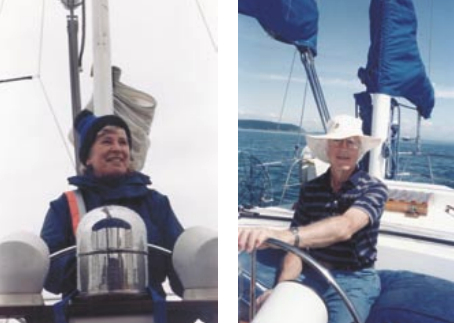
In 1990 we sold our house and moved aboard. It was great, living aboard the most comfortable boat we have ever owned. We had so many happy cruises with Aleta and were proud of her wherever we sailed.
One day we were cruising up Fitz Hugh Sound in the rain as a large cruise ship passed us. Scott eyed the few passengers out on deck through his binoculars, and they looked back at us. We were discussing the depressing concept of paying $5,000 or more per couple for a week’s cruise in that kind of weather. Then we realized that most of the passengers were probably sitting in a warm dry lounge, saying, “Look at those poor buggers in the little sailboat.” I remarked that they got off cheap. But there was no way we would trade places with them.
We sold Aleta in the autumn of 1994. It was time to return to land . . . or so we thought. We sometimes wish we hadn’t sold her, because we still miss her. In fact, within two months we purchased another, much smaller not-so-good old boat. But Aleta’s buyers became great friends, and the following summer found us heading north once again, with Aleta following right behind us, on one of the best cruises we ever had. It was easier for us to part with our boat, knowing she was in good hands.
Thank you to Sailrite Enterprises, Inc., for providing free access to back issues of Good Old Boat through intellectual property rights. Sailrite.com