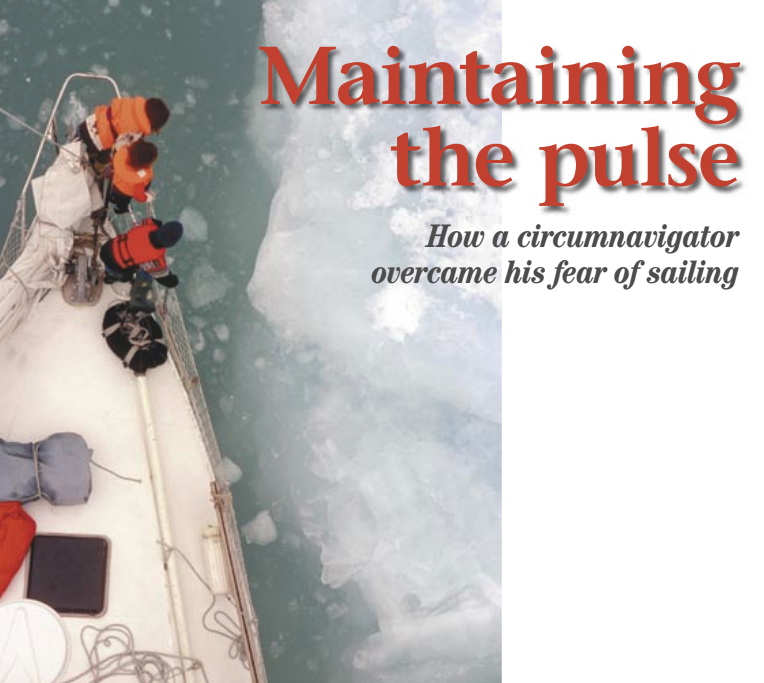
How a circumnavigator overcame his fear of sailing
Issue 37 : Jul/Aug 2004
Whether outfitting for an extended cruise or a sail on a protected bay, there is no piece of gear that can take the place of good seamanship. My childhood sailing heroes adhered to this principle too. When I was a young boy I became entranced by the stories of John Guzzwell and Robin Lee Graham. Back then, many of the electronic gadgets we consider standard now weren’t even dreamed of. Those guys had no choice but to rely on sound boat-handling skills, confidence, and intuition.
When I think back to the voyages of Trekka and Dove, I realize how technology has changed cruising. These days, it seems that “confidence and intuition” are tightly interwoven with an array of electronics. Don’t get me wrong, electronics definitely have their place in cruising, but if the electrical pulse is removed, the human pulse should not falter.
I began my sailing career in 1971, at the tender age of seven. Our Cal 25, Martini, was the epitome of simple: it sported cabin lights and an FM radio. I had endless amounts of fun on the boat while it was safely tied to the dock, but the moment we untied the lines the fun ended. I hated the actual sailing part. The mainsail would go up, sail slides chattering, boom swinging. Noise and commotion. Next came the genoa. As the sailcloth inched its way up the forestay, sheets flapping, I sat in the cockpit paralyzed with fear. I knew what was coming next; the genoa sheet would come in, and the boat would heel … farther, farther, farther. I’d cling to the windward gunwale and scream, “Daddy, Daddy! We’re gonna die!”
Fortunately, during my fourth summer of sailing, my feelings of terror began to fade. My parents enrolled me in a sailing program that taught boat handling and theory. I learned how to sail from the keel up, step by step, nice and logical. Instead of panicking, I began to critically analyze “cause and effect.” I realized that if I was going to lead a life of adventure, I had to get a grip.
What’s the difference?
That was the same summer I read about the feats of John Guzzwell and Robin Lee Graham. At first their experiences intimidated me. But then I thought, what made them different from me? If John could circumnavigate on a 20-footer and Robin on 24-footer, why couldn’t I do something similar? By summer’s end I knew that I would sail around the world. I didn’t know how or when, I just knew it would happen. I didn’t care what sacrifices or hazards I would have to endure to make ocean sailing a reality. Going was all that mattered. I think this is the same drive that each of my idols shared.
Now, with many years of offshore sailing behind me, I’ve realized that “adventure” is not just a word reserved for the things “other people” do. Whether it’s crossing the bay or crossing an ocean, adventure is any experience that tests personal limits. Novice sailors are the lucky ones because they can get that “adventure sensation” close to home! But as the novice becomes more proficient, he or she will experience less adventure close to home and will have to travel farther afield for the same thrill. And so the cycle begins.
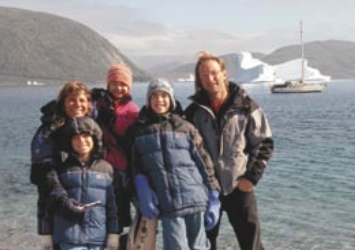
Although I have embraced GPS and a few other “advances of modern technology,” I still have a fondness for a boat with simple systems. For me, sailing is all about “making do.” If something breaks, I fix it. If I can’t fix it, I do without it. Instead of thinking about what I can buy for my boat, I try to think about what my boat can buy for me: freedom.
I feel lucky that I began sailing when the world wasn’t so controlled by electronic gadgets. I also have my sailing idols to thank — they were my real instructors. By showing me what was possible, they proved that confidence is all that’s really required for seeking adventure. Let’s face it, if it wasn’t for them, I’d still be clinging to the rail, screaming.
Thank you to Sailrite Enterprises, Inc., for providing free access to back issues of Good Old Boat through intellectual property rights. Sailrite.com