A designer’s view of Trina and her offspring
Issue 44: Sept/Oct 2005
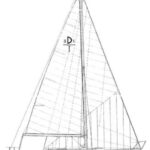
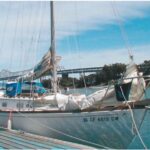
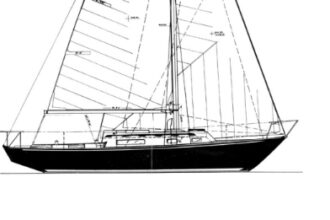
BILL SHAW’S SWEET LITTLE TRINA HAS LONG BEEN ONE OF MY favorite small yacht designs. From her yawl rig to her keel/centerboard hull with its medium displacement and triangular-shaped centerboard, Trina appears to be a miniature version of renowned cruiser/racer, Finisterre.
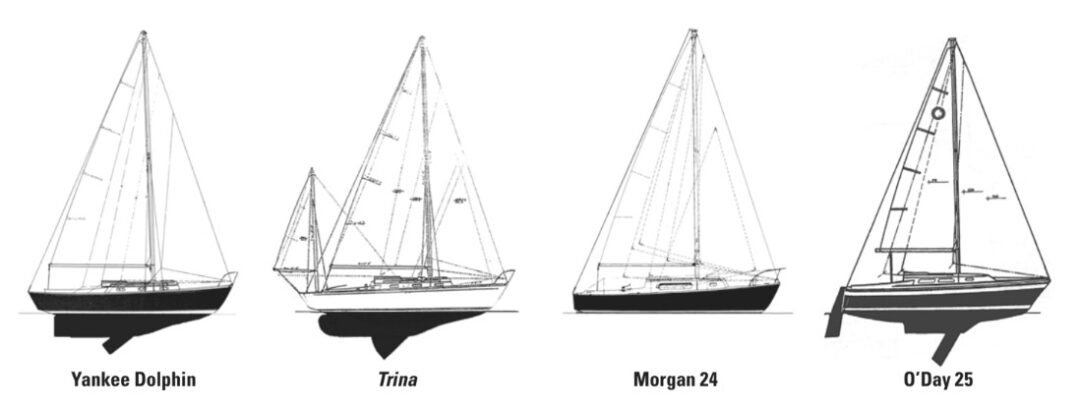
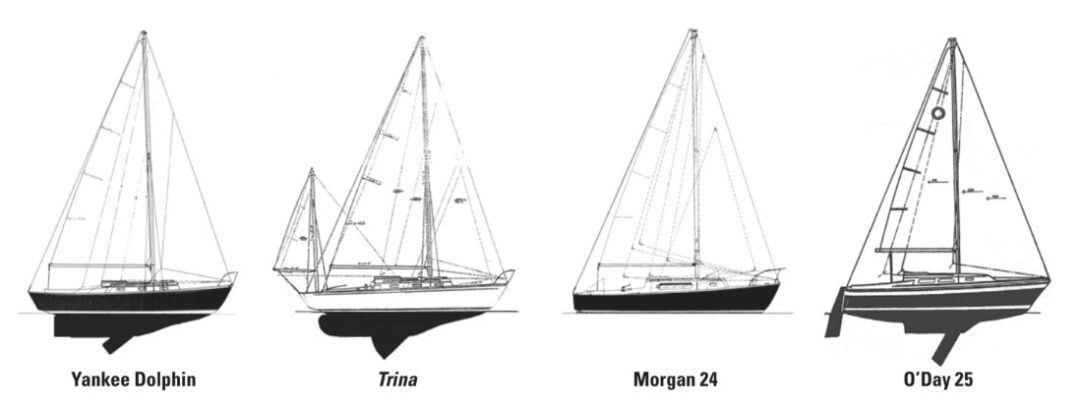
Bill Shaw worked for Sparkman & Stephens at the time, and Trina was given a careful review in 1959 when George O’Day commissioned S&S to design a new midget ocean racer. I’d always thought that the fiberglass Dolphin was a duplicate of the wooden Trina except for her sheerline and construction. Comparing the two, however, I discovered significant differences. Still, it’s obvious that the designers at S&S had Trina in mind when they began work on the Dolphin design two years later.
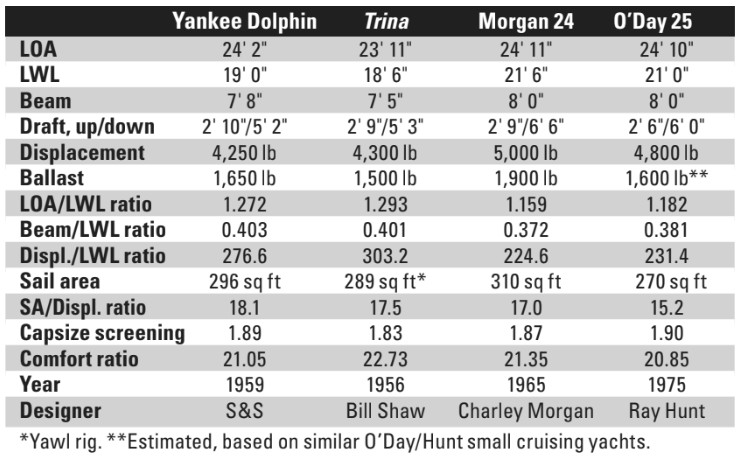
Looking at the numbers, we can see where S&S made slight increases in the beam, waterline length, and ballast to give the Dolphin a lower displacement-to-length ratio, along with a touch more stability. A bigger change is the Dolphin’s higher-aspect-ratio centerboard, which reduces wetted area and should improve efficiency. All these differences add up to slight performance increases while, to many eyes, the more conventional S&S sheer improves her aesthetic appeal as well.
Better rating
The Dolphin’s sloop rig adds a few square feet of sail area, of course, but Trina’s yawl rig would probably rate better under the Midget Ocean Racing Club rule of that era.
The newer Morgan 24 and O’Day 25 designs have lower displacement/LWL ratios due to their considerably longer waterlines, despite considerably heavier displacement. They also have lower beam/LWL ratios and, undoubtedly, a finer entrance. This should reduce resistance while their deeper, higher-aspect-ratio centerboards will improve weatherliness. The Morgan would give both the Dolphin and Trina stiff all-around competition. Due to her smaller sail area, the O’Day will be harder pressed to keep up with the fleet in light air but should shine when it breezes up.
The four little yachts are similar in their comfort ratios. In any case, such small craft can hardly be considered comfortable in heavy weather regardless of the numbers. Bear in mind that shoal-draft, keel/centerboard boats will recover slowly, if at all, in the event of a capsize beyond 90 degrees. These small yachts cannot be recommended for serious ocean passaging.
Still, given good condition and gear, any one of them would make a fine little singlehander or a cruiser for a cozy couple. A slight exception here for a sister to Trina: any wooden yacht that’ll sport more than 40 candles on her next birthday cake had best be checked by an expert before she’s taken very far from the pier.
Thank you to Sailrite Enterprises, Inc., for providing free access to back issues of Good Old Boat through intellectual property rights. Sailrite.com