Old rigging provides new safety
Issue 74 : Sept/Oct 2010
As the refit in celebration of Eurisko’s 30th year neared completion, we were three months and several thousand dollars beyond our original estimate. Luckily, only small projects remained; one of these was replacing the lifelines.
Our 1979 34-foot Creekmore had vinyl-coated lifelines that we feared were original. For the 10 years we’d owned her, we continually warned our three sons not to trust them. But then, why have them? The vinyl coating was cracked and the wire so badly rusted we could no longer hang clothes on them for fear of stains. They were obviously unsafe and needed to be replaced, but we were unsure what to use.
When we first considered replacing the lifelines, we were stateside, and high-strength, low-stretch line seemed the ideal material. When we eventually got around to doing the job, we were in the Caribbean, where supplies are more expensive (when available). We were not willing to spend the money or wait to have a package shipped down. Ever a recycler of boat parts, my husband, Dave, suggested we use our old standing rigging, since we had just replaced it as part of the refit.
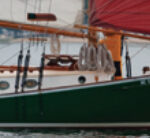
Eurisko is a cutter with an unusually tall rig for her size, so we were able to use her old backstay, inner forestay, and two intermediate shrouds for the four lifelines. We didn’t use the upper shrouds. Since they are the longest, we chose to save them for use in the event of a rigging failure.
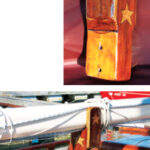
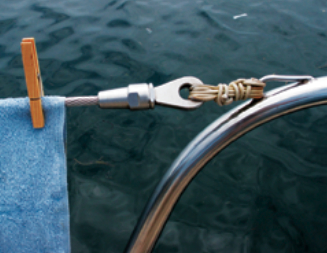
We have swageless terminals on our rigging and left one of these terminals on each length of wire. After measuring the old lifelines, we cut the new ones from the lengths of old rigging. We cut them 6 inches short to allow for the terminal on the other end, lashings at each end, and stretch in the wire as it straightened out under tension.
We chose to lash the replacement lifelines to the pulpits because it’s simpler, in keeping with how we live our lives, and they add less weight and cost less than turnbuckles. We suspend solar panels from our top lifelines, so a gate is impractical for us.
Only after a thorough inspection of the old rigging did we feel comfortable using it for lifelines. We disassembled several terminals and even unlayed strands of wire. We found no corrosion or visible cracks. Although we reused terminals from the old rigging, we did buy new cones for each replacement lifeline. For an investment of $8 per cone ($32 total) and several feet of line for the lashings, we now have attractive, heavy-duty lifelines that live up to their name.
Connie McBride, her husband, Dave, and their three boys have been living and exploring aboard their 34-foot Creekmore, Eurisko, for 9 years. After several years in the Eastern and Western Caribbean, they are currently in the Florida Keys topping up the cruising kitty.
Thank you to Sailrite Enterprises, Inc., for providing free access to back issues of Good Old Boat through intellectual property rights. Sailrite.com