Fly and douse a standard spinnaker like a gennaker
Issue 75 : Nov/Dec 2010
People are selling their little-used symmetrical spinnakers and replacing them with expensive cruising gennakers that can be handled without poles, hoisting and dousing them with a snuffer sock. They don’t realize that symmetricals can be used the same way. As a result, inexpensive used symmetrical spinnakers are available from online sources like Second Wind Sails and Atlantic Sail Traders. For example, a good secondhand spinnaker for my 1980 C&C 34 would cost about $350.
I inherited a barely used spinnaker with poles and rigging when I bought my boat, but managing the complex pole setup singlehanded was out of the question. I thought that meant the spinnaker would sit unused in my sail locker until Kame Richards, local sailing guru and founder of Pineapple Sails, referred me to an article on his firm’s website entitled “Look Ma, No Pole!” Photos showed a husband and wife sailing up and down the California coast in their Ericson 38 using an old tri-radial spinnaker and an ATN Tacker hooked over their roller-furled headsail.
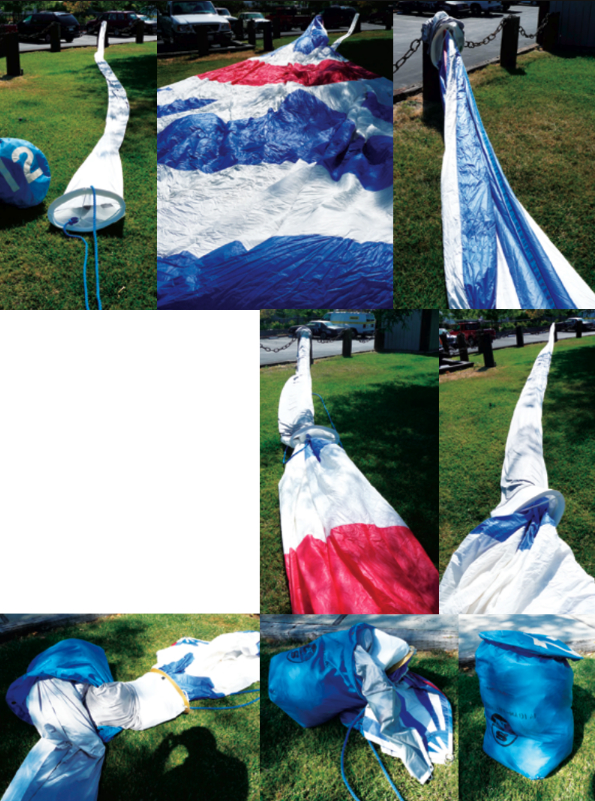
For a few hundred dollars, I bought an ATN Tacker and a Spinnaker Sleeve (ATN’s name for its sock). The only problem I faced was installing my spinnaker into the sock, but I didn’t spend money at a sail loft having it professionally set up. I did it myself one windless morning. Here’s how you can do the same:
- Find an area of lawn the length of your sock. Secure the head of the sock to something strong and stretch the sock out full length.
- Reach through the scoop at the foot of the sock and, as you walk toward the head, gather the sock over your arm. As you delve farther into the sock, pull out more of the control line that raises the scoop and collapses the sock like an accordion. When you finally reach the top fitting, place the collapsed sock on the ground with the fitting exposed. This is where you will shackle the head of the spinnaker.
- Spread out and flatten the spinnaker. Any puff of wind can hinder this process; it helps to tie the head of the spinnaker to something. Fold the spinnaker once clew to clew then a second time from mid-sail to clews.
- Attach the spinnaker head to its fitting at the top of the sock and make the halyard fitting at the top of the sock fast again.
- Pull the scoop down to capture the spinnaker. Make sure the spinnaker fits through the lines and attachments on the scoop, including the lines that raise and douse the sock. Continue to pull the sock steadily forward while these lines run freely back through their sleeves. When the entire spinnaker has been captured, the clew ends will protrude. Tie them together for now.
- Avoid twisting the spinnaker when it goes into the sock. If it does get twisted, however, the top fi tting on socks like the ATN will swivel freely to undo twists when the sock is raised completely.
- Stuff the sock with the spinnaker inside it into the spinnaker bag. Start about four feet from the scoop end so you can put the scoop, the head, and the clews in last.
- When the bulk of the sock is in the bag, tie the sail’s clews and the head of the sock together and lay them in the top of the bag where they’ll be readily accessible when it comes time to use the sail.
Dr. Lewis Keizer began sailing in 1980 and is a licensed captain and Vice Commander of Capitola USCG Auxiliary 6-10. He is preparing for a circumnavigation in his C&C 34, beginning this fall with the Baha Haha to Mexico, when he will be using his good old symmetrical spinnaker downwind when conditions are suitable.
Thank you to Sailrite Enterprises, Inc., for providing free access to back issues of Good Old Boat through intellectual property rights. Sailrite.com