Applying the principle without the cost
Issue 90: May/June 2013
It’s impossible to build with fiberglass for very long without having occasion to think that a vacuum-bagging setup would be convenient. The industry magazines at the fiberglass supply stores advertise them; they’re in pictures and even spoken of casually on composite-related websites. But unless you’re in serious production, the cost is hard to justify. While building Ganymede, a Cape George 31 cutter, I came up with a cheaper alternative.
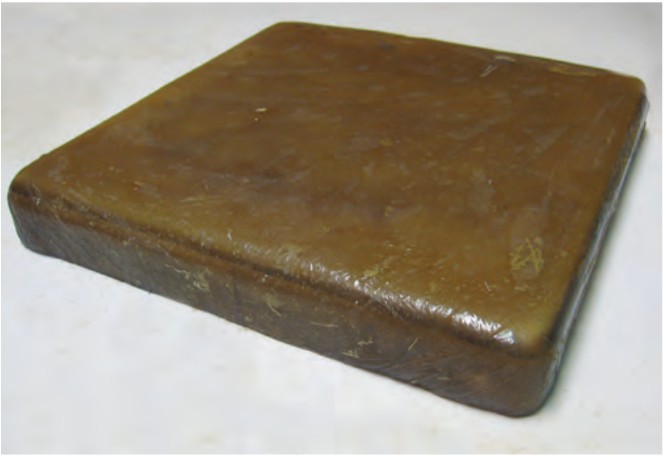
Call it the poor man’s vacuum bag. It involved, essentially, laying up whatever small item I was building — say a hatch cover — over its sacrificial plywood mold, putting the whole thing in a black plastic garbage bag, and sucking out all the air with a Shop-Vac. While not as fancy as the systems that pull resin through a dry layup, my substitute process is good enough to make 24-ounce roving take a sharp outside corner without its usual problem of lifting off and creating a bubble in the layup.
All this was easy enough to begin with but, after several unsuccessful tries at hermetically sealing the bag once the Shop-Vac was turned off, I found it better to eschew the vacuum and just smooth the bag down firmly over the piece by hand, thereby squeezing out excess resin, then gather the loose bag ends underneath and tape them down firmly.
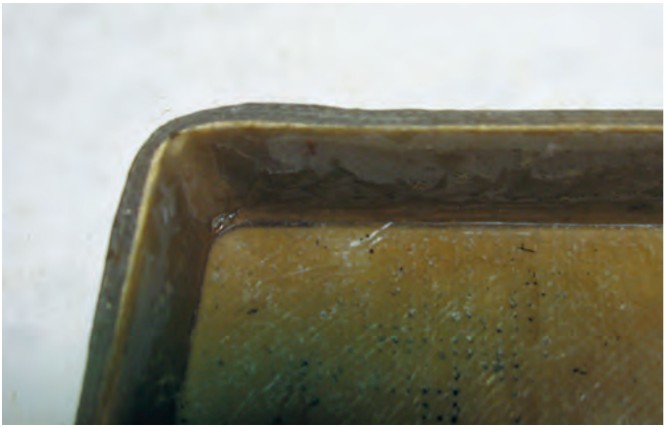
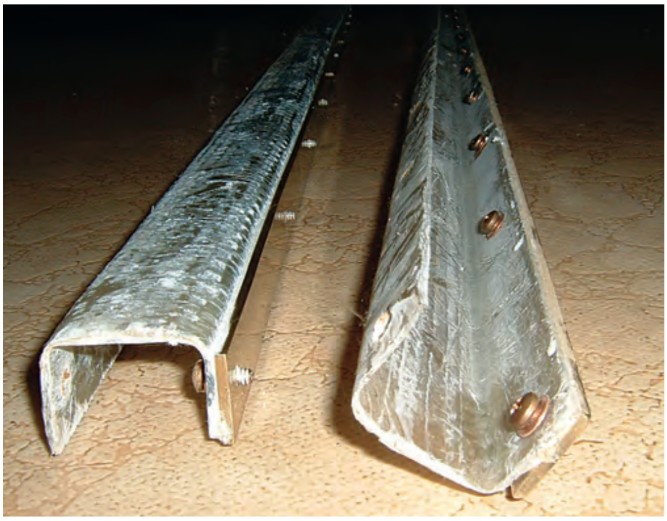
From there, variations followed as needs dictated. When I wanted some U-channel for companionway hatch slides, I made a mandrel by sheathing a piece of 2 x 4 in Saran Wrap (my favorite mold-release). A fiberglass layup went over that, wrapped tightly again in Saran Wrap and tape. Once it all cured, I had a fiberglass box-section with a 2 x 4 inside. After splitting it lengthwise in two with a table saw, I easily lifted the remaining wood out of the two fiberglass U-channels thus created. Not as nice, perhaps, as the pultruded fiberglass or G-10 shapes you can buy, but it’s a lot cheaper and lets you make exactly the dimensions you need. The resulting surface usually needs to be ground and faired, since the plastic wrapping leaves lots of little wrinkles, but it’s a small price to pay for a tight, bubble-free layup. Another successful project was a gaff saddle, made from carbon fiber and epoxy with a paint can as a mandrel.
The uses for this are limited only by the imagination. If you can find or fabricate a male mold for any shape required, a good tight plastic wrapping can ensure perfect corners and a consistent bubble-free wet-out, all without using more resin than is necessary.
Ben Zartman and his wife, Danielle, set sail in their early 20s in an Irwin 27. They now live with their three young daughters aboard Ganymede, the Cape George 31 cutter they built from a bare hull. Their book, We Who Pass Like Foam, is available on Amazon for Kindle.
Thank you to Sailrite Enterprises, Inc., for providing free access to back issues of Good Old Boat through intellectual property rights. Sailrite.com