Limiting wear from beach landings
Issue 94 : Jan/Feb 2014
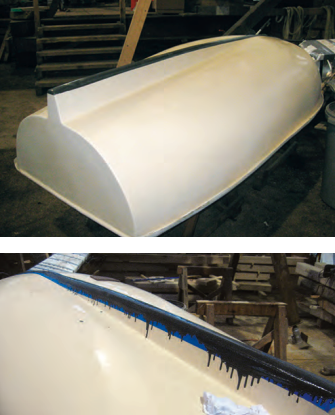
The cruising life is a hard one for dinghies, especially in tidal areas where they often have to be dragged 100 feet and more up pebble beaches. After a few years and hundreds of surf landings on beaches with varying grades of abrasiveness, our faithful fiberglass rowing dinghy was beginning to show some wear on the skeg. Though it’s far from wearing through, since we carry the dinghy whenever possible rather than drag her, it seemed time, while giving her a fresh coat of paint, to also add a little protection to the skeg.
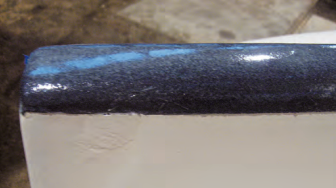
On the advice of a New Zealand boatbuilder, I ordered some 60-grit carborundum (silicon carbide) powder from a rock-hobby supply, made a thick mixture of it with G/flex epoxy, and painted it along the entire length of the skeg. I should have made it thicker than I did, since it ran off slightly onto the masking tape, but it made a nice thick layer with a smooth finish. The carborundum powder, which is harder than almost anything but diamond (it’s used for making sandpaper), should take a good long time to wear off and give the dinghy’s bottom a greatly extended life, regardless of how many prickly beaches it gets pulled up onto in the course of our future travels.
Ben Zartman lives with his wife, Danielle, and their three young daughters aboard Ganymede, the 30-foot Cape George Cutter he built from a bare hull. The carborundum skeg paint performed admirably, Ben says, as they explored the Canadian Maritimes last summer. They are wintering again in Newport, Rhode Island. Follow them on their blog at www.zartmancruising.com.
Thank you to Sailrite Enterprises, Inc., for providing free access to back issues of Good Old Boat through intellectual property rights. Sailrite.com