Put an anchor light on automatic
Issue 109 : Jul/Aug 2016
After receiving a citation for not having an illuminated anchor light while moored in Miami’s Biscayne Bay, I did some research on how to build an anchor light that would turn on automatically at night. I didn’t find much information on the subject. You can purchase an anchor light but most models neglect one important feature: they do not turn on by themselves. In some situations, this defeats the purpose of having an anchor/mooring light in the first place.
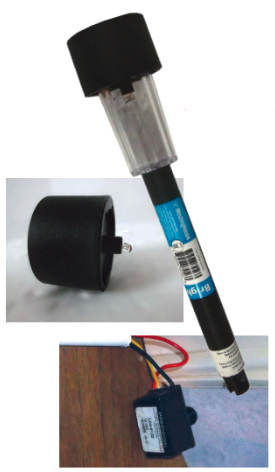
After I received my citation from the Miami Marine Patrol, I purchased an LED anchor light and decided to make my own photo switch to turn it on when darkness fell. I found the most important component for the switch in the component section at Radio Shack. It’s called a cadmium-sulfide cell, and they usually come four or five in a little bag for around $4. The other materials I used were a landscaping light (the smaller the better) like those sold in Home Depot or Walmart, black electrical tape, heat-shrink tubing, stranded wire (18- to 24-gauge tinned wire works best), and a drinking straw. To construct a similar switch, start by removing the plastic stem from the landscaping light; all you need is the top with the solar panel and the LED light. Cut a 2-inch piece from the drinking straw.
Solder a length of stranded wire to each of the wire leads on the cadmium-sulfide cell, then cover the bare wires with liquid electrical tape or heat-shrink tubing. Shove the cell into the drinking straw so the head of the cell is about 3⁄8 inch from the end of the straw, then slide the straw over the LED light. With the electrical tape, adhere the straw to the landscaping light so it cannot slide off and wrap the straw to shield the cadmium-sulfide cell from daylight. You now have a light-sensitive switch to connect to your anchor light’s electrical circuit.
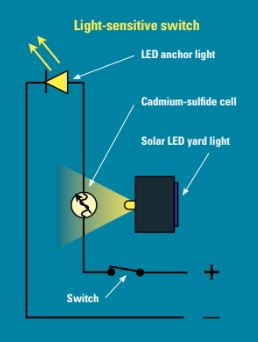
The light-sensitive cadmium-sulfide cell will conduct current only when exposed to light. When it gets dark, the landscaping light will turn on and illuminate the cadmium-sulfide cell, which will then conduct electricity to your LED anchor light.
The switch can be affixed to any portlight or window on your boat, or it will work just as well outside the cabin. The total cost for this project is about $10.
Solution for incandescents
A cadmium-sulfide cell has a fairly high electrical resistance (about 100 ohms) even when it does conduct electricity, and will not work in a series circuit with an incandescent light bulb. The solution, in that case, is to purchase a photo switch. One low-cost solution I found is the Lumatrol model LCA-612D, a 12VDC, 10-amp switch from Precision Multiple Controls, Inc. It costs less than $20, is easy to wire, and is sensitive enough to work while installed near a window inside the vessel.
Adano Brown, an avid sailor, lives in St. Petersburg, Florida.
Thank you to Sailrite Enterprises, Inc., for providing free access to back issues of Good Old Boat through intellectual property rights. Sailrite.com