A racing wolf in cruising sheep’s clothing
Issue 59 : Mar/Apr 2008
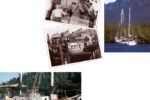
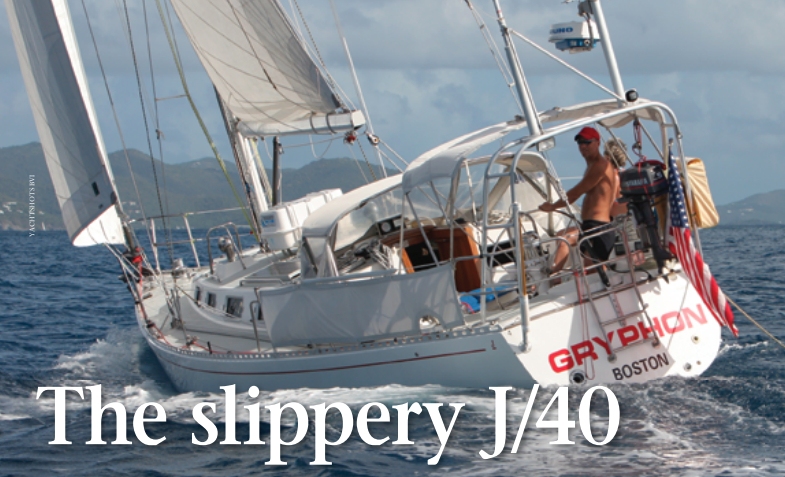
Serious business would be a good name for this boat, I thought. Gryphon, her actual name, is proclaimed on her transom in bold, blood-red letters. OK, a mythical giant raptor also seems a suitable namesake. Lean, sleek, gray and white, with shiny stainless-steel accents — this is not a boat for the faint-of-heart.
Her owners, Jeff and Raine Williams, are easy-going, unassuming folks who love to sail and sail fast. When we met, Raine (pronounced like rain) had just started managing our marina and Jeff was working on the prototype of an independent unmanned submersible for the nearby university. They were living aboard Gryphon, while trying to adjust to life ashore again after a six-year circumnavigation. The adjustment was temporary; at about the same time we became good friends, they were able to fix their timetable for departure for the British Virgin Islands, which they are now using as a base for a while before taking off again.
While cruising, Raine and Jeff asked a lot of Gryphon, and she delivered more than once in rather boisterous conditions.
Gryphon is a 1986 J/40 (hull #6), designed by Rod Johnstone and built by Tillotson-Pearson in Rhode Island. A breakthrough for Rod and J/Boats, the 40 cracked the cruising market for a company that was already enjoying every success on the racecourse. TPI built 86 of these boats between 1985 and the early 1990s. Though it was intended for performance-minded cruisers, in its first year of production the 40 won its class in the Chicago-Mackinac Race and Sailing World named it U.S. Boat of the Year in 1986.
Ignored them all
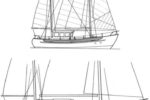
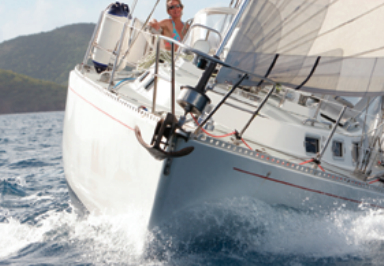
Full or modifi ed full keels, skeg-hung rudders, heavy displacement, and split rigs all figured in the prevailing conception of the serious cruising boat when Rod Johnstone drew the J/40, ignoring them all. Gryphon and her sisters sport fin keels, spade rudders, tall sloop rigs with marked mast bend, hydraulic backstay adjusters, hydraulic vangs, and, for a cruising boat of the time, light displacement. (As an interesting side note: Robert Perry, noted designer of many traditional cruisers, said in a review in Sailing magazine, “The J/40 was my favorite boat of 1985.” Rod also ignored principal IOR characteristics that, he claimed, made a boat difficult to sail shorthanded.
The bow, stern, draft, and sailplan all depart from IOR conventions. Rod wanted the boat to sail well with mainsail alone, so he gave it a big main with the mainsheet and mid-cockpit traveler just in front of the wheel. Like Ted Hood at the same time, Rod objected to large genoas for larger cruising boats and drew the boat to sail fast with a jib smaller than most fast boats were flying at the time. Jeff and Raine report that he succeeded. Gryphon points decently and keeps up with other boats under main alone. With a main and working jib (Dacron, not laminate) as her standard sail plan (she only flies a main and genny on long downwind legs or when beating in less than 10 knots), Jeff and Raine report out-sailing larger boats. Under main and jib — no chutes — she ran the Indian Ocean from Chagos to Madagascar a full day faster than boats that left at the same time. Jeff reports that he and Raine have enjoyed blowing away big boats, including some cats, in the Virgins.
Moderate displacement
In spite of all that, it’s just as easy to distinguish the J/40 from today’s performance-oriented boats as it was to set her apart from the IOR boats and traditional heavy cruisers of her own day. You won’t see the wide, squarish stern, dagger with bulb keel, or extreme beam of many of today’s designs. And, while a light cruiser in her day, her displacement would be considered moderate now. In fact, by today’s standards, she is a moderately conservative design. In the opinion of a great many ocean sailors, of course, that’s a good thing. It certainly contributes to comfort at sea. On her world cruise, Gryphon sailed in company for a while with a Slocum 42, a heavy double-ender.
“Raine and I would get grumpy around 22 knots of wind speed and the Slocum folks would get grumpy around 24 knots,” Jeff says. That’s not a big difference in comfort. And though she was built to go fast, she was also built tough.
Just after dusk on the Pacific coast of Panama, Gryphon collided with a large log floating just under the surface. She was making 6 knots at the time. Both Raine and Jeff knew the log hit the rudder hard. When they got a chance to make repairs, Jeff said she needed only a bit of glass repair to the 1 square inch where the impact occurred and to have the packing gland tightened up.
The rudder post on the J/40 is a stainless-steel tube about 4 inches in diameter. It turns on a lower bearing mounted into a fiberglass receiver in the exterior hull. Jeff reports that the Harken rudder bearings last most owners 10 to 15 years. They are still using the upper bearing, even after sailing around the world, but the lower one, which sits in water most of the time, has been replaced.
Easily visible
The chainplates are 3⁄8-inch stainless steel, 4 inches wide. They’re conspicuously mounted to the main bulkhead, which is a very good thing in Jeff’s opinion: “Once the sealant ages and leaking begins, it’s obvious and gets immediate attention. Our chainplates exhibited crevice corrosion at the glorious age of 20 years. We were able to see it and do something about it because of the convenient installation.” Because they are exposed, Jeff polished the chainplates to a mirror finish.
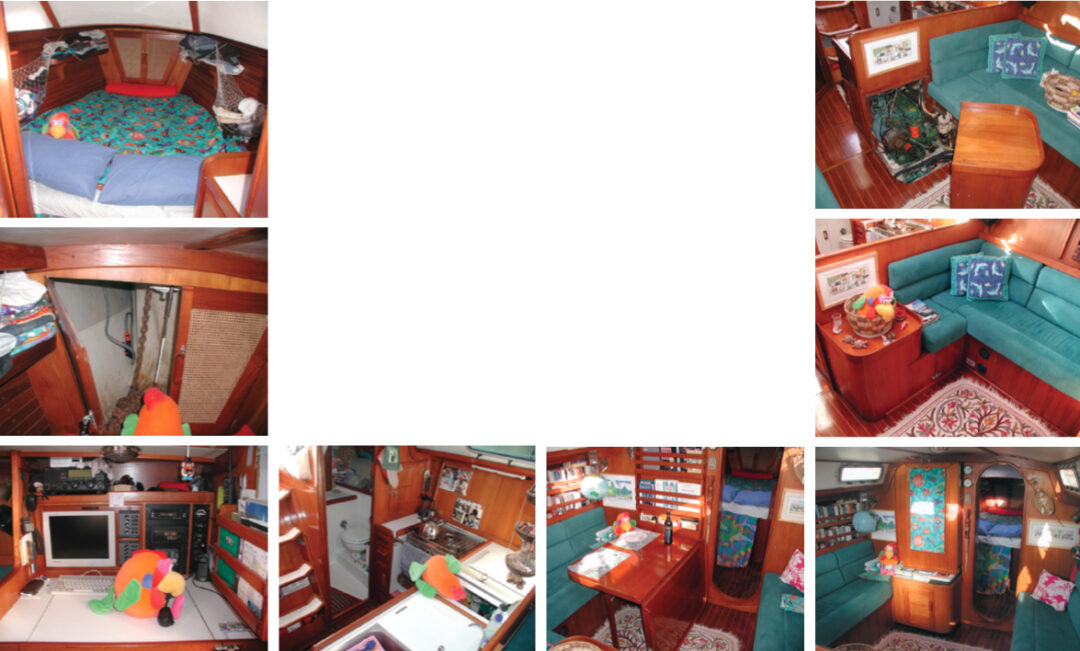
Raine and Jeff live in a sensibly laid out, well-appointed interior. Curved companionway steps lead to the U-shaped galley to port or to the starboard aft cabin with a queen-sized quarter berth (the inboard part of which was converted to house battery stowage). Forward of that is the modified nav station with swing-out seat and electronics console. The main saloon is luxurious for four and perfectly comfortable for six. There’s an L-shaped settee to port and a straight one to starboard. A large teak folding table fills the space between these settees for dining.
A fiddled side table next to the port settee hides the engine, and there’s full maintenance access underneath. The forward cabin includes a V-berth with stowage under, lockers, and another head with shower to port. Jeff says the second head is overkill for two but was nice when cruising with another couple. The molded-in head compartments are white with varnished teak trim. The teak trim throughout the boat is above average.
Curved hand-laid-up laminated doorways and table corners are finished with laminates up to 17 layers thick. Raine likes to varnish (so long as it’s interior work), so Gryphon’s interior, including her teak-and-holly sole, gleams. Art pieces from their world travels hang from the bulkheads. Some J/40s, by the way, were offered with a “Herreshoff interior”: white bulkheads, ceilings, cabinetry, and overheads with teak trim.
Teaching diving
Raine and Jeff left corporate jobs and cold weather in the early 1990s to teach scuba diving in the BVI. They didn’t know how to sail. The manager of crewed yachts for The Moorings approached them about working as charter crew. They said they didn’t know how to sail. The manager told them they could learn on the job. Indeed they did. Both now hold master’s licenses. They bought a Whitby 42 to live aboard — a boat that couldn’t be more different from Gryphon. While they enjoyed the commodious living aboard the Whitby, after gaining some experience cruising the eastern Caribbean between charter crew assignments, they realized she wasn’t the boat for them. They fell in love with a J/44 but couldn’t afford one and started looking for a 40 instead. They found Gryphon in their price range in 1997. She was set up as a weekend cruiser, so fitting her out for their hoped-for circumnavigation would be a serious project.
While working at “real jobs” in Massachusetts, these two sailors got busy on Gryphon. With a double income, they could afford to hire out much of the work. They did an epoxy bottom job and replaced the stanchions, bases, lifelines, and standing rigging. They kept the running rigging for part of their circumnavigation, switching it out in New Zealand. They added a swing-out seat for the stand-up chart table and built a fold-down false front panel that hides the electrical panels and provides mounting space for a flat-screen computer monitor and other displays. On a light-displacement boat intended primarily for short-term cruising, stowage was an issue, so they added cabinets in the main saloon and, a year later in New Zealand, in the aft cabin.
A belowdecks autopilot replaced an undersized cockpit model. For navigation and communication, Jeff and Raine added integrated instruments and an SSB radio. For comfort, they added refrigeration, a watermaker, and vacuum insulation for the icebox. To meet the new power needs, they upgraded to new AGM batteries, a high-output alternator, a 1-kilowatt inverter, solar panels mounted on deck, a wind generator, and a separate engine-starting battery. They mounted a radome and antenna on a tubular stainless-steel stern arch. With passage-making in mind, they divided the anchor locker with a glass-reinforced panel for improved collision protection, added an inner forestay for a storm sail, a life raft, new hatches and portlights, and storm covers for the portlights. After making it down the U.S. East Coast and into the Caribbean, Gryphon’s Volvo 2003T began giving them trouble. Before heading for the Panama Canal, they rebuilt it with some friendly expert help from a fellow cruiser.
Some experiences
I asked Raine and Jeff to relate some highlights of their experience with Gryphon (much of which has been documented in the pages of Ocean Navigator and Cruising World, on their website at http://www.j40.org, and on the official J/Boats website http://www.jboats.com. They said:
“Sailing under the Newport (Rhode Island) Bridge and realizing we wouldn’t be coming back . . . reaching Bermuda for the first time on our own . . . having the Mirafl ores lock gates of the Panama Canal open and Pacifi c water under Gryphon’s keel for the fi rst time (the dawning realization that the Caribbean was 30,000 miles ahead, not 50 miles behind) . . . raising the Marquesas after 3,000-plus miles . . . the America’s Cup 2000 in Auckland . . . island-hopping in Tonga, Vanuatu, and the Solomon Islands . . . 10 days on a deserted island with friends . . . crossing the (expletive deleted) Indian Ocean, with Jimmy Buffett blasting from the stereo (‘I have been a-round the world . . . ’ well, almost) . . . Madagascar . . . 3 weeks of downwind bliss across the Atlantic . . . seeing Martinique . . . anchoring in Antigua once again.
What to watch out for
Jeff says he can’t fault the design or construction of the boat at all. He does caution that when it comes to original fittings and equipment, prospective buyers should not assume that they are bluewater grade because, in many cases, they aren’t. This includes ports and hatches. The boat also has “minimal interior volume” for a cruising boat her size — a tradeoff for her performance — and probably isn’t the ideal vessel for a packrat. So, like most production boats, some modification and customization will be necessary to convert a stock boat into a long-distance cruiser.
The hull as well as the deck is balsa-cored to save weight. TPI used end-grain balsa. Jeff reports that he’s never discovered any voids and the only rot he’s found has been around loose fittings and extended no farther than an inch from the hole. With any balsa-cored hull, buyers and surveyors should look for the same set of problems they’re accustomed to with older balsa-cored decks.
Is she for you?
J/40s aren’t cheap, but with nice ones going on the market for less than $200,000, even a nicely-equipped and maintained one costs half the price of a comparable new boat. The boats currently offered at Yachtworld.com range from $159,000 for a 1986 to $189,900 for a 1991. There seem to be a handful on the market at any given time, most in the $180,000s. Refits, of course, can add a tremendous amount to the purchase price of a larger cruiser; Jeff and Raine spent about $80,000 on their refit 10 years ago.
“Boats are akin to cars,” Jeff says. “You can commute in a Camry, a minivan, an SUV, Mercedes, or Porsche. If you chose the Porsche, you’ll love the J/40.”
Phillip Reid , and his wife, Andie, sail their 1977 Pearson 28, Miss Bohicket, out of Wilmington, North Carolina.
Thank you to Sailrite Enterprises, Inc., for providing free access to back issues of Good Old Boat through intellectual property rights. Sailrite.com