In the same tradition as its predecessor but roomier on deck and below
Issue 122: Sept/Oct 2018
In 1963, Andrew Vavolotis left Boston Whaler and founded Cape Dory Yachts. Until its demise 28 years later, the East Taunton, Massachusetts, company built close to 3,000 sailboats, ranging in length from 10 to 45 feet, until it ceased operations in 1991.
Noted naval architect Carl Alberg, who was responsible for about one-third of the company’s designs, espoused the full keel with attached rudder, relatively narrow beam, an attractive sheerline, and moderate overhangs. Consequently, while other builders turned their attention to the racer/cruiser with its fin keel and high-aspect-ratio rig, Cape Dory stayed the course doing what it did best, and created a complete line of conservative cruising sailboats. This tack served the company well. Because Cape Dory produced boats of consistently high quality and with excellent resale value, customer loyalty was tremendous.
After Cape Dory ceased operations, the name was sold and most of the company’s designs and molds were scattered among a number of boatbuilders. Vavolotis took what remained of the company, along with its marine hardware division, Spartan Marine, to Maine, where he started Robinhood Marine and began manufacturing the Robinhood 36 and 40 using the Cape Dory 36 and 40 molds. Several sets of molds, including those of the Cape Dory 30 Mk II, were sold to Nauset Marine, at that time a custom boatbuilder on Cape Cod.
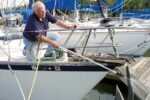
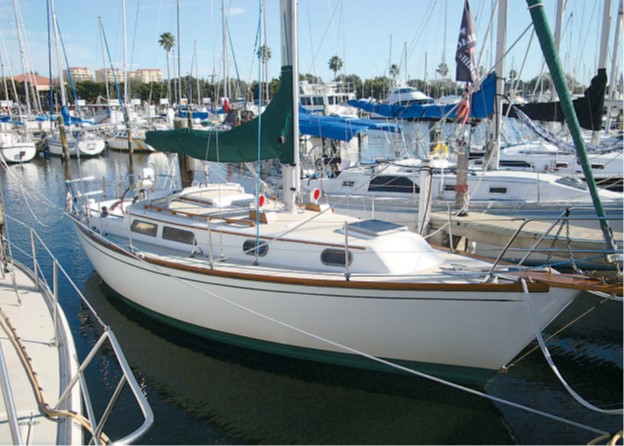
Our review boat, Tern, is a 1987 Cape Dory 30 Mk II. Her owners, Doug Wilkin and Margaret Zak, proudly point out the numeral 1 on the builder’s plate: this is the boat that was premiered at the US Sailboat Show in Annapolis, Maryland, in October 1986. Records indicate that it was fitted with a significant number of factory options, adding $12,244 to the base price of $62,995.
Design
While Carl Alberg had established Cape Dory’s original design parameters, his strict adherence to them and his resistance to the changing demands of the sailing public became awkward for the company. Changes needed to be made, and in 1980, Vavolotis formed a division of Cape Dory called Intrepid Yachts to introduce a line of sailboats that looked and sailed more like their contemporaries from other builders. For them, he utilized the design talents of Chuck Paine and the firm of McCurdy and Rhodes. Soon afterward, he also made naval architect Clive M. Dent chief designer at Cape Dory Yachts.
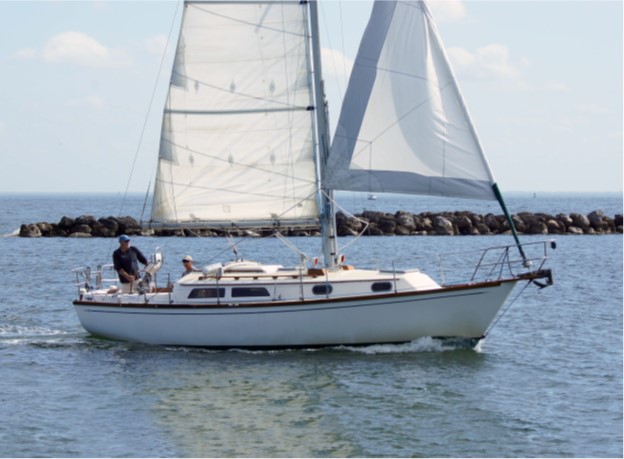
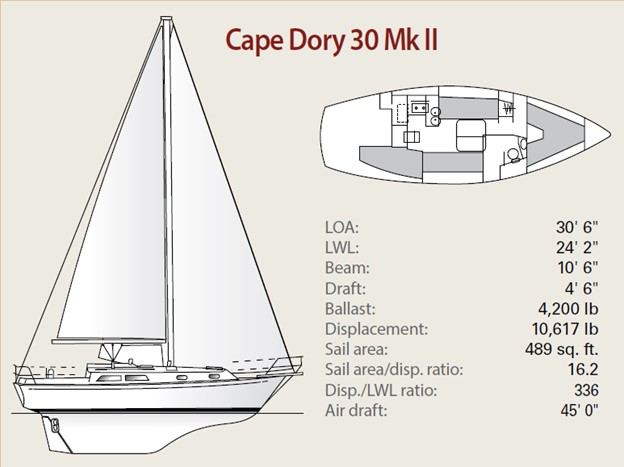
In 1986, after 10 years of production and almost 400 hulls, Cape Dory Yachts discontinued the Cape Dory 30 and replaced it with the Cape Dory 30 Mk II, designed by Clive Dent. While the Mk II has the same attractive full-keel profile, seaworthiness, and high quality of construction, its interior and cockpit are more contemporary. Best of all, Dent’s modifications to the hull, which included lengthening the waterline and increasing the beam, gave the Mk II 30 percent more living space than its predecessor.
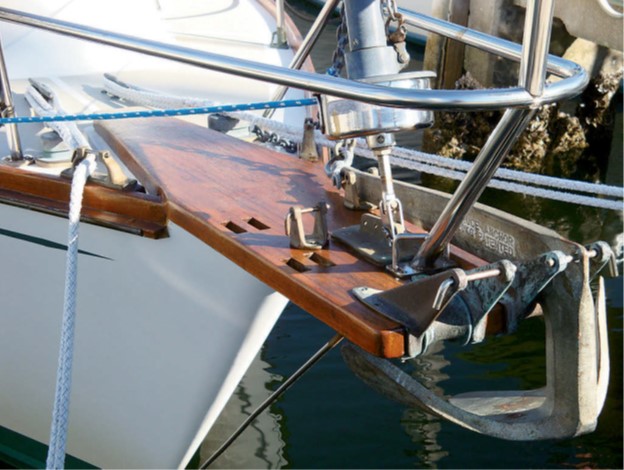
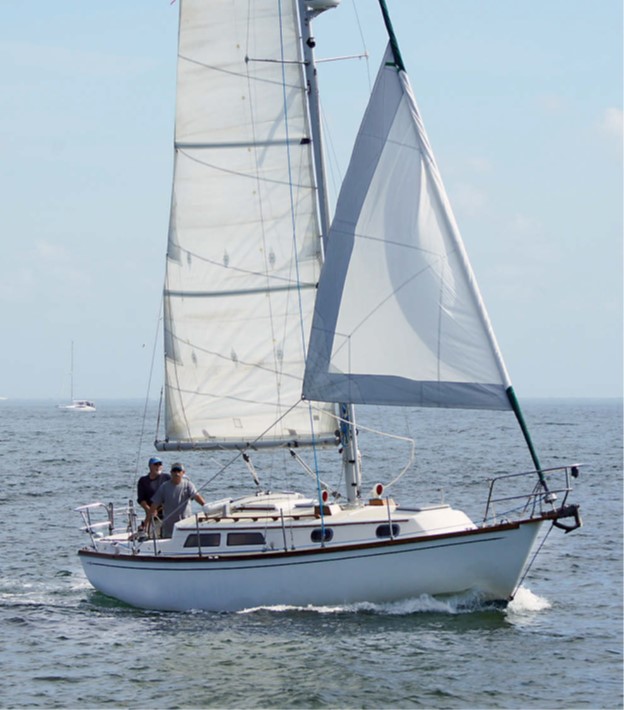
While the new hull form has more interior volume and greater form stability, the Mk II’s looks are what initially set it apart from other 30-footers of the period. A pleasing sheerline sweeps from a modest forward overhang to a near-plumb stern. The coachroof is long and low and, because the broader beam carries aft, the cockpit is large. The generous use of teak, including a sturdy bowsprit, and bronze hardware from Spartan Marine contribute to the boat’s traditional appearance. Production of the Cape Dory 30 Mk II ceased in 1990 after 31 hulls.
Construction
The hull of the Cape Dory 30 Mk II is a solid hand-laid laminate built up with alternating layers of fiberglass mat and woven rovings impregnated with polyester resin. All structural members are encapsulated in fiberglass and, along with the bulkheads, permanently bonded to the hull to stiffen an already stout structure.
The deck, cabin trunk, and cockpit are molded in one piece with an encapsulated end-grain balsa core. This sandwich construction adds little weight while stiffening the structure and providing some degree of insulation. Unidirectional fabrics are incorporated in high-stress areas and a tan-colored non-skid pattern is molded into the deck gelcoat.
The deck joins the hull on an inward-facing flange, where it’s chemically bonded with thickened polyester resin and through-bolted. Stanchion bases, bow and stern pulpits, and other through-bolted deck hardware contribute some secondary mechanical fastening. The joint is capped with a 2-inch-high solid-teak toerail.
The ballast is a 4,200-pound lead casting carried low in the keel cavity. Voids between the casting and the keel are filled with thickened polyester, and the casting is glassed over. The rudder is a fiberglass laminate with a 1 1/2-inch stainless steel stock and is mounted on the aft end of the keel by means of cast-bronze gudgeons and a shoe.
Spartan Marine Products, a wholly owned division of Cape Dory Yachts, fabricated all the deck hardware, including the portlights. In keeping with tradition, all the deck hardware is bronze and is through-bolted using stainless steel bolts and aluminum backing plates.
The spars and rigging are grounded for lightning protection and all underwater hardware is bonded.
On deck
A 5 1/2-foot laminated-teak bowsprit with two bronze anchor rollers dominates the bow. Only 2 feet of the sprit projects forward of the stem. The aft 3 1/2 feet is on the foredeck, flanked by a pair of bronze deck pipes on the deck and chocks port and starboard on the toerails. Two 8-inch mooring cleats are fitted side by side aft of the sprit.
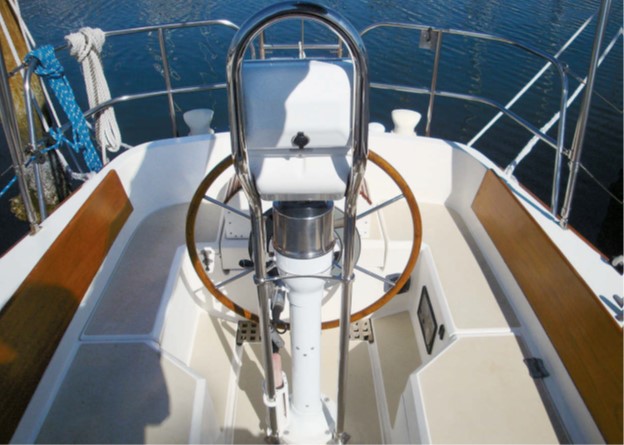
In addition to the non-skid, on-deck security is provided by 8 feet of teak handrail on each side of the cabintop, stainless steel bow and stern pulpits, and double lifelines with stainless steel stanchions mounted in bronze bases.
The T-shaped cockpit is 6 feet 9 inches long and incorporates a bridgedeck and 19-inch-deep seats with teak backs. There are three cockpit seat lockers. The one forward on the port side houses four house batteries, the AC compressor/condenser, and the water heater, with some room left for stowage. The starboard locker is aft and is primarily used to house the propane tank. The large lazarette is dedicated to general stowage.
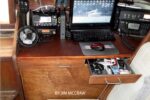
While the 26-inch-wide footwell affords good bracing, the teak seatbacks might become a bit uncomfortable after a while. Forward on the port footwell side is a manual overboard waste pump. On the same side, adjacent to the helm, is the engine’s control panel, and a manual bilge pump is beneath the helmsman’s seat. Aft, there’s a pair of 2-inch cockpit drains and access for the emergency tiller.
Two 5-inch cleats are mounted on the stern, along with a pair of cowl vents to provide the engine with combustion air and a centerline foldable swim ladder.
Belowdecks
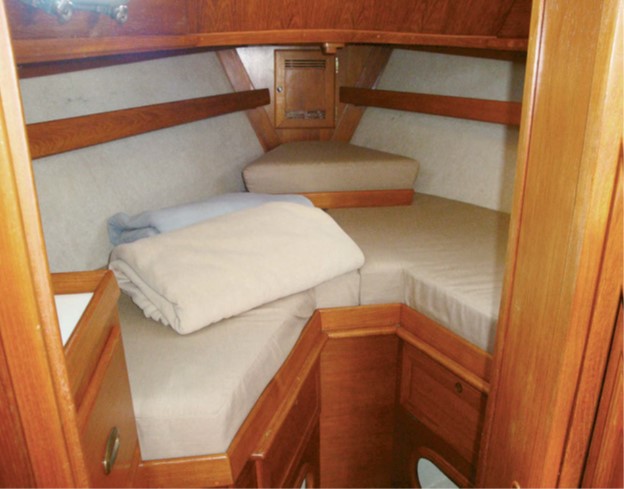
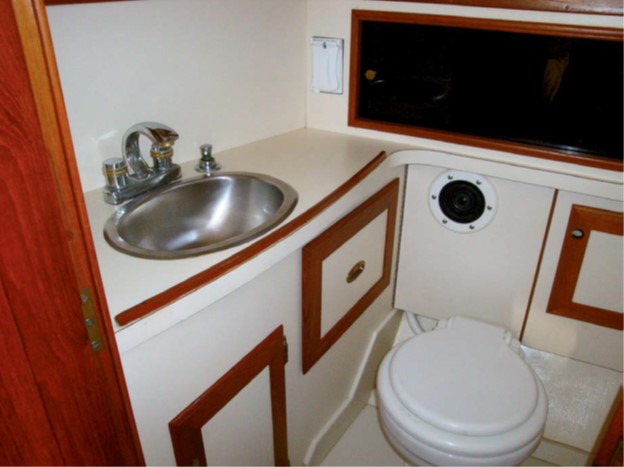
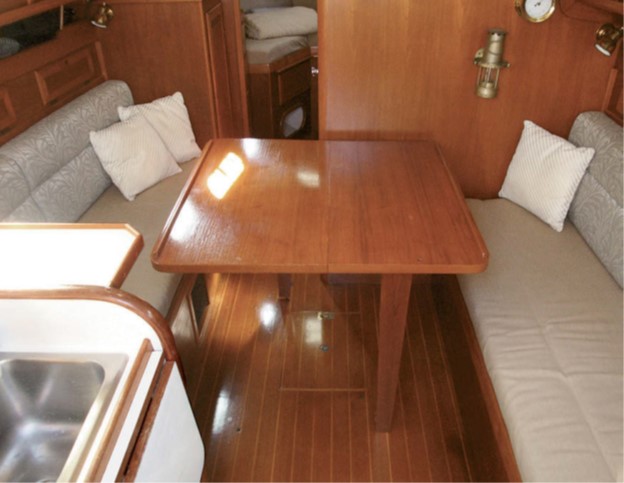
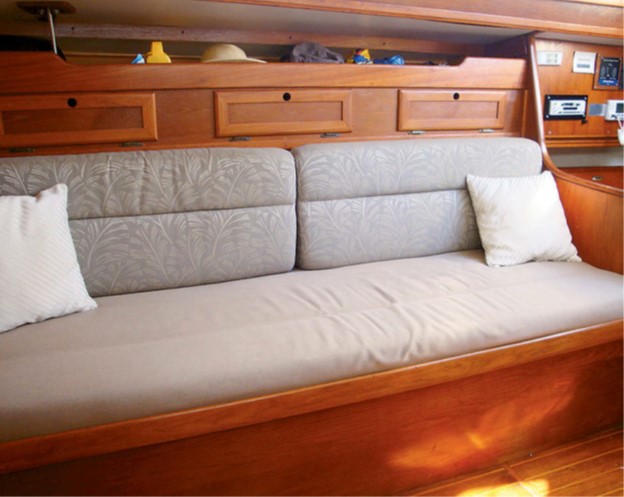
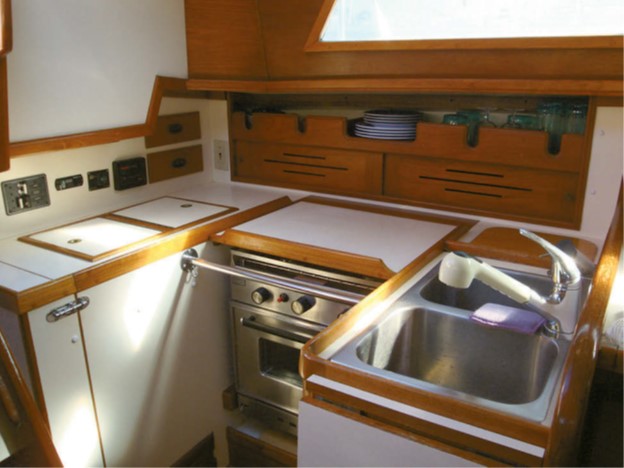
The traditional appearance and high-quality craftsmanship typically associated with Cape Dory Yachts carries belowdecks. The Cape Dory 30 Mk II interior has neither a fiberglass pan nor headliner. It is stick-built, mostly of teak, teak-veneered plywood, and matching hardwoods. The excellent joinery is finished beautifully with varnish. In the V-berth and quarter berth, the hull is covered with a fabric liner. Surfaces in the galley and head compartment are of an off-white plastic laminate trimmed in teak, as is the overhead liner.
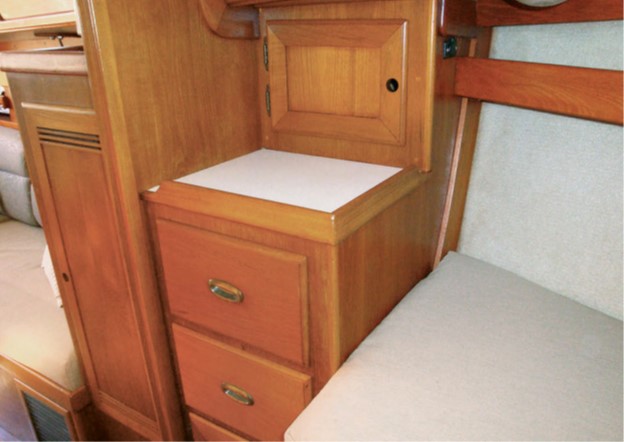
From the V-berth forward to the quarter berth aft, the layout is conventional. The head compartment is on the starboard side forward of the saloon, and a drop-leaf table is mounted on the bulkhead that separates them. Across from the head is a large hanging locker with a bureau top and, aft of that, the port settee. While there’s stowage behind the settee’s seatback, the space beneath it houses the 20-gallon aluminum fuel tank and the evaporator for the boat’s AC unit.
Another polyethylene potable water tank is beneath the starboard settee. Its volume of 46 gallons brings the boat’s water tankage to 70 gallons.
Bins, fiddled shelves, and cubbies with doors provide stowage above both settees. The sole is teak and holly. Headroom throughout is 6 feet, and the overhead is fitted with long (8 1/2- and 7-foot) teak grabrails on the port and starboard sides.
Aft of the starboard settee is a cozy double quarter berth, beneath which are the starting battery and a very large stowage area with three access points. The U-shaped galley is opposite the head of the quarter berth.
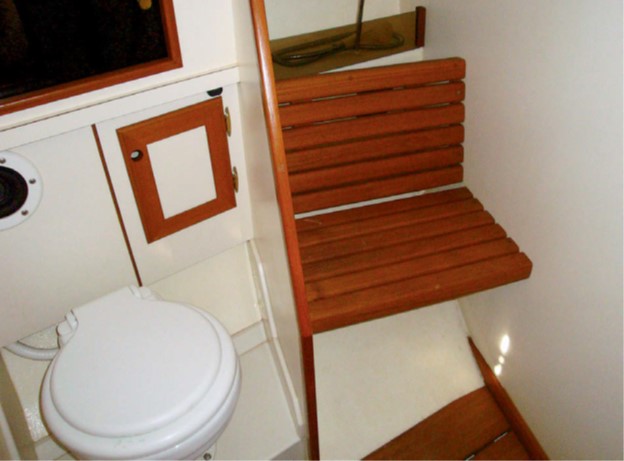
Ventilation and illumination for the saloon and galley are provided by a single opening portlight, a Dorade vent, the overhead hatch, four large fixed portlights, and the companionway hatch. For nighttime lighting there are three reading lights and four overhead lights.
The rig
The Cape Dory 30 Mk II was offered as a sloop, with a cutter rig as a $1,995 option. While Tern is rigged as a masthead sloop, both configurations employ a deck-stepped mast supported by a single pair of cap shrouds, forward and aft lower shrouds, a single pair of spreaders, a headstay, and a backstay. Bridge clearance is 45 feet. The halyards are sheaved internally and the shrouds are fastened to inboard chainplates. The aluminum spars are from Spartan.
The mainsheet leads from mid-boom to a traveler mounted on the cabintop forward of the companionway hatch, and aft from there to a 2-speed Lewmar #6 bronze winch and a cam cleat located on the port side of the aft cabintop. The headsail sheets can be led through cars on either the 10-foot jib tracks (on the sidedecks) or the 5-foot genoa tracks (on the teak toerails) to Lewmar #40 self-tailing bronze winches on the cockpit coamings.
Other rigging includes a topping lift, boom vang, jiffy reefing, and a pair of mast-mounted Lewmar #7 halyard winches and cleats.
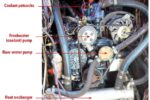
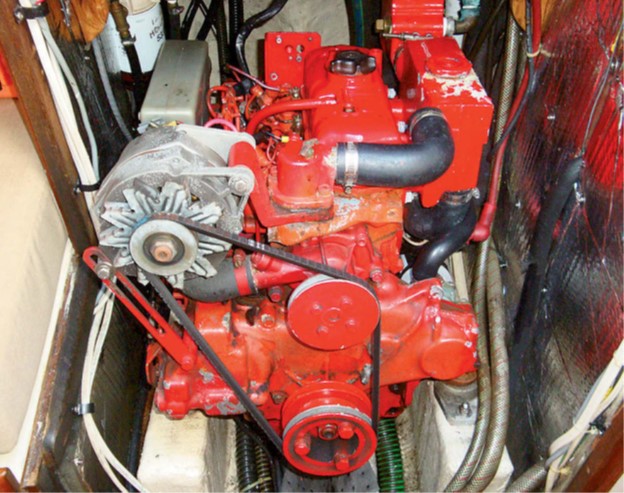
Auxiliary power is provided by a Westerbeke 21A diesel engine. This 22-horsepower, three-cylinder power plant is freshwater-cooled and turns a two-blade propeller. As the engine is behind the companionway ladder, access for routine maintenance is good.
Under way
The Cape Dory 30 Mk II is not a light-air boat, nor does it build up speed quickly. To get going, it needs a minimum of about 6 knots of wind, but it really comes alive in medium to heavy air. While the headsail can usually be left alone, it’s best to reef the main when the wind gets up to about 18 to 20 knots or significant weather helm will develop. The full keel with attached rudder allows the boat to track well both on and off the wind. With a bit of wind, a pointing angle of 30 degrees to the apparent wind is achievable. The boat doesn’t seem to have any bad habits or bad points of sail.
Things to check out
Both the deck and cabintop of the Mk II are cored with end-grain balsa. On older boats it is not uncommon for the core to become wet, resulting in delamination. The deck should be sounded out around every fitting, especially the chainplates.
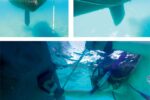
On some Cape Dory models, rudders have been known to become saturated, causing delamination. Another problem is osmotic blistering of the hull. These areas can be inspected when the boat is hauled out for routine bottom painting.
All the deck hardware is bronze, and it’s through-bolted with stainless steel fasteners to aluminum backing plates. Because of the differences in electrical potential between these dissimilar metals, it’s advisable to inspect the fasteners, and especially the backing plates.
Other areas to check are leaking portlights, especially the fixed ones, and craze cracking of the deck and cabintop gelcoat. While this is often mostly cosmetic in nature, severe cracking can allow moisture into the laminate.
Summary
The Cape Dory 30 Mk II is easily driven and very stable. It is a conservatively designed and solidly built offshore cruiser. Both on deck and below, the boat stands apart from most production sailboats. Its mostly wood interior is warm and inviting. While the boat is not without its deficiencies, the needed corrective action won’t break the bank, and the boat is worth it. Depending upon year, condition, and equipment, examples are listed at prices from $30,000 to $39,000.
Gregg Nestor has been a Good Old Boat contributing editor for 15 years. His home port is on Lake Erie, but he has become a snowbird and spends much of the winter in Florida aboard Raconteur II, a Caliber 35. He recently released his fourth book, Twenty Comfortable Sailboats to Take You Coastal Cruising. It might loosely be considered a sequel to one of his previous books, Twenty Affordable Sailboats to Take You Anywhere.
Thank you to Sailrite Enterprises, Inc., for providing free access to back issues of Good Old Boat through intellectual property rights. Sailrite.com