Issue 22 : Jan/Feb 2002
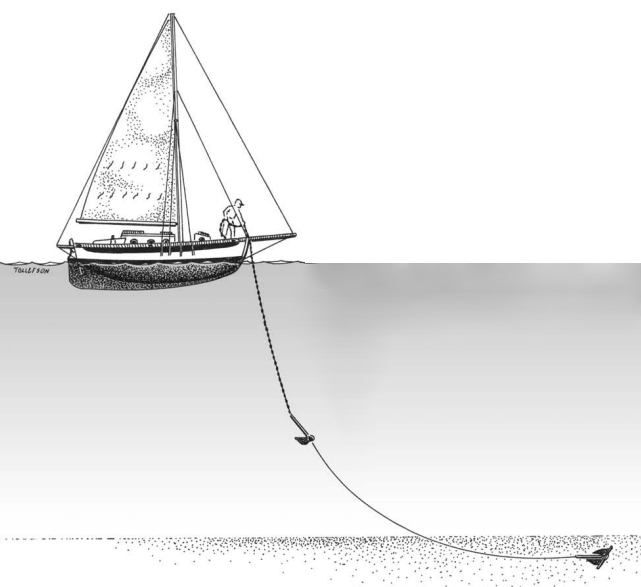
This is a classic textbook evolution with which I seem to have inordinate trouble, especially when sailing singlehanded. The yacht is at anchor in fairly deep water, stiff breeze. If I am lucky, I will be able to hoist working sail while at anchor.
Then what? Apparently you haul up the anchor chain until it is straight up and down. One more sacroileac heave breaks it out of the bottom; then the anchor is aweigh. At this point you and the boat are away, too, sailing off with a huge length of chain dragging under the forefoot of the speeding vessel, while you haul away like a man possessed for fear that you will sail into something, like shallow water (where you will involuntarily re-anchor) for example.
Finally, with an immense tangle of foul-smelling chain piled up on the foredeck, because you could not possibly get it down the pipe to the chain locker at the rate you were hauling, you crawl aft to assume command of your little ship only to find that she will not answer the helm quite as she should because of the change in the center of gravity. Then the boat heels to the wind, and the chain slides off the deck . . .
It may not be this bad, but it can be complicated on a smaller vessel. One course of action might have been to leave the anchor and cable hanging after the anchor broke out of the bottom, sail the boat into known deeper water with more sea room, heave to, and get the ground tackle aboard in a more orderly fashion.
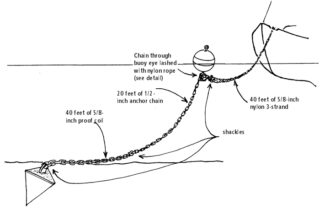
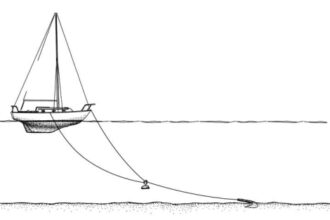
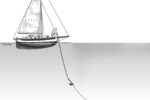
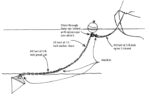
When conditions have been too tight or uncertain for that, I have used a different method altogether. Knowing the water is deep, when I anchor I let out a small kedge anchor on a rope cable. With the boat lying to the kedge on a short scope, I hitch the bitter end of the kedge cable to the trip-line eye of my main anchor. Then I lower that, too, on its chain. The two anchors in tandem give much greater holding. Then when it comes time to hoist sail and haul up the ground tackle with the ship ready to go, I first haul up the chain, at a pace befitting my years, and feed it down into the chain locker. Next I secure the main anchor for sea while we are still lying to the little kedge. Then, when I am ready to go, I have a much lesser task in the raising of the kedge.
Of course you keep your weather-eye alert for possible dragging of the kedge, and you would be mindful of the danger to the propeller from a trailing length of kedge-warp, but that is the common sense of good seamanship. Over the years, that anchoring technique has served me and my little ship well.
Geoffrey lives in a beach house near Cardigan, on the west coast of Wales. He’s been involved with small craft for more than 40 years. He just bought his Westerly back from the folks he had sold her to. Turns out, he couldn’t part with her after all.
Thank you to Sailrite Enterprises, Inc., for providing free access to back issues of Good Old Boat through intellectual property rights. Sailrite.com