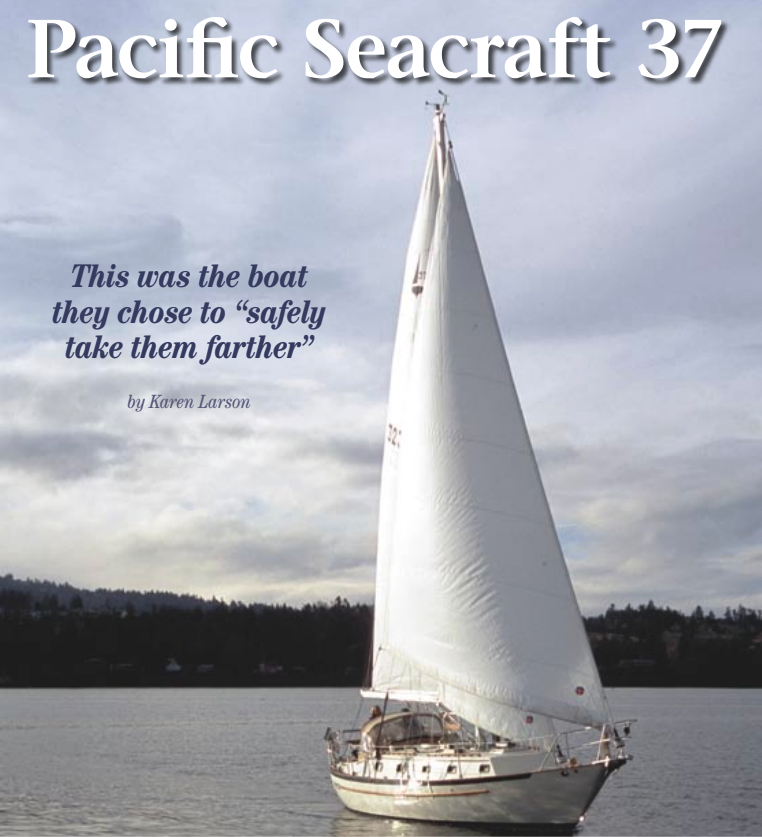
This was the boat they chose to “safely take them farther”
Issue 39 : Nov/Dec 2004
Jon Church spent much of his professional career as a geologist on oil rigs off the coasts of Sweden and Norway. For professionals on a small, crowded oil rig, the view is out to sea. For Jon, the view was of passing sailboats. “I dreamed of sailing,” he says.
As a U.S. student of geology at the University of Uppsala, 30 miles northwest of Stockholm, Sweden, Jon met Marga, a Swedish student studying statistics and psychology in Stockholm. They married and lived first in Sweden, then Spain, then Canada, and later the United States. They moved back to Sweden again and made a final move to America. The two are now living in Sequim, Washington, on the Strait of Juan de Fuca that divides the United States from Canada. Along this journey between two continents they were joined by two sons, Don and Leo, who are now 32 and 22.
Sailboats were not in the picture during the 20 years that Jon dreamed of sailing while “captive” on oil rigs in the Arctic, the Gulf of Mexico, the North Sea, offshore Africa, California, and Canada. Of those times, he says, “I saw a lot of seas and oceans in all types of weather. This, along with the courses offered to offshore oil workers, gave me some background which should help with our future sailing plans.”
The dream began in earnest 15 years ago while the couple was living near Seattle with their younger son, Leo. Jon took several American Sailing Association courses, which enabled him to take sailboats out through the Island Sailing Club in Seattle, and Leo began working for the Sequim Bay Yacht Club and the Sequim Boys and Girls Club as a sailing instructor during high school. “As Marga and Leo became more interested in sailing,” Jon recalls, “we agreed to move up to larger boats.”
Moving up
They started with a 17-foot O’Day Daysailer, which they still own and sail regularly. “For a couple of years after moving to Sequim we owned an old 25-foot Coronado,” Jon says. “This boat, the Osprey, was more fixing up than sailing. With the three of us getting more and more into sailing, we began looking for a larger boat which would safely take us farther.”
For the next six years they sailed a Storebro 33, a Swedish boat with a center cockpit. “We named the Storebro Vinden, which means ‘the wind’ in Swedish,” Jon notes. Vinden was built in 1982, the last sailboat built by the Storebro company, which now builds only cabin cruisers. “The Storebro 33 is not well known in the U.S. but is very popular in Sweden where it is considered to be a real classic,” Jon says.
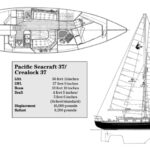
“We had always liked, and dreamed of getting, a Pacific Seacraft. So after selling Vinden to a couple from Idaho, who are now sailing her in Mexico, we began looking for a 34-foot Pacific Seacraft. We knew we wanted a Pacific Seacraft,” he says. “They hold their value well. After a lot of looking, we found Autumn Breeze (a 37 rather than a 34), and that was it.” The boat was in Michigan. They had her trucked to Washington.
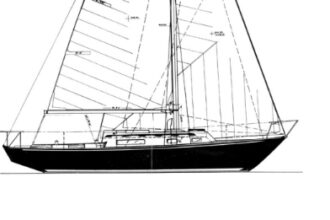
At the time, Jon and Marga didn’t know that the 37 (also known as the Crealock 37) was the boat that began a long and fruitful association between designer Bill Crealock and the Pacific Seacraft Corporation. As the story goes (told in the Good Old Boat July 2003 profile of Bill Crealock), Bill entered a design contest sponsored by a sailing magazine. He submitted a 37-footer. Designing this boat was a particular pleasure for him since he was not drawing lines to please a client. For the first and only time, these lines were of a sailboat as Bill Crealock thought a sailboat should be.
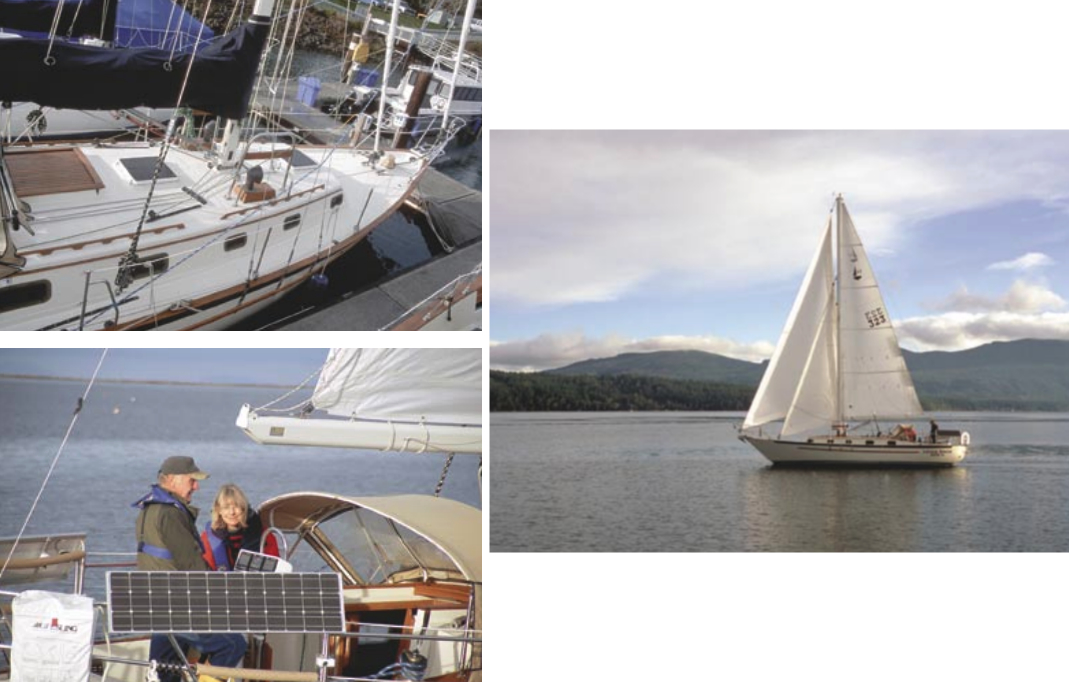
Sold 20 of them
Others also liked what Bill liked in a boat. The design was purchased by a company called Cruising Consultants. They built the molds and sold 20 boats before running into financial problems. A new and growing company named Pacific Seacraft bought the molds in the late 1970s and the rest, as they say, is history. Close to 400 boats have been built.
But wait! There’s a punchline. Bill’s boat entry didn’t win the design competition although he was awarded an honorable mention. The winning boat, as he describes it, “was a very modern design for the time, actually a rather hideous boat, I thought.” This boat soon disappeared from the scene, he remembers, while the 37 went on to recognition in the Sailboat Hall of Fame. So much for the prescience of those who would be judges.
This boat impressed Jon and Marga too. “It was solid,” Jon says. “It had a singlehander’s package, which makes it easier for a small crew to manage, and it sails well.” After a moment’s thought, he adds, “And it has good storage . . . or it will have once we get organized.” The singlehander’s package, Jon notes, comes with the cutter rig. The main feature is that all lines are led aft to the cockpit.
In fact the boat has most of the bells and whistles that good old boaters consider as possible upgrades to their boats of the 1960s, 1970s, and 1980s. Although she was bought as a used boat, Autumn Breeze is a 1997 model, not officially a good old boat (at least by the publishers’ classification of 10 years old and older) until 2007, but others of her line have been manufactured since 1980.
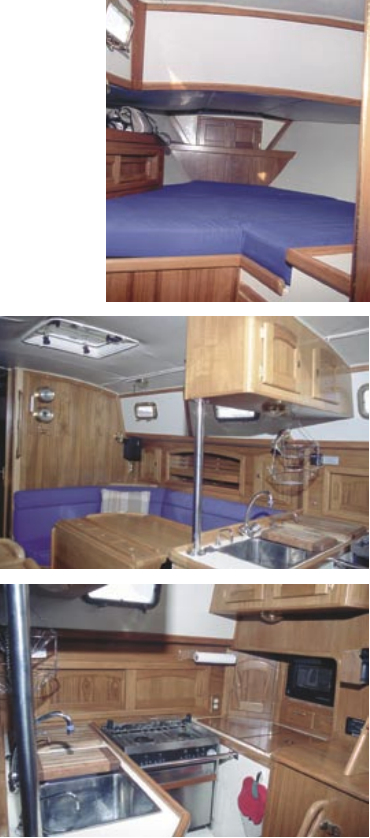
Some extras
The extras on Autumn Breeze include refrigeration, a propane stove, an inverter, a microwave made possible by the inverter, a diesel heater, a double stainless-steel sink with hot and cold pressure water, and good tank capacities: 37 gallons of fuel, 85 gallons of water, and a 16-gallon holding tank. It also has a Magellan GPS Nav 6500, an autopilot, a windlass, a life raft, a dodger, a teak cockpit grate, and all the essential sail, docking, and anchoring gear. What was missing? “We added solar panels,” Jon says.
“We’re seldom connected to shorepower. The panels (55 watts each) are enough to keep the refrigeration up and run the heater.” The cost of that addition was about $850 by the time the mounting was completed, he says. For a boat that would otherwise be charged $30 a month for electrical usage, the solar panels will pay for themselves in a bit more than two years.
Not long after they added the solar panels, Jon and Marga decided to head south to Baja California and “went wild at the Seattle Boat Show,” as they put it, adding a chart plotter, radar, and a new GPS. A Monitor windvane was on order soon afterward also.
Now that they’ve got the boat of their dreams, Jon and Marga are cruising in the “neighborhood” while they make the sorts of modifications that will make this boat their own. From the John Wayne Marina in Sequim, it’s a five- to six-hour sail to the San Juan Islands in one of the prettiest cruising grounds anywhere. And the boat’s Scheel keel gives them a 4.5-foot draft, allowing them go where others might not. Beyond the San Juans, of course, are the Gulf Islands, the Strait of Georgia, Queen Charlotte Sound, all of Vancouver Island, and the route north to Alaska.
“We thought these waters would be enough,” Marga says. “But now we’re thinking of sailing at least to Baja California.” While he was growing up, Jon spent some time in Mexico. He agrees with Marga. “I want to sail there — not drive — the next time.” With this boat, Jon and Marga realize the only limit is their timetable and imagination. By the time this is printed, they should be heading south. Where they go from there, only time will tell.
Thank you to Sailrite Enterprises, Inc., for providing free access to back issues of Good Old Boat through intellectual property rights. Sailrite.com