Only buy new if you can’t make do
Issue 99 : Nov/Dec 2014
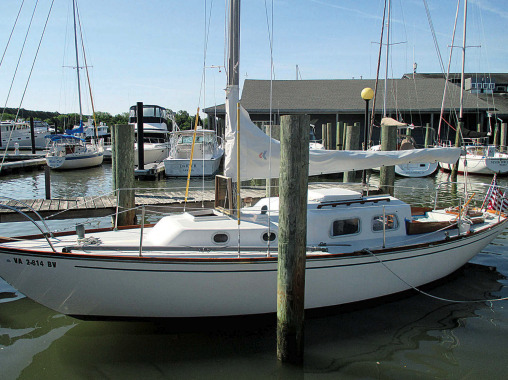
I have owned my 1967 Alberg 30, Good News, for more than 22 years. While maintenance is always needed on a good old boat — mine is now 46 years young! — I’ve saved a ton of money and time by not doing some common upgrades. I don’t race my boat, so that has had a major impact on my decisions.
This is not to disparage “museum-quality specimens” or those that are fully tricked out for optimum performance. I absolutely enjoy seeing a classic that has been lovingly restored to “much better than new” condition, whether at the docks, out sailing, or in the pages of Good Old Boat. I wish I had more time and money. Lacking either in sufficient quantity, I have made choices. Here are some “roads not taken” that have allowed me to afford to own and sail a really great good old boat on a modest budget.
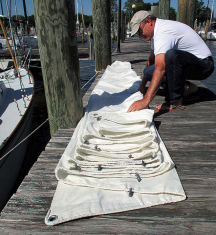
1. Don’t convert the headsail to roller furling
A 30-footer, especially a CCA design with a small foretriangle (a short “J” measurement) doesn’t have huge headsails. My #1 genoa (170 percent LP) and working jib are original sails. The #2 is about 25 years old. I can handle them easily. I like having help when folding them, but I can do it myself if it’s not too windy on the dock. They’re always carefully folded and stored in a cockpit locker, so I don’t have sailbags on the bunks in the cabin. I have a loose-luffed drifter for light-air days.
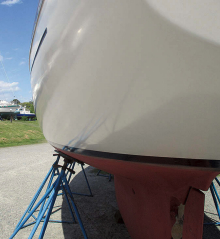
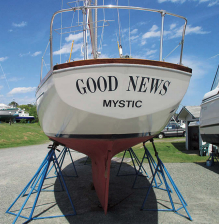
2. Original topsides gelcoat
Good News has her original white topsides with dark blue cove and boot stripes. Each spring, I clean the hull, use FSR on any stains, and wax and polish the topsides. I do not buff with abrasives, so the gelcoat has lasted. Whitby Boat Works did a good job when they built the boat as there is little, if any, checking or crazing in the surface. I do paint the stripes with enamel paint and get two years out of the “stripe job.” I paint the boot top and cove stripe in alternate years so there’s always a shiny new stripe. From 10 feet away, no one can believe the topsides are original 46-year-old gelcoat! I did have the deck painted about 18 years ago and it’s due for a repaint, but I will keep the topsides gelcoat as long as I can. Of course, a colored gelcoat will not last as long, but that was in my mind when I bought a white boat.
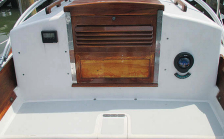
3. No fancy electronics
I have a VHF, depth sounder, and hand-held GPS. I do not have wind instruments, a knotmeter, radar, or an integrated navigation system. I bought the GPS when the Coast Guard shut down Loran C. Good News came equipped with a very serviceable Loran unit that lasted as long as the Loran system did!
4. No changes to the deck layout
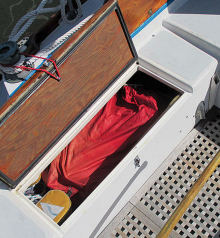
I still use the original Merriman primary winches. They’re bronze, have few moving parts, and will outlast me. I have smaller Merrimans on the mast for the jib and main halyards. I can easily trim the genoa jibs (the smaller CCA foretriangle helps), even though self-tailers would be nice. For backup, I found spare winch handles at consignment shops, but fortunately I haven’t (yet!) lost a handle over the side. The boat tracks and handles so well that it is easy — even when singlehanding — to handle the halyards at the mast. I see no need to bring the halyards aft to the cabintop so I can reach them from the cockpit. My traveler does not have a rolling block adjuster, but it’s not hard to move the thumbscrew stops. I did convert the roller-reefing main to jiffy reefing, so the boom hardware and reefing lines are new. I also upgraded all the running rigging over the years to new lower-stretch double braid.
5. Don’t paint the mast
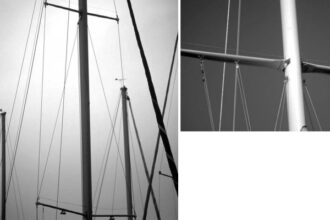
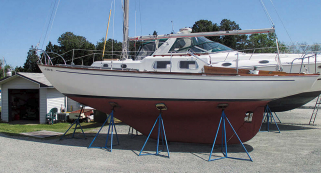
Some don’t like the look of an unpainted aluminum mast, especially one that long ago lost its anodizing (if it ever had any). This look works for Nautor’s Swans, however, and it works for me. I noticed that many painted masts have significant paint-bubbling “issues” due to dissimilar metals where hardware is attached. A lot of effort is required to prep and paint the spars and maintain the paint thereafter.
6. Tiller steering is fine
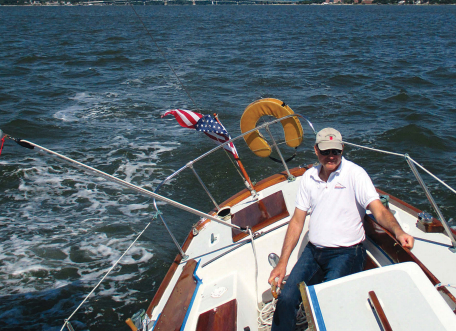
I have seen several sister ships that have been converted to pedestal wheel steering. This opens up cockpit legroom, but at a high price in cost and complexity. When I needed to replace the tiller, a stock Catalina 27 tiller was a perfect fit. What’s more, it’s cheaper and easier to put an inexpensive autopilot on a tiller. One came with the boat and lasted me close to 20 years. I’ll get another when the budget allows.
7. The interior layout is OK the way it is
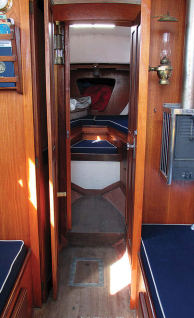
As a tall guy (6 feet 2 inches), I appreciate the standing headroom and bunk length on the Alberg 30. Other than replacing the icebox (the new one has a chart table on top) and adding a removable insert between the V-berths in the forward cabin, there has been no drastic interior carpentry surgery. I’m not handy enough to do yacht-quality carpentry, so I focus my interior efforts on varnish, new cushions and curtains, and other details to make the saloon and cabin feel like home.
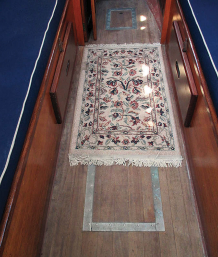
8. Don’t dress up the cabin sole with varnish
The cabin sole on Good News is solid teak (no holly) planked over 1-inch marine plywood. While I scrub the sole and keep it clean, I have not been tempted to varnish or replace it with a new teak-and-holly sole. All the other teak (on deck and below) is varnished and that’s enough varnish. An unvarnished sole has better footing (remember that we usually sail at a good angle of heel) and isn’t going to get messed up by sandy shoes, the occasional dropped tool, or water getting under the varnish. A little oriental rug adds a touch of class for cocktails. With a fire going in the fireplace and oil lamps for light, no one can see the sole well anyway!
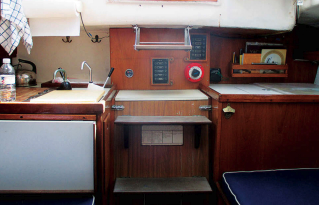
9. A propane stove isn’t the only way to cook
My boat came with a two-burner Origo non-pressurized alcohol stove that replaced the original Kenyon pressurized stove. I have had a lot of experience with Origo stoves and love them for their ease of use. To convert to propane requires finding a location for the tank (on deck or in a vented locker), hoses, solenoid, and sensors. The stove itself would cost at least 15 percent of the value of my boat. No thanks.
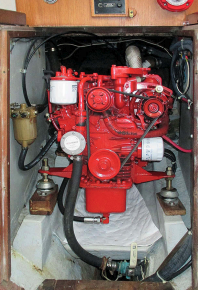
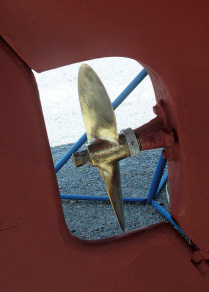
10. Replace the Atomic 4 only when necessary
The trusty original auxiliary that came with Good News — a Universal Atomic 4 — gave me three seasons of trouble-free motoring. When an overhaul was eventually required, I found a good used Atomic 4 for $300. Installing it was cheaper than overhauling the original engine would have been. That replacement engine gave me another 15 trouble-free seasons.
Having saved up a little coin for the inevitable re-powering, and not wanting to push it any longer, I purchased a Beta Marine16 diesel (Atomic 4 replacement) and had it installed. I gave the old engine and all my spares and parts to the yard that did the job. The Beta 16 is the perfect engine for an Alberg 30. I couldn’t be happier with the change, and I did it when I could afford it.
Simply does it
We sailors are not under the impression that our boats are financial investments. What kind of investment could it be if it requires an annual cash infusion of 30 percent of its value? That being said, part of the love affair with old boats is that they bring a quality of sailing and boat ownership experience within a realistic budget that those of us with moderate means can afford. The choices we make reflect the sailing we do and plan to do as well as our priorities for our boats.
Other sailors might come up with a slightly different list of ways to save money, but the concept would be the same. Admirers of good old boats don’t need to own a fancy or expensive boat to enjoy the sailing life, nor do we need all the latest in technology, sails, and equipment. There will always be plenty of projects to keep us busy!
John Brooks has been sailing for more than 40 years and currently sails his 1967 Whitby Alberg 30 sloop, Good News, on the lower Chesapeake Bay. He’s the veteran of 18 Bermuda Races. A retired U.S. Coast Guard officer, he was at one time director of the Sailing and Seamanship Branch at the U.S. Coast Guard Academy.
Thank you to Sailrite Enterprises, Inc., for providing free access to back issues of Good Old Boat through intellectual property rights. Sailrite.com