Issue 6 : May/Jun 1999
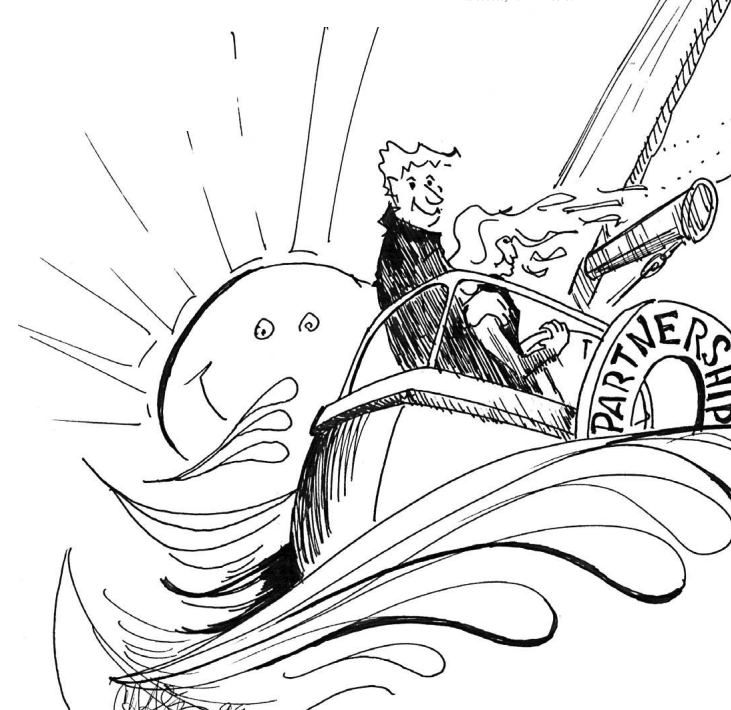
Yacht co-ops, like other human associations, can but often don’t work. At best they allow the partners to enjoy far more boat than either party could financially manage alone, while providing built-in manpower. At worst, they can be short lived and unhappy arrangements. I have known of a partnership that endured for many years and only broke up when ill health and old age overwhelmed one of the partners. And I have heard of co-ops that lasted but a single season.
One of the most common problems is a lack of equality between contributors. This can arise because of natural differences in background, workload, sailing experience, or financial resources. Explore and deal with these possible sources of inequity before you buy that dream boat.
If you know Bill works an 80-hour week during fitting-out season, then perhaps he can contribute a greater financial share. Or if Sally isn’t real strong in the marine wiring and plumbing department, perhaps there is something else she’s good at when it comes to rejuvenating a sound, but work-worn, yacht or keeping up your co-op dream boat. (In our three-way partnership on a 32-footer, I told the two men, both of whom were far better mechanics than I was, that my main contribution to the arrangement would be enthusiasm.)
You should also consider such legal and logistical details as under whose name will you register the boat: one or all of you? What will you do about insurance? Will one of you act as a contact person for the marina? (In our case, we had the boatyard secretary totally confused as she put one person’s name with another’s address and phone number. Some of this arose because she received checks from three different accounts. We eventually appointed a “treasurer” to pay the boat bills and be our liaison with the yard.)
Money seems to torpedo a lot of partnerships. You should agree (perhaps in writing) how costs will be shared. Also work out how to deal with upgrades and unexpected scenarios such as a major engine repair or a catastrophic sail blowout. Are you all liquid enough to deal with such contingencies? Or should you perhaps establish a boat fund in advance of the “emergency?”
Be sure, too, especially if partners are on an unequal financial footing, that you have “escape clauses” worked out ahead of time. What happens if one of the partners gets a transfer, is divorced, loses a job, or suffers a major crop failure? Can the rest of you carry the yacht’s expenses and also, if need be, afford to purchase the failing partner’s share if he has to bail out? Keep in mind a forced sale made in haste is apt to yield a significant loss to everyone.
Differences in personal wealth can lead to resentment or tension as one partner opts for better quality gear or extras while the tightwads dig in their heels and insist, “We don’t need that!” If this is the case, perhaps the group can agree in advance that the wealthier partner may add his or her toys with the clear understanding that they are (or are not) common property.
Differing experience levels can also lead to tensions and dissatisfactions in a partnership. And if this is the case, can the less-experienced person team up for some confidence-building practice in boathandling with a more experienced partner? This may well build confidence on both sides, as the experienced partner observes the junior co-op member’s growing skills.
Arrangements for scheduling the use of the boat seem to vary widely among partners. Some draw up a calendar and mark off days or weeks for the full season, as we did. Then if you want to use the boat on Bill’s day, you call and ask whether he’s planning to go out. In our case, unless I actually spoke with this partner, I assumed the boat was off-limits on his days. A word of warning: it’s easy to get slack about checking. In our second season, one of the partners used the boat rarely or never for the better part of two months. The other two partners developed a bad habit of “assuming” it was OK to use the boat on his days. This wasn’t particularly wise or fair. So whatever timesharing arrangement you work out, stick to it and communicate clearly about any changes. Successful partnerships take a certain amount of discipline, responsibility, and communication.
One of the advantages of co-ops is that the partners can crew for each other. All too often I have observed a sizable boat sitting around the marina with a single sailor onboard on a splendid summer afternoon because that person has no desire to singlehand. For this type of person, a co-op can be a boon. Last fall I met a woman sadly selling her 26-footer because her husband didn’t like sailing, and she didn’t like singlehanding. For people like this, a partnership might be ideal.
How each yacht co-op will play out cannot be predicted in advance. It’s probably a bit like marriage. But if the partners treat each other with respect and act responsibly and fairly most of the time, stay flexible, and retain a sense of humor, cooperative boat ownership arrangements can work very well indeed.
Thank you to Sailrite Enterprises, Inc., for providing free access to back issues of Good Old Boat through intellectual property rights. Sailrite.com