Coordinated universal time and the mystery of the vanishing 13 seconds
Issue 19 : Jul/Aug 2001
The biggest disappointment of my early life, after the Santa Claus thing, was the discovery that “Time Service” in Houston, Texas, in the 1940s was typically in error by 10 or 15 seconds. When you dialed Capitol 7171, you reached a lady sitting at a desk who, when the 20 or so phone lines filled up, looked up at an electric wall clock and announced the time. Worse, she fudged it a few seconds to give you time to walk back to your kitchen and get down the wall clock and reset it.
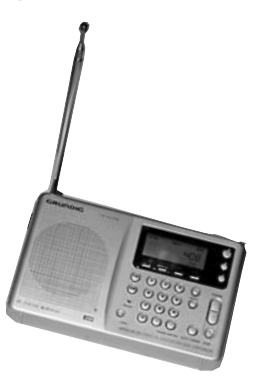
I learned this from a high-school friend, the one for whom the word “nerd” could have been invented, who had a Hallicrafters shortwave radio and was a regular listener to WWV, source of the U.S. Naval Observatory official time. Since that searing moment I have tried never to be without a suitable radio. My current one is the Grundig Yacht Boy 400PE, which has digital tuning, AM/FM reception, and single-sideband capability — you can receive high-seas amateur traffic and weather fax signals on it — and as much sensitivity and selectivity as you can get for $200.
Still best game
If you don’t need better than one-second accuracy, WWV is probably still the best game in town. It broadcasts continuously on five frequencies from two locations. The frequencies are 2.5, 5, 10, 15, and 20 MHz from WWV in Fort Collins, Colorado, and all but the 20 MHz from WWVH on Kauai, Hawaii. Since there are occasions when both stations can be heard, the announcements from Colorado use a male voice; from Hawaii, the voice is female; and no, they don’t talk at the same time. Both transmit the same “time ticks,” accurate to within less than one microsecond (millionth of a second) when they leave the transmitter. The signals will wander around in the ether for a while before they reach your receiver, but you can probably count on accuracy of less than a hundredth of a second (10 milliseconds). There is also a 440 Hz audio tone, in case you want to tune a piano.
The time that they are announcing is Coordinated Universal Time, the time on which both the Nautical Almanac and the Air Almanac are based, and the time that you will want to use for celestial navigation. Why, you may ask, is Coordinated Universal Time abbreviated UTC instead of CUT? The answer, on the authority of the National Institute for Standards and Technology (formerly the National Bureau of Standards), is that the advisory committee of the International Telecommunications Union, meeting in 1970 to establish a standard technology and finding themselves deadlocked between the English CUT and the French TUC, declared “a plague on both your houses” and settled on the neutral form, which was neither.
Battery of clocks
But where does it come from and with what is it coordinated, you may ask? The answer is that it comes from the “real” official time, maintained by a battery of clocks in Paris and Washington, that count periods of the radiation corresponding to the transition between the two hyperfine levels of the ground state of the cesium atom, hence the name “atomic clocks.”
But how can clocks located on opposite sides of the Atlantic be compared and kept in unison with accuracies of near-infinitesimal parts of a second? The answer, of course, is that they can’t. The process always lags a couple of weeks behind the time, as it were, and involves travel between France and the United States, highly technical discussions of intricate recorded data and, one hopes, the drinking of a certain amount of wine under pleasant circumstances in a collegial atmosphere.
But the esoteric dance between the atomic clocks has little to do with navigating a vessel, and that is where the coordination comes in. For celestial calculations you must have a time that is rooted in celestial observations, and that is the one now called UT1, the time derived from observation of the rotating earth itself. But the rotation of the earth is irregular, and it is known to be slowing, which brings us at last to my favorite bureaucracy, the Paris-based International Earth Rotation Service (IERS).
It’s serious
I am not making this up. You can visit their Website. Their mission is to monitor the slowing of the earth’s rotation, which we know from analysis of very early eclipse observations has been going on for some time now. To give a tangible example of the rate, the last year in which the day lasted exactly 86,400 seconds (as the second is currently defined) was about 1820. In the 180 years since then, the day has lengthened by two milliseconds because of the earth’s overall slowing trend. That makes it easy to understand why at two milliseconds (thousandths of a second) per day, it takes just about 500 days for the error to accumulate to a full second.
This is the point where the IERS steps in, after biding its time for months and months. It is deemed intolerable for the discrepancy between the two times to equal or exceed a second, so when the error reaches nine tenths of a second, a leap second is declared. Since the earth itself is out of our control here, the second is “added” to the time of the atomic clock. By convention, it takes place, when required, at midnight of December 31 or June 30. (The last leap second was declared on Dec. 31, 1998; there was no leap second planned for June 30, 2001.)
Nothing available
Leap seconds have been declared at intervals since 1972, so why haven’t we noticed? Probably because until the cheap GPS receiver became available, there was nothing that we could afford to buy and hold in our hand that would tell us. (You could have listened for the anomalous tick on WWV at midnight on New Year’s Eve, but it would have been a peculiar hobby.) Once the GPS system time clock was started, at midnight on June 5, 1980, and the satellites began to deploy into their orbits, there was no way to call them back and reset their clocks any more than we could reset the earth. There have been enough leap seconds since then that GPS time has “gotten ahead” of UTC by 13 seconds, enough to make a difference if you need a time source for celestial navigation. The much-discussed “rollover” of the GPS week calendar, which took place at GPS midnight on August 21/22, 1999, actually happened at 23:59:47 UTC.
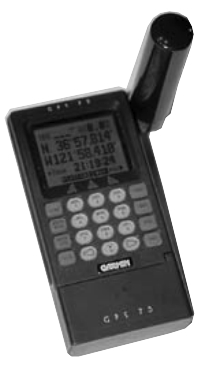
Since writing that sentence I have taken both of my GPS receivers, together with the shortwave radio, out of doors to see it once more for myself. To my surprise, the first of the receivers was indicating a time precisely on the mark with WWV, which is not what I remember from previous occasions when it clearly showed the 11-, 12-, or 13- second discrepancy.
The explanation
Taking the question to one of the most informative GPS-oriented Internet sites, maintained by Joe Mehaffey, I found the explanation, which should put us further on our guard, if anything. Quoting from Garmin, it is summarized as follows:
“Provided the unit has collected current leap-second count from the navigation message (current leap-second difference from GPS time is only broadcast once in a 12.5-minute navigation message) or current leap second has not changed since the last time the unit collected this variable, the time displayed on the front of the unit should be accurate to within 1 second of UTC.”
Joe comments: “This means that if your GPS does not have (or does not save) the leap-second offset from the last time it was operated, your time may be off by perhaps 12 seconds (today it would be 13) until the complete navigation message is received by the GPS. Jack and I have observed that, typically, Garmin GPS receivers display time that is delayed from about 1⁄2 to 1 second behind UTC. Lowrance GPS receivers are usually between 1 and 2 seconds delayed behind UTC. In both cases, this is a result of the display-driver subroutine having low priority, as the GPS internal clock is within a few nanoseconds of correct.”
Turning on my second, and older, model, it refused to find but two satellites, taking far too long to accomplish it, and showed a time some five minutes in error. It will shortly be on its way back to the factory, but its unexpected failure points up the admonition of one mariner on the Internet, that if you are going to carry a backup GPS, let it be a Gray Plastic Sextant. That same mariner had a suggestion that I find beguiling for those unwilling to pay for a genuine chronometer and suspicious of total dependence on a radio: buy 10 drugstore quartz watches, run them at home for a month against WWV time, and take the best three with you on the voyage.
Thus the question of where the 13 seconds might be lurking turns out to be less clear than I expected it to be when I started this article. I had intended to warn that some GPS makers might have tailored their software to compensate for it, and some might not have. It now appears that the current leap-second count is transmitted from the satellites to your receiver as part of a message that is 12.5 minutes in length, and your receiver may not have heard it to the end recently. If you are going to use the time readout on your GPS receiver for celestial navigation, take the trouble to find out how it relates to UTC and the leap-second count: compare it with WWV before you leave, or talk to the maker of the GPS, and make certain.
Roy was introduced to sailing on San Francisco Bay in J24s and later crewed regularly on Monterey Bay on a C&C 30. He crews on passages between Santa Cruz and Seattle whenever he gets a chance. He spent a few years operating high-altitude satellites for Lockheed and has been senior product advisor for West Marine Catalog.
Thank you to Sailrite Enterprises, Inc., for providing free access to back issues of Good Old Boat through intellectual property rights. Sailrite.com