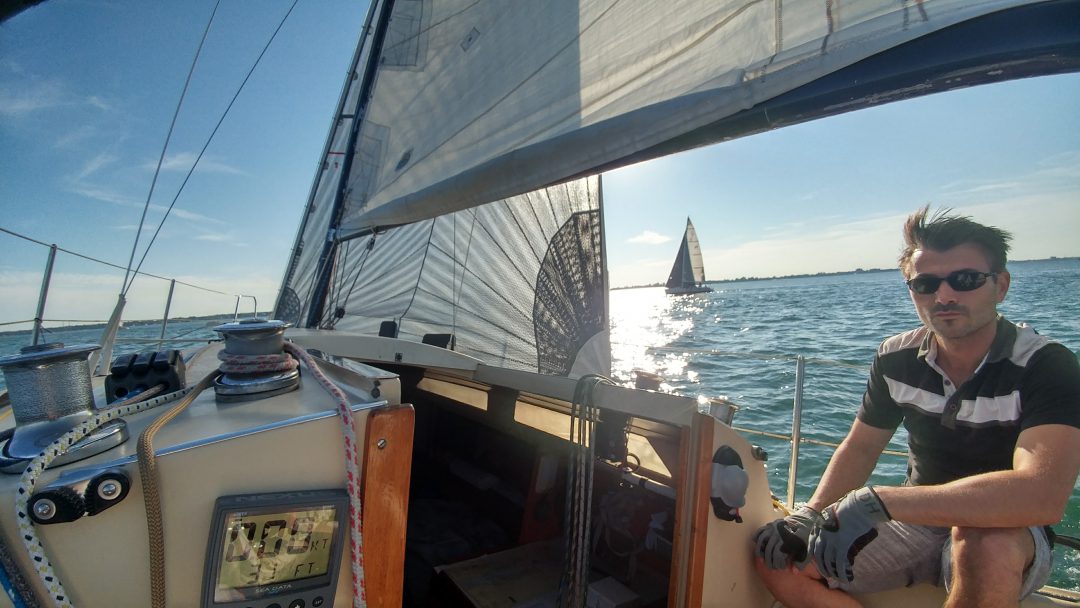
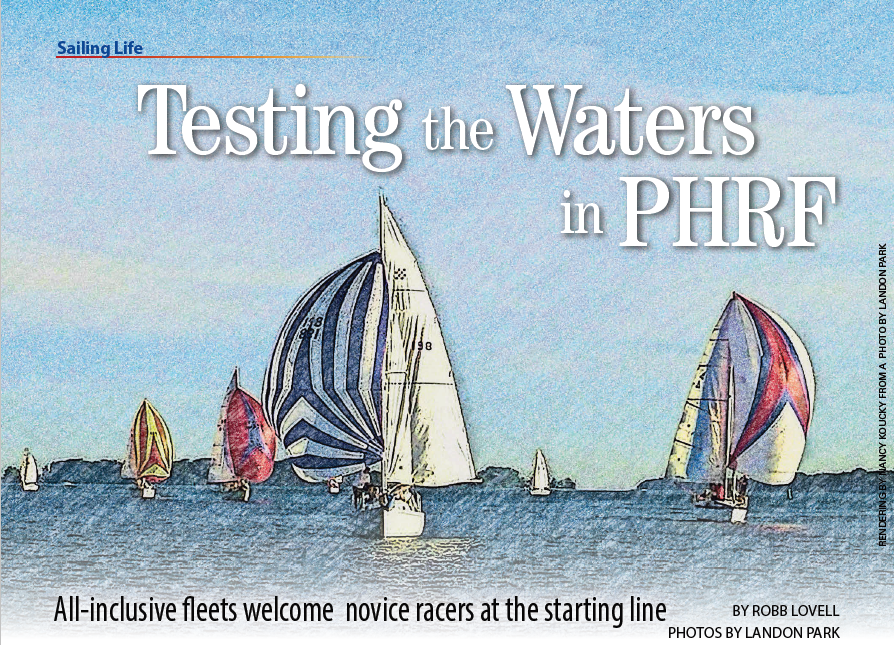
All-inclusive fleets welcome novice racers at the starting line.
Issue 124: Jan/Feb 2019
When I was a child, my family would spend every summer cruising and sailing out of our home port. Years later, when I bought my own boat, I continued to cruise, enjoying the feeling of adventure and freedom. Sailing melted my stress and transported me to a place of contentment. At the same time, although I had never raced on a sailboat, I was intrigued by the active racing scene at the nearby sailing club. I started heading out with friends on my own boat to watch the races. It looked exciting — the crews were engaged and their boats seemed to sail so close to one another! I wanted to join them, but I had no idea how to do that. I had no idea what the rules were, and I was a bit intimidated.
Lessons from racing
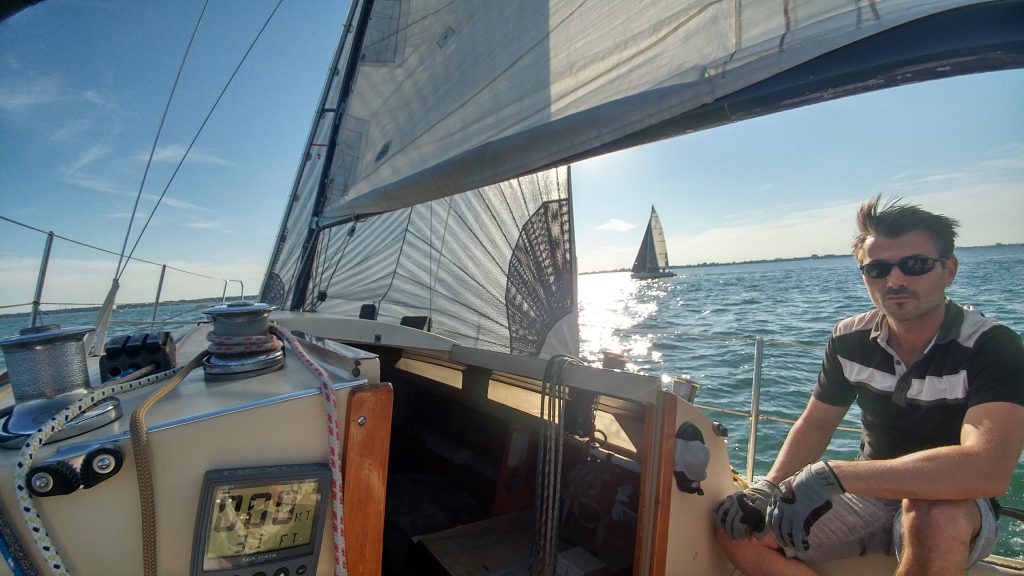
That was years ago. I did get into sailboat racing and discovered that it is not only fun, it’s a fabulous way to get more use out of your boat, get to know your boat better, and build your skills as a sailor, leader, and team builder. In the process, you develop a great sense of camaraderie among your crew of family and friends and your local sailing community.
Becoming a competent racer is a long learning process involving the niceties of sail trim to mastery of the Racing Rules of Sailing, but the path is fun and rewarding. I started along it by reading, and that gave me a leg up on understanding what I was seeing on the racecourse and what I would experience once I dipped my toes in. Of the many books on sailboat racing, one of my favorites is Getting Started in Sailboat Racing, by Adam Cort and Richard Stearns, which takes the reader through all the basics. It remained a great general reference guide as I built my racing knowledge and skills.
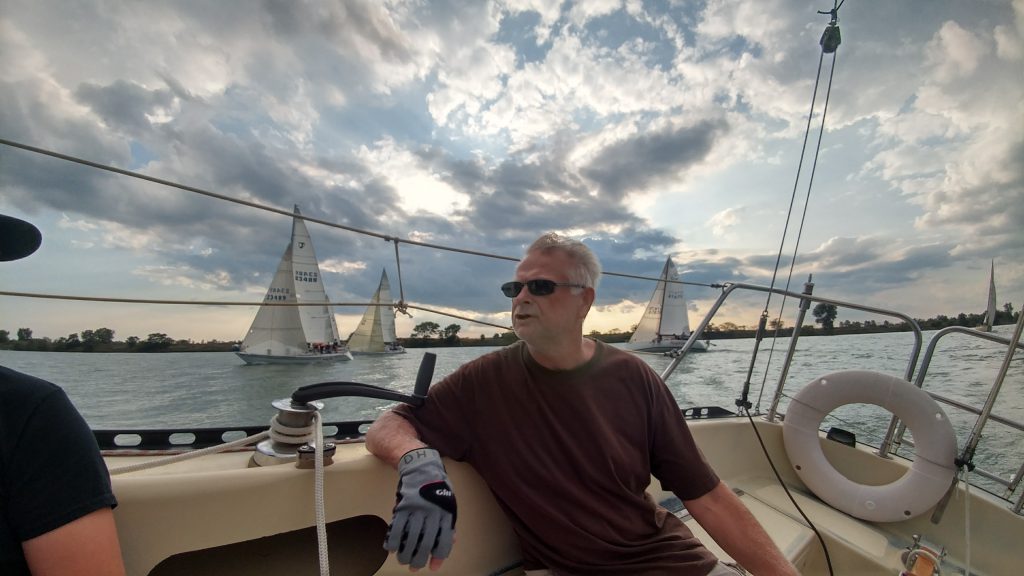
Although I’ve been racing for more than 15 years, I still read and re-read books and continue to learn from them. In fact, I’ve found that what I get out of a book depends on my level of knowledge at the time. Sometimes I go back to a book to retrieve knowledge I can apply but that I’ve not yet used. For example, last season we were frustrated by the downwind legs of the racecourse, so I reviewed the sections from various books in my library on downwind trim and tactics. I even read aloud excerpts to my crew before each race so we could apply the concepts that day. Our race results improved immediately.
Sailboat racing formats
Just as sailboats come in infinite varieties, so do sailors and the ways they race their boats, from professionals in grand prix regattas, to soloists in around-the-world marathons, to sixth- graders in Optimist dinghies. Sailboat racing is popular with ordinary folks too. You’ll find a sailing club on almost any body of water that’ll float a boat, and most of those clubs host races.
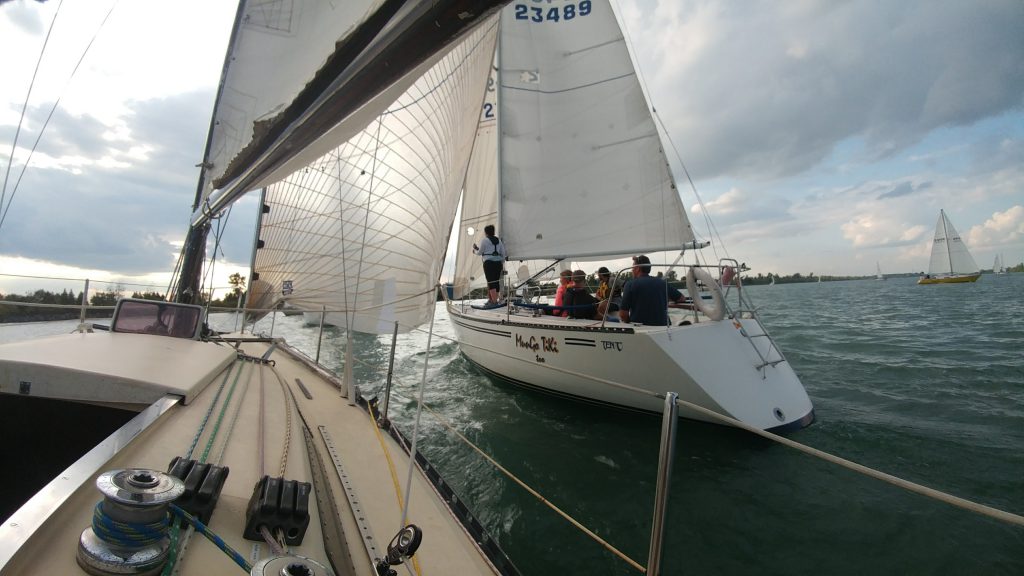
Club racing takes several forms, but most good old boats fall into one of two categories: one-design or PHRF (Performance Handicap Racing Fleet). One-design racing, where all the boats are of the same design (the J/24 is a classic example), is like a foot race — everyone starts at the same time and the first over the finish line is the winner. Under PHRF, every boat is assigned a handicap (see “PHRF Unwrapped,” below). Everyone starts at the same time but the winner is the boat with the fastest “corrected time,” which isn’t known until all the boats have finished. Large PHRF fleets are usually divided into smaller classes of boats with similar handicaps.
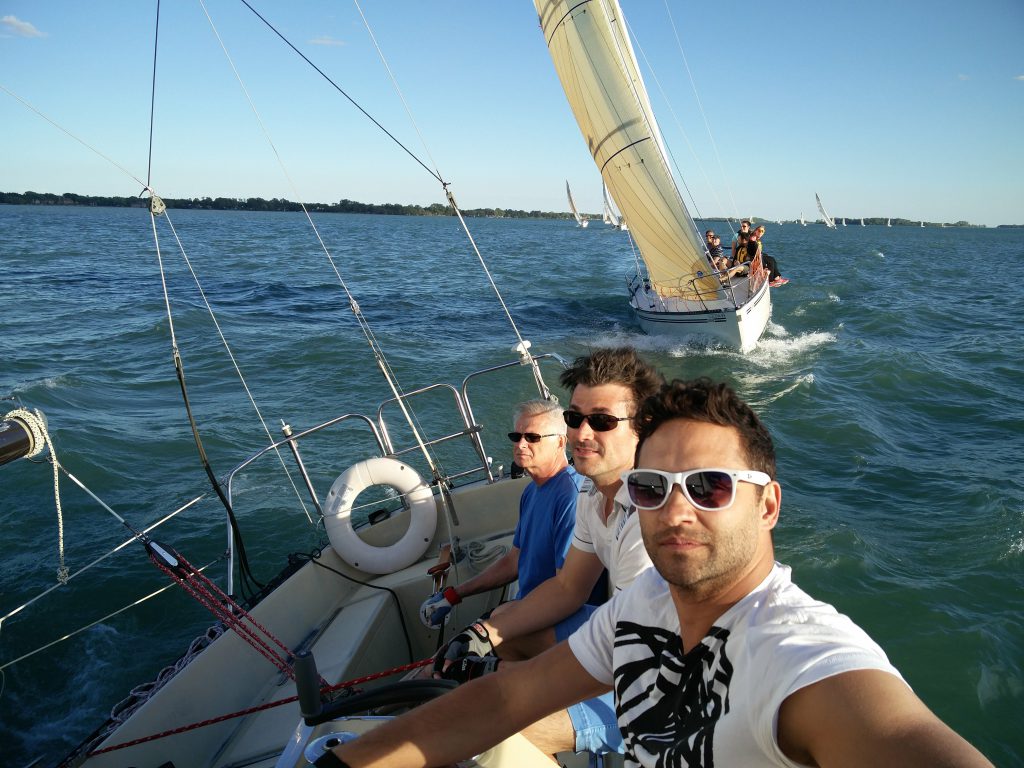
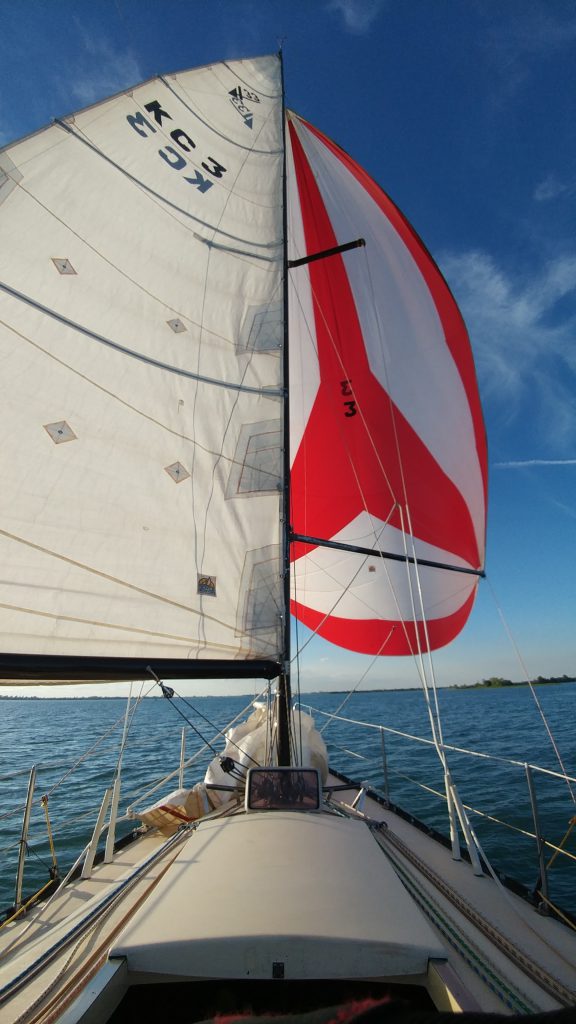
Many clubs include a JAM (jib and main) class for sailors who prefer to use only their white sails, as it removes the stress of setting and dousing spinnakers. This class is a great place for newcomers to start racing their own boats. It also attracts cruisers who use colored sails only rarely and sailors who are just learning.
Some clubs run pursuit races, in which every boat is assigned its own start time based on its handicap, and the first boat to finish is the winner. This format reduces the pressure on the start line because the entire fleet isn’t jockeying for position at the same time.
Learn by crewing
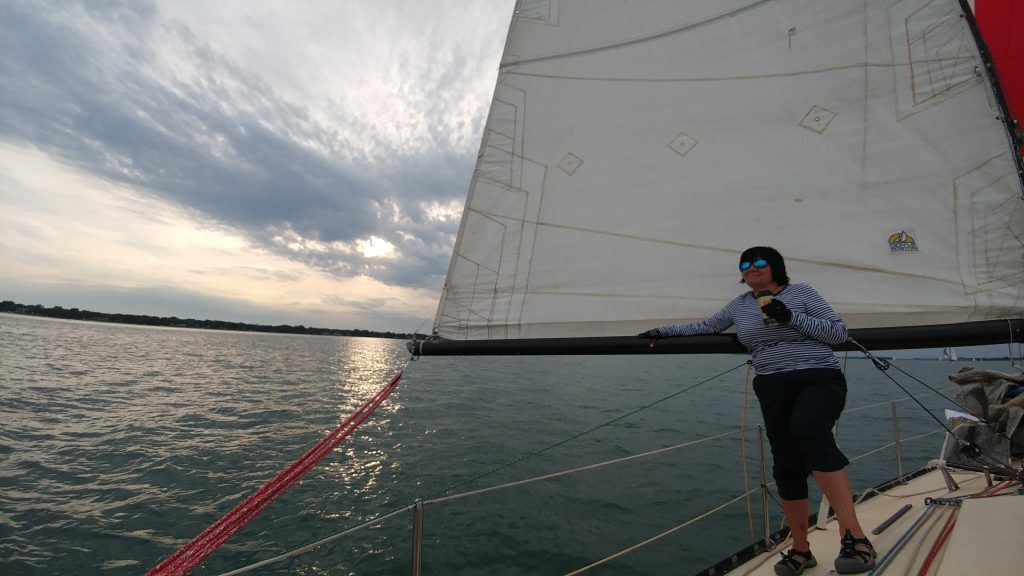
The best way to learn to race is to leave your boat at the dock and put in some time as crew aboard a boat with an experienced racing skipper. At most sailing clubs, skippers are always on the hunt for new and reliable crew. If you’re already a knowledgeable sailor, you will likely be a coveted candidate.
I started out by racing on many different boats, until I eventually met a successful local skipper who, along with his crew, kept the racing at the right balance of competitive and fun. The skipper (now my good friend Scotty) not only knew what he was doing, but he was eager to teach and was skilled at talking his crew through all aspects of a race. He would direct each of us through every mark rounding and sail change. Scotty not only taught me how to crew on a raceboat, he showed me the importance of teaching and developing crew members.
Sailing as crew allows you to figure out racing without the pressure of running your own vessel as skipper. This approach is all the better if you can find a skipper like Scotty, who is happy to teach and who employs a teaching and leadership style you enjoy.
When you join a crew, the skipper will probably assign you to a position. Begin by taking charge of your tasks and learning how to coordinate with the rest of the crew. Once you have mastered your role, start getting your head into the race as a whole. Time the start on your watch, think about how the rules apply when you encounter other boats, and watch the water for signs of wind shifts. Listen to the cockpit chatter on tactics and start thinking tactically yourself.
Your understanding of race tactics will develop over time. I spent two seasons racing as crew on other people’s boats before venturing out on my own boat, racing once a week in a local jib-and-main race series aimed at newer sailors.
I still take part in regattas as crew on other boats, and I learn something new every time.
Practice, practice, practice
Even before you try campaigning your own boat, every time you go sailing you can work on building skills you’ll need when racing. For example, practice tacking and jibing, so you can perform those maneuvers smartly and at short notice, then do that around navigational aids without the pressure of having fellow racers around.
Before my crew and I made the jump from JAM to spinnaker racing, we took the boat out and practiced launches and takedowns. That gave us the confidence to go on the racecourse and set and douse the chute while surrounded by a bunch of other boats.
And we still practice. Before the start of each season, we head out and get our sea legs with the goal of working out the bugs and getting our mistakes out of the way before our first day on the racecourse.
Racing your own boat
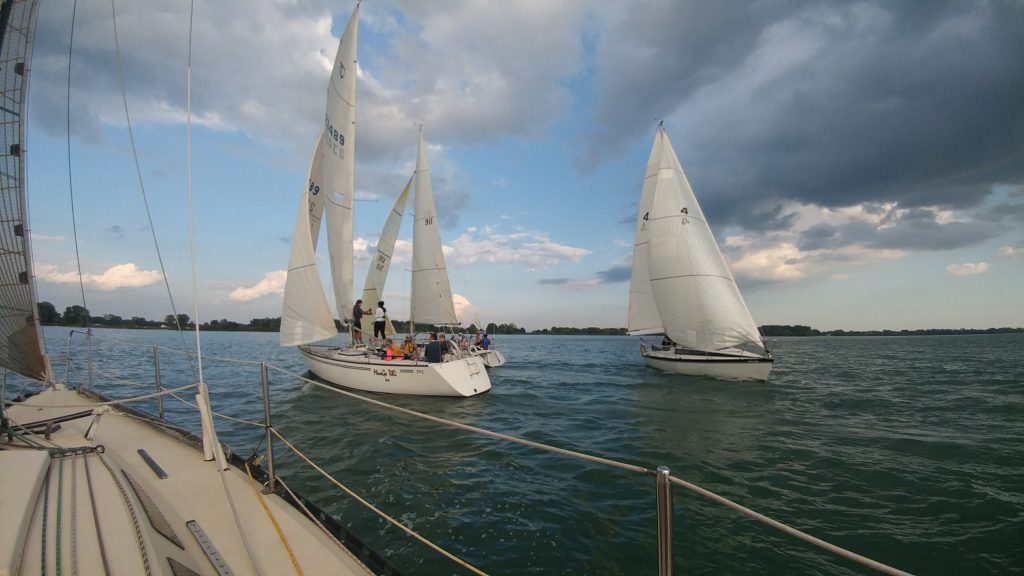
When you are ready to race your own boat for the first time, pick a suitable race or race series for a beginner. Take into consideration the length of the race and how complex the course is. On race day, consider the wind and sea conditions before deciding whether or not to start.
Read the notice of race (NOR) and get to know the specifics. If you don’t understand something, ask the race director or an experienced fellow racer for clarification.
If there is a skippers’ meeting, make sure you attend, and don’t be shy about asking questions.
Talk to other skippers and tell them you are new and ask for advice and help. Most sailors are eager to help someone get started in a sport they themselves are passionate about.
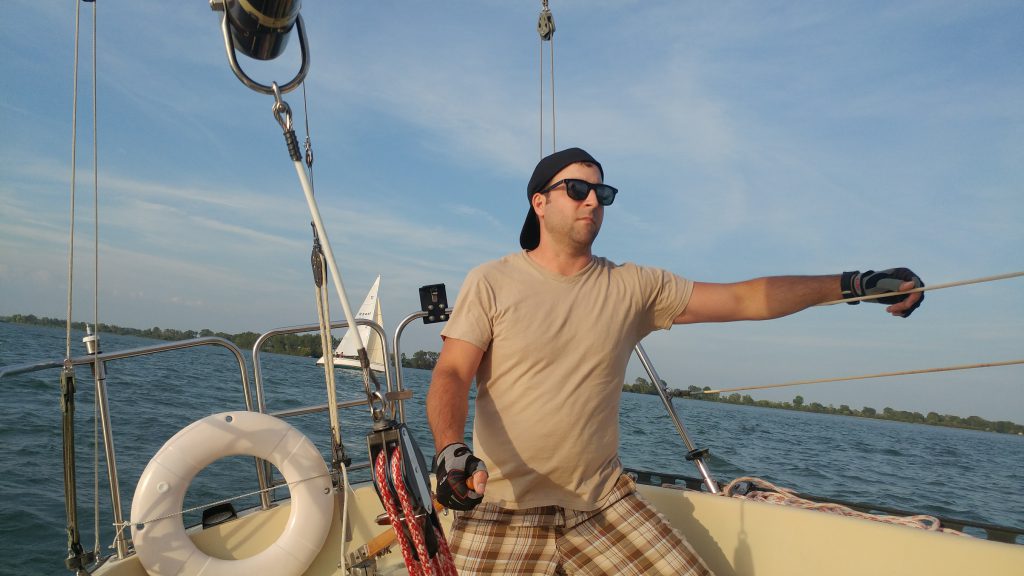
If you are anything like me, the first time you race your own boat as skipper, you will be nervous. What if I hit another boat? What if I didn’t remember the course? Do I have all the rules straight? Anxiety is normal, but ahead of your first race, you can take some steps to alleviate it.
Draft experience – For that first race, find an experienced racer to go with you who can assist in talking you and your crew through the race and helping you stay clear of trouble.
Avoid other boats – If you are not 100 percent sure of your boathandling skills or of your knowledge of the rules, hang back a bit at the start and steer clear of crowded mark roundings. Ease into the experience.
Follow the leader – Don’t be disappointed if you’re not in the lead, but take advantage of having someone to follow around the course. Even as you improve your own skills, watch the best racers ahead of you, to see how they find areas of stronger wind and identify wind lifts or headers.
Make a cheat sheet – The night before a regatta, I distill the most important information from the notice of race and make up a large-print one-page race sheet to fasten up in the cockpit for quick reference.
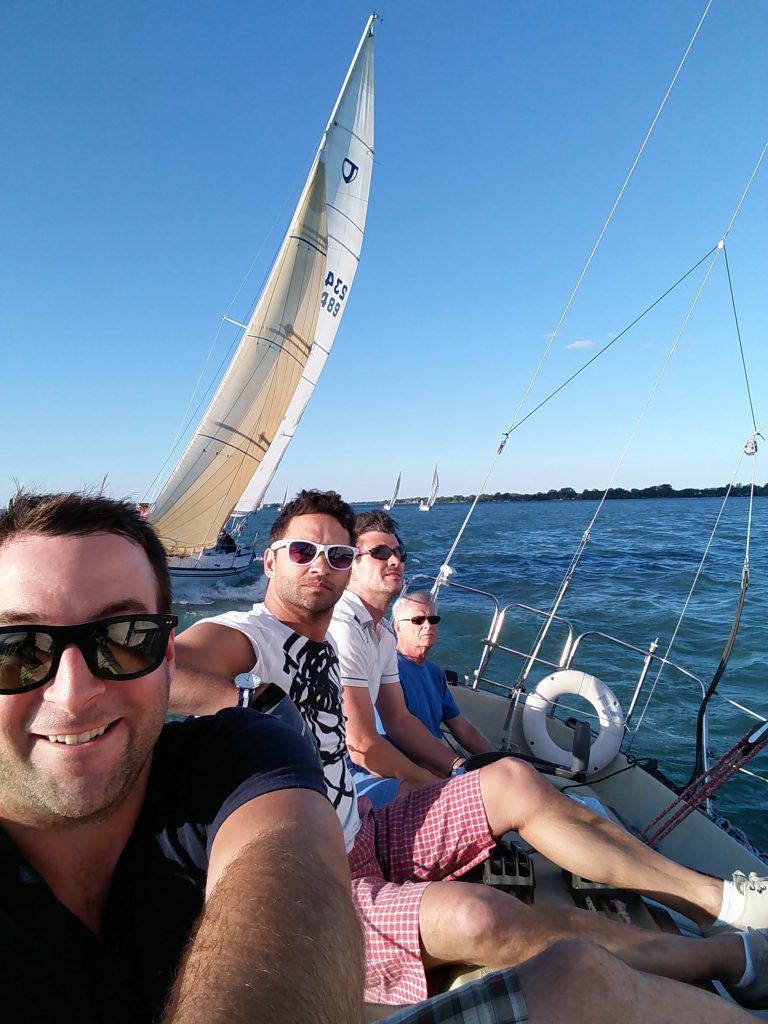
Set goals and keep it fun
In each race, only one boat will win, but every crew can have a good time. Sailboat racing is a complex sport full of challenges. It can take years before you score your first win. Don’t spend that learning time constantly feeling frustrated. Have fun.
New racers commonly wind up toward the back of the fleet. When you’re in this position, rather than focusing on the other boats, pay attention to how you can improve crew work and skills aboard your own boat. Before you know it, you will find yourself moving up the fleet.
Focus on measurable and attainable goals. Perhaps you want to work on completing a race with the cleanest, fastest tacks. Perhaps you want to make cleaner spinnaker takedowns and make a better start than in your last race. Set and share goals with your crew and work as a team to achieve them. While the outcome of a race is often out of your control, you are in control of your boat, and concentrating on how you and your crew can learn to sail the boat better brings its own rewards.
Little in life that’s worth doing is easy. Racing your sailboat can be one of the most rewarding and challenging things you will ever do. Post race, remember to think about what went right and wrong during the race and build on each race. Most important: congratulate yourself on becoming a sailboat racer.
PHRF Unwrapped
PHRF, which stands for Performance Handicap Racing Fleet, is a handicap system used to level the playing field when boats of different designs are racing (as distinct from one- design racing in which boats of the same design race as a fleet).
Each boat is assigned a handicap based on its estimated speed relative to a theoretical yacht that has a handicap of zero. A boat’s handicap is the number of seconds per mile that the boat should trail the zero-handicap yacht. For example, if your boat has a handicap of 190 and another boat in your class has one of 170, that boat will owe your boat 20 seconds for each mile of a racecourse. Over a 6-mile course, it would need to cross the finish line more than 120 seconds ahead of you to beat you.
A boat’s handicap is based on particular attributes, including its waterline length, displacement, sail area, size of its largest foresail, type of keel, and the type of propeller and number of its blades.
Local and regional associations set PHRF ratings for boats in the local racing fleets, taking into account the predominant sailing conditions in the area, such as light air or heavy air. As a particular boat establishes a race record over a period of time, that performance might be taken into consideration and result in a handicap adjustment.
While handicaps are assigned locally, US Sailing maintains a fleet handicap book that includes information on more than 60 PHRF fleets throughout North America, and handicaps for more than 5,000 (mostly good old) classes.
For more information on PHRF and racing in general, visit ussailing. org/competition/offshore/phrf.
This article is the first in a series in which Robb Lovell will talk up the benefits good old boaters can get from racing their good old boats against like-minded sailors in boats of similar age and characteristics. In Part 2, in the March 2019 issue, he will give pointers on how to set up a boat for racing and how to trim the sails for performance. Much of the advice he gives will also help non-racers get more out of their boats.
Robb Lovell grew up sailing on Lake Huron aboard his family’s Endeavor 40, where he caught the sailing bug. That was about 20 boats ago. Rob enjoys buying and restoring boats, and is an avid racer and cruiser based out of LaSalle Mariner’s Yacht Club (LMYC) in Ontario. He currently races on a Cal 9.2 named Jade but owns three other sailboats and a tugboat . . . yes, he has a problem!
Thank you to Sailrite Enterprises, Inc., for providing free access to back issues of Good Old Boat through intellectual property rights. Sailrite.com