Ingenuity and a warm oven solve the problem
Issue 54 : May/Jun 2007
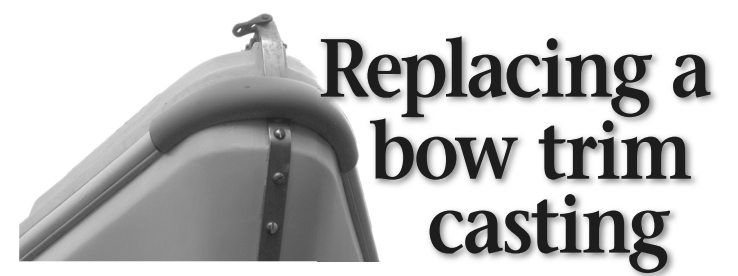
Replacing a smashed aluminum stem casting had us facing the prospect of having to have one custom-machined from scratch at considerable expense. Instead, we decided to make it ourselves. We wound up with a perfect-looking result.
As we considered our broken casting, PVC electrical conduit came to mind because it resembles aluminum, is available in several diameters, and is less brittle than plumbing PVC pipe (or cast aluminum for that matter.) A quick trip to the local electrical supply turned up the proper size conduit and, to our surprise, they also stocked 2-foot long 90-degree sweep sections in each size. They were so inexpensive we got two, planning to practice bending on the first one. A trip to the plumbing supply revealed that standard PVC pipe caps fit the size we had selected for our replacement piece.
First we capped one end and secured the cap with a sheet metal screw instead of PVC cement. Next we filled the pipe with sand and packed it down with a mallet. (Note: use sand that has been carefully dried in an oven. Wet or damp sand may cause an explosion when the moisture turns to steam. –Eds.) Finally the second cap, with some sand in it, was installed and hammered down to insure very tight packing of the sand. It was also secured to the pipe with a sheet metal screw. (Note: do not seal the pipe tightly. Leave an opening for expanding and contracting air to enter and leave. –Eds.)
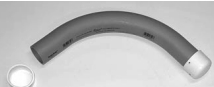
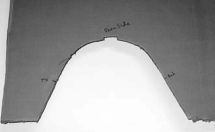
The bend in the sweep was already 90 degrees, so we had to continue bending until we had the desired bend, which was almost a U-turn due to the fineness of the bow on this boat. We made a cardboard template of the shape of the bow, refined to be an exact fit, and a male pattern of that template, also from cardboard.
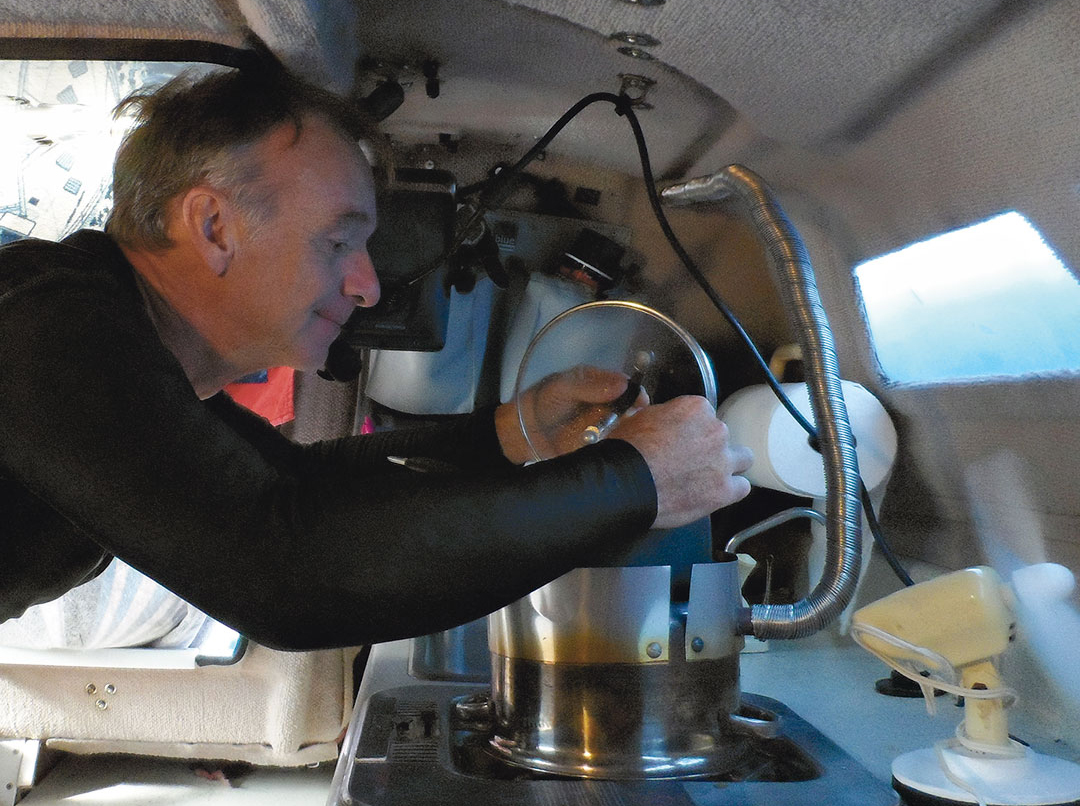
We placed the plugged, sand-filled conduit in a household oven at 200° F for half an hour to preheat the sand. When it was removed, it seemed as rigid as when it had been cold. We increased the temperature to 235° F for another half-hour.
Suddenly flexible
To our surprise, when we checked the piece at 235° F, it was not only flexible but the original bend/sweep was half-gone. Undaunted, we removed it from the oven (wearing leather gloves) and were able to bend it so the male pattern could lie right on the centerline of the conduit. The sand not only kept it from kinking during this extreme bend but also held the heat so our working time was extended. While holding the bend we needed, we ran some cold water over the piece to set the bend.
After removing the screws, caps, and sand, we traced the pattern on the piece and cut the line with a bandsaw. A jigsaw or even a coping saw could be used instead of a bandsaw.
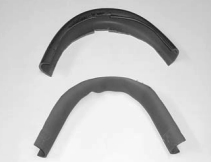
A little scribing, trimming, and rounding gave a perfect fit, top and bottom. Instead of drilling and through-bolting in three places (as was designed for the installation of the original aluminum), we decided to bond it in place. This would prevent a crack from starting at a bolt hole as had been the case with the original casting. The bonding material would fill the space behind the casting, cushioning any impacts. In addition, no screwheads would be showing.
Tracing around the new piece on the hull gave us a line to which to run 2-inch masking tape. We also completely masked the outside of the fitting. A third of a cartridge of Life Seal was dispensed into the fitting and we pushed it in place and held it overnight with a strip of duct tape. The next day, after the excess caulk and masking was cut away, we had a very solid finished product. This is a good application for Life Seal as it is as resilient as silicone but with far better adhesion.
Thank you to Sailrite Enterprises, Inc., for providing free access to back issues of Good Old Boat through intellectual property rights. Sailrite.com