Look before you take the leap from tiller to wheel
Issue 30 : May/Jun 2003
Thinking of converting (or buying a boat that’s been converted) from tiller steering to wheel steering? Read this first.
I wouldn’t convert a tiller-steered boat to wheel steering unless the boat is so big and heavy that steering her with a tiller is a Viking’s job. The conversion process involves much more than unbolting the tiller and mounting a wheel, pedestal, quadrant, and cables. It can involve the layout of all the boat’s controls as well as her cockpit accommodations. Even if you’ve just bought — or want to buy — a boat that already has a wheel, you might want to go back to the tiller.
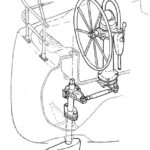
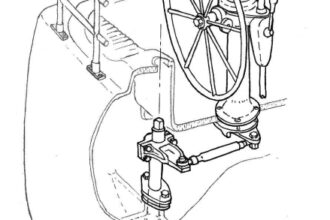
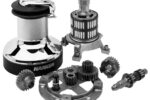
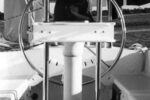
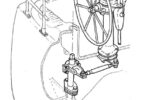
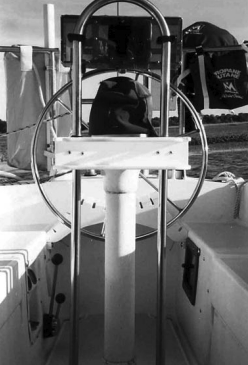
My boat, a Pearson 28, was designed for, and originally fitted with, a tiller. A previous owner had installed an Edson destroyer wheel and pedestal with wire-rope cables to the wheel on the rudderpost — a common system for small- to medium-sized sailboats. The components are high quality, and the actual installation was properly done. But it was incomplete.
The previous owner had unbolted the tiller, stowed it below, installed the steering components, and mounted a steering compass in the binnacle, and he was done. But the way the boat was laid out at the factory — from sail controls to electronics — was based on tiller steering. When you steer with a tiller, you sit toward the front of the cockpit, on one side or the other. So the cockpit seats are long, and there is no aft seat.
My boat’s choke, throttle, and shifter were forward, easily reached from the head of the tiller. The starter button and ignition were placed just inside the companionway, within reach of the tiller. The mainsheet was an end-boom configuration, running to swivel blocks at the aft end of the seats. The depth sounder, on the overhead just inside the companionway, was easily viewed from the head of the tiller. (The VHF was located too far forward in the main cabin to be accessible at all from the cockpit.)
Different scenario
So now the tiller’s gone and a wheel and pedestal are sticking up from the cockpit sole. It’s a different scenario with what is now a poorly laid-out boat. There’s nowhere to sit behind the wheel. Quick maneuvers under power? Forget it. You can’t reach all the engine controls from the wheel. You can’t see the depth sounder.
Guests are grabbing the compass as a handhold because there’s no pedestal guard. You can’t leave the helm even long enough to trim the mainsheet, because there’s no wheel brake on the pedestal. (The previous owner did convert the mainsheet to mid-boom sheeting, but now the 4:1 mainsheet is underpowered due to loss of leverage — another upgrade for the list.)
I’ve spent countless hours addressing all this, and for me wheel steering’s not worth it. If my boat had come with the “complete” conversion, I certainly wouldn’t undo it. But if you have decided you want to replace your tiller with a wheel, check these aspects of your boat’s layout and note how each would be affected by the conversion:
Pedestal guard: If there’s already a wheel, is there a guard? You’ll need one, and guards cost in the $150 – $200 range.
Engine controls: Where are they? Will you be able to reach them from the helm?
Mainsheet/traveler: Will you have to move them? If you have 4:1 end-boom sheeting and convert to mid-boom, you may find it underpowered.
Helm seat: An athwartship helm seat behind the wheel is awfully nice.
Instruments: Will they be visible?
Steering lock: If you have a tiller, you may have some sort of lock device to hold the stick in place while you do something. If you go with a wheel, you’ll need a steering brake for the same purpose, and brakes are in the $150 range. You may also want a quick-release wheel nut (about $43) so you can get the wheel off in a hurry if the steering fails and you need to bolt on your emergency tiller.
Thank you to Sailrite Enterprises, Inc., for providing free access to back issues of Good Old Boat through intellectual property rights. Sailrite.com