What about insurance?
Issue 3 : Nov/Dec 1998
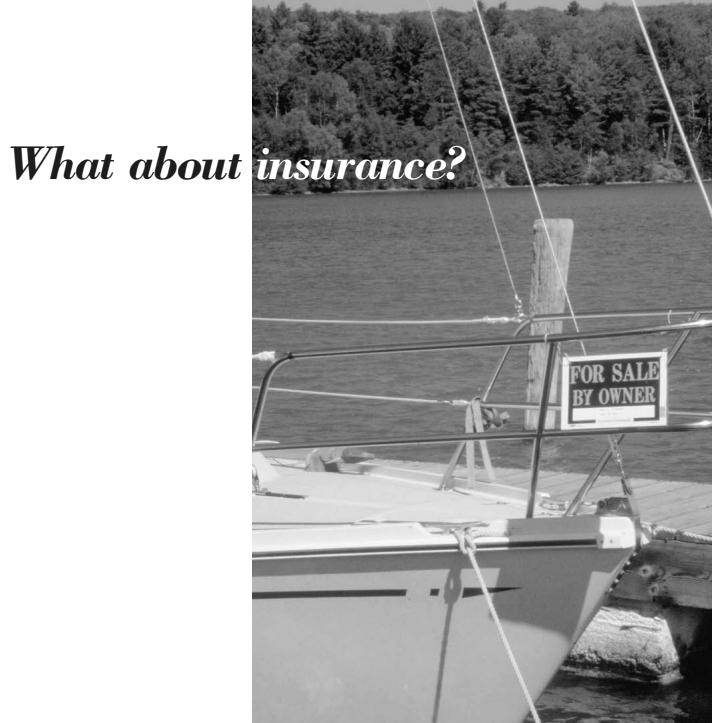
Picture a scene from a really bad nightmare. You’re on the maiden voyage of the newly restored nautical fantasy you’ve just spent three years sweating, spending, and bleeding into. It’s a perfect day for sailing, with your destination 15 miles north of you and the wind out of the west at 10-15 knots. The skies are clear, and beers are chilling in the icebox. Myron, your old high school buddy, is feeding the fish over the leeward rail, giving you a nice chuckle at someone else’s expense. Here’s where it turns bad: instead of keeping an eagle eye forward as assigned, Myron is paying for his double chili omelet breakfast croissant. Instead of keeping your own fool eyes open, you’re watching Myron. Pity you don’t see the 120-foot gin palace you’re about to T-bone.
The screeching, rending, tearing crash you hear is nothing compared to what’s about to happen. It seems you’ve hit Johnny Cochran’s new flagship, Litigious, in the one spot that would sink her on the spot. Meanwhile, Myron flew forward and knocked himself silly (thin skulls run in his family). Unbeknownst to you, the force of the impact tore your engine loose from its bed, and the fall split the oil pan open, dumping five quarts of black oil into your bilge. The good news is that your automatic bilge pump switch performs flawlessly. Too bad there’s more bad news: you just pumped all of that nasty oil straight into Lake Pristine (home of the EPA, Sierra Club, Greenpeace, and The Fund for Animals). Bummer.
Coolly, almost casually, you reach into the sodden folder containing all of your ship’s documents and extract … a yellow sticky note reminding yourself to:
“Look into insurance of some kind.” Gasp. Choke. Sport, your nightmare is just beginning. You’ve just lost the boat, your house, your business, the ’78 Monza you traded down to in order to buy the boat, and great Aunt Fannie’s old brooch. On top of that, your picture will be on every environmental activist’s bumper sticker from Prince William Sound to the Love Canal.
You wake up sweating and with an irresistible urge to run down to the marina and pet your boat. First thing in the morning, you resolve to get boat insurance. Where do you begin? What do you need to know?
Owners of good old boats should know that insurance companies are going to focus on the second, rather than the first, word that describes your diamond in the rough. Get rid of the fantasy that you can call up your local car insurance guy, tell him your 20-year-old 26-foot Sinkmenot is worth $110,000 and be set.
First and foremost, you need liability insurance that covers damage you do to another boat, damage you do to a marina, damage you do to your guests, and damage you do to the environment. Most likely, your marina won’t let you tie up until you have proof of insurance. Common sense says you should buy insurance as soon as possible. Don’t fool around with this. A lawsuit or two could put you out of business. Worse, you could have to explain to Aunt Fannie what happened to the brooch she gave you.
Beyond liability insurance, it’s a tough call on whether you get comprehensive coverage or not. If you bought the boat with a secured loan, you’ll have to carry comprehensive insurance. You won’t be required to carry comprehensive if you have clear title to your boat. Personally, if I don’t owe the bank, I don’t want to throw money at an insurance company. I need my folding dough for bait and beer. I trust my own skills, judgment, and mechanical abilities. Besides, the risk and exposure makes me that much more careful. Make up your own mind.
You will need to provide the insurance company with a résumé of your boating experience. Some companies offer a discount for completion of a United States Power Squadron or Coast Guard Auxiliary safe boating class. Some will flatly deny coverage due to insufficient experience. It’s almost a certainty that whatever insurance company you deal with will want an insurance survey less than one month old before they bind you with a policy.
An insurance survey is less thorough than a full C&V (condition and valuation) survey. Primarily, the surveyor will be looking for problems that will cause the boat to burn, break, or sink. As a buyer, you will probably want a C&V survey to make sure you aren’t buying a pig in a poke. Insurance companies will accept this to begin coverage, and a good C&V survey gives you an excellent starting point for a repair list. (A C&V survey generally runs $10 to $15 per foot.) Some insurance companies maintain a list of surveyors that they regularly use. It’s a good place to start looking, as is NAMS (National Association of Marine Surveyors). (Address and telephone numbers on Page 12.)
Obviously, if the oil pump outlet discharges directly overboard and the propane tanks are located next to the engine along with the briquettes and starter fluid, there are some things you will need to fix. An insurance company will sometimes offer to carry you as a “port risk,” meaning you can stay at the boatyard, but you can’t put the boat into the water and use it.
Understandably, most yards are unwilling to accept “port risk” boats anywhere except the farthest reaches of the back of the yard. As soon as you send the insurance company satisfactory proof of repairs, you’re on your way to watching Myron yack over the side on a spanking reach across Lake Pristine. Satisfactory proof of repairs can mean anything from Polaroid photos and a photocopy of a receipt, to a signed statement from a marine contractor. It depends on the company insuring you.
You will also want to negotiate coverage amounts and deductibles with your insurance company. Most marinas will tell you how much liability insurance they would like you to carry. Find out how much that would cost, and compare that to the cost of the next step up.
If you can afford it, go one step higher. If you can get a discount by restricting your insured cruising area to your home waters, go for it. Be realistic: don’t buy insurance for the whole East Coast if you’ll never leave Long Island Sound.
Depending upon where you live, you might be able to save some money if you move your boat north for hurricane season. Also, some insurance companies offer towing services as well as other benefits at a discounted rate. Take a look at a few quotes before you settle on one company. Be sure and ask about the claims process. Make sure you understand how to get in touch with a representative and what you should or shouldn’t do in case of an accident.
The bottom line is that you don’t want to get caught unprotected. If you don’t carry liability insurance, get it. If you’re looking at buying a used (good old) boat, budget for insurance premiums and a survey every couple of years. You’ll have a lot more fun with your boat that way, and you won’t have nightmares about T-boning the M/V Litigious.
Thank you to Sailrite Enterprises, Inc., for providing free access to back issues of Good Old Boat through intellectual property rights. Sailrite.com