It took willpower, elbow grease, and a whole lot of paint, but in the end a skeptic was won over
Issue 10 : Jan/Feb 2000
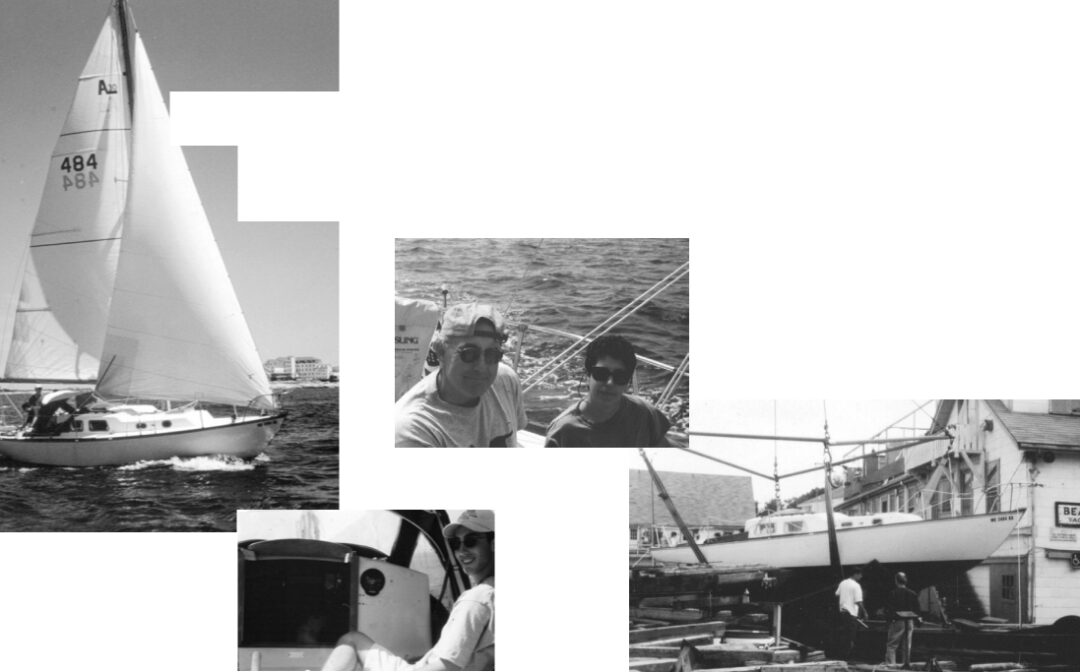
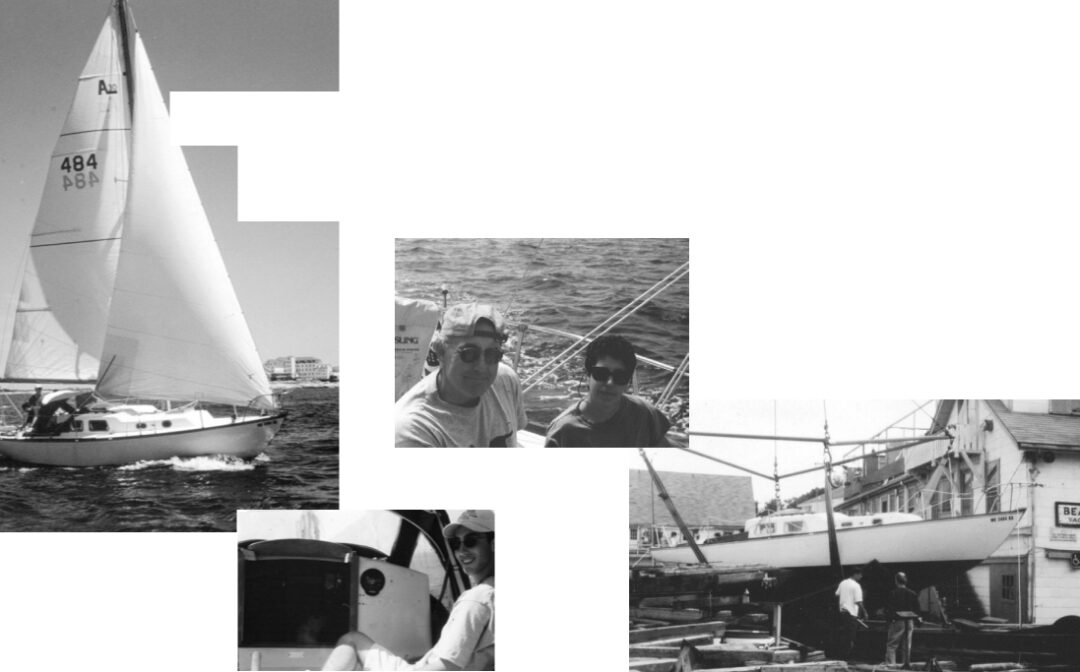
The fall of 1997 brought with it the usual sights. . . the oranges, yellows, and reds of the leaves, the crisp night air and the sounds of children rushing to get a seat on the school bus. But one autumn was a bit different. I’ll never forget the sight of that semitrailer with its billowing soot exhausting into the sky, driving up our small residential street, 60 miles from the nearest salt water. Cradled behind it, was a beautiful (so I was told) classic Alberg 30.
I had not been consulted about the purchase of this sailboat, nor had I wanted to be. I thought the 22-foot O’Day we’d owned for the past eight years was perfect for our needs. A family of five could do a little day sailing on Buzzards Bay and then go home. Little did I know that my husband was getting what is called “six-foot fever”. . . something all sailors seem to catch at some point in their sailing careers. Stephen caught an eight-foot strain of this fever.
So now there was a classic boat that towered over the O’Day 22 next to it. I cannot honestly say this classic design was a “beautiful” boat as far as I was concerned. The hull was painted robin’s-egg blue, the teak (all of it) was black with gray specks, the lifeline stanchions were bent, the white fiberglass decking was blackened, and the name painted on the stern was not something that I wanted my three children to repeat. And that was just the outside.
Down below, the scene was something from the evening news: “Tornado Rips Through 30-foot Sailboat Interior.” Not only did the interior have 30 years of debris strewn about, but there was also a stench of diesel fuel and mildew strong enough to gag anyone walking through the companionway.
At that point I thought: This is going to be an exercise in futility. It’s definitely a boat we should not have.
Nevertheless, during the day, while everyone else was at school and work, I decided to clean it up just a little. Three hours later, after I heaved 11 large green leaf-bags, filled with everything from pieces of frayed line to 30-year-old charts, overboard, Stephen came home and showed me the long list of “projects” that this boat needed — not in order to sail, but simply to float again. I realized suddenly that the game had hardly begun.
The hull
Luckily, the gods of good weather answered our prayers shortly after we took delivery of “the heap.” The first order of business was exterior aesthetics. Armed with a gas-mask-like air filter and a box of 40-grit sandpaper, our esteemed captain took to the daunting task of removing all the urethane paint that had built up for nearly 33 years on the topsides. Nearly 20 hours later, the hull, although still not fully stripped of its paint, was once again smooth, and our skipper had taken on the appearance of Papa Smurf.
When you undertake a task such as repainting the hull of a 30-foot vessel, you often wonder just how much paint it will take to cover all that surface area. But perhaps we didn’t wonder enough. After browsing the aisles of the local marine suppliers, we somehow managed to buy enough Hatteras White to paint the Alberg five times over, at two coats per application. Oh yes, we bought a lot of paint.
But at least the painting went well. The first coat looked brilliant in the late fall sunshine. The warmth of the Indian Summer worked its magic as the paint dried. The next coat also came out great, except for slight blushing in the finish. Within the next week, all the exterior teak had been sanded and sealed, and the exterior actually looked presentable again.
The deck
Then we started on the next job, an inspection of the deck. Many boats from the 1960s and 1970s are plagued with deck delamination. Over the years, the wooden (usually balsa) core within the sandwich of fiberglass has soaked up water that has seeped in around badly sealed deck fittings. After a time, the water rots the balsa, and the decks become spongy. But Alberg 30, hull #114, was quite a different story. During the earlier production years (1960s), Albergs were manufactured with Masonite coring, rather than end-grain balsa, in the decks. Therefore, our boat had no water intrusion whatsoever, and the decks were as solid as the day they were attached to the hull. Masonite is also stiffer than balsa, so this boat had no stress fractures. We were happy, to say the least, that the deck needed no structural repair.
Down below
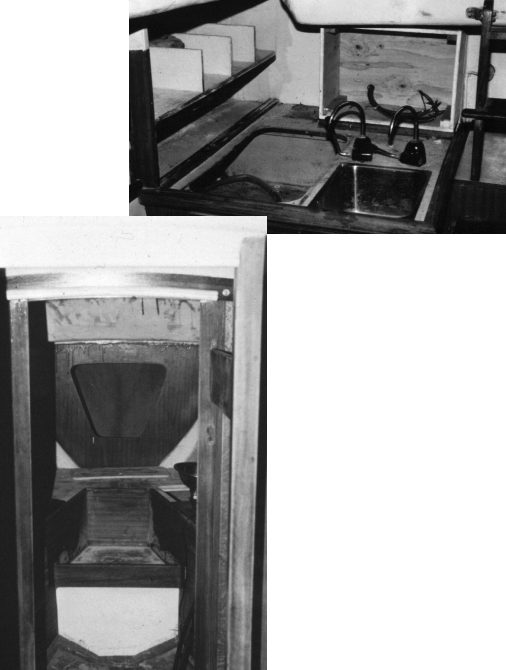
Newer boats often have headliners. These are great for eye-pleasing views of boat-show quality cabins, but are a maintenance nightmare if you need to rip every piece of wiring out of the boat. This was precisely what we needed to do to Carina Vela. The lack of a headliner made wiring much easier.
When we purchased her, the wiring was bunched with tape and terminated with wire-nuts. Wiring was strewn about and routed in endless loops around the cabin. Not one light worked.
During early December all wiring and the fuse panel were removed from the boat and placed in a trash barrel (we kept one bunch as a souvenir). That month, we ordered a custom breaker panel from Bass Electronics, and we bought large spools of wire. In the bitter New England winter months that followed, the skipper and I worked, with the aid of space heaters, roughing in nearly 200 feet of wire to the area that would house the new circuit panel and to the locations of the new brass light fixtures. The tinned wire was crimped and soldered to forestall corrosion. Due to the amount of work still required in the cabin, we did not install any lighting or the box to house the circuit panel for another few months.
The interior of the cabin was the same “robin’s-egg blue” color as the topsides and happened to be in the same condition. Before covering the boat for the winter, Steve had sanded, scraped, and epoxied the inside of the cabin to a very smooth surface. Blue dust covered the inside of the cabin all winter, but we consoled ourselves with the thought that it would be removed come springtime.
During the winter months, we also removed all the gate-valve seacocks and through-hulls to prepare for replacement with full-flow ball valves and new through-hulls. We also removed the entire stern-tube/prop-shaft assembly during the fall (which required removal of the rudder), and ordered new ones. This included replacement of the worn bronze shaft with stainless steel, a new stern-tube/Cutless bearing assembly, and a new dripless stuffing box. These items by themselves were a costly venture, but we felt the investment was warranted because of the added insurance they gave us.
The portlights on this vintage vessel were so badly scratched and fogged that they, too, needed replacing. We tried to remove the original aluminum window frames, but the anodizing had worn off long ago, and the frames fractured and fell apart in our hands.
Finishing touches
I felt a developing connection to Carina Vela. She had become beautiful to me, and the finishing touches would be mine. The portlight curtains were white-on-white, tied onto mahogany-stained rods. This made for a wonderful contrast to the interior of the mahogany-and-white cabin.
We recovered the cushions with Sunbrella fabric in Pacific Blue, which complemented the large red and blue throw pillows. One glance into our world of varnish revealed an antique beauty that we had seldom seen in similar boats.
The first season aboard came and went, and it was a sad day when Carina Vela was pulled from the water and placed on her cradle for the harsh New England winter months ahead.
We decided that year to store her in the marina in Gloucester. I was actually looking forward to watching those streams of billowing soot from the semi hauling our magnificent sailboat up the street. Looking out of my bedroom window this winter won’t be the same . . . she won’t be sitting on her jackstands, the largest object in the neighborhood.
After sailing on Carina Vela for the past two summers, I have discovered that I enjoy being out on the open ocean, reaching for the warmth of the sun and feeling the salt spray upon my face.
I’ve grown to respect her and the ritualistic dance she does with the waves. Maybe what I’ve learned is true . . . I’ve had an experience with calming the fury of the sea in a vessel that is truly worthy of her name: Carina Vela.
The naming of Carina Vela
When you purchase a “new” vessel, the name needs to suit those who will be trusting their lives to her seaworthiness. As I have mentioned, the previous name was a mouthful, and not one I would want to keep. Our last boat was named Serendipity . . . a great name; however, a very popular one.
I do understand that the sea gods prefer one to carry the same name over from boat to boat, maybe altering it just so slightly by adding a Roman numeral. But, since we were virtually going to have a “new” sailboat, I thought Neptune would be forgiving this time around.
So now we began a search for a new name that fit hull #114. This was my “project,” since there were so many in which I did not participate. Like nearly every sailor, I wanted to have a name that would represent the sea and the stars, by which sailors still navigate to this day.
My son, Chris, an avid amateur astronomer, had several books on the subject of constellations and it didn’t take much time to come across some meaningful Latin. In fact, there were two constellations in the southern skies that fit the bill. Carina, translated, meant keel; Vela meant sails.
Carina alone would have been appropriate, because the Alberg has a very long, full keel. However, the addition of Vela completed the name and added a romantic flair to a boat that had graced the waters of New England and the Chesapeake for the past 33 years.
Carina Vela is sailed out of Ipswich, Mass, by Stephen Sousa and family: Joyce, Chris, Becky, and Rachel. Authors Joyce and Chris are pictured on the previous page.
Thank you to Sailrite Enterprises, Inc., for providing free access to back issues of Good Old Boat through intellectual property rights. Sailrite.com