Issue 10 : Jan/Feb 2000
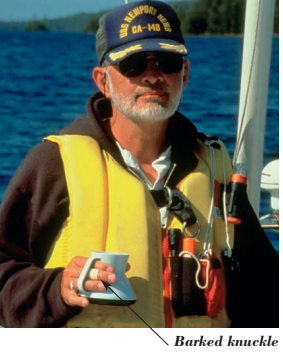
In a recent conversation, a Good Old Boat reader recited the “one thing leads to another” litany. You know the drill. “I took this apart and found that . . . which required that I remove this . . . and when I did, I found . . .” This reader, like many of our readers, was probably working on his first “big boat” restoration, but he was pretty handy and had already dealt with several problems in a respectable way. He even had a smaller boat that was giving him his “sailing fixes” while he worked through the restoration. The problem was that he had bonded with the big boat, not the smaller one, which he and his friends knew to be a poor sailing vessel.
The big one was a Cape Dory, which I thought would probably reward his restoration efforts nicely. Anyway, his enthusiasm was invested in the boat on the hard next to his house. He was a doer, not a talker, and the boat on the hard would sail some day, but it had not done so yet during his ownership.
I was reminded of our recent trip to Maine, where we did a story about an Allied Seabreeze that had been brought back from unusable condition by another reader. He had put three years into the restoration, and was not, in his opinion, finished when he said: “Enough is enough. She’s going in the water this season. I’ll finish later.” When we saw her, the boat was safe and functional, and the interior was “done.” Actually, the interior was completely redone and extensively modified as well. It looked pretty good, and the owner was rightfully proud of his work.
The interior of that boat was not as spiffy as a brand-new boat at a boat show, but quite nice by any other more realistic standard. The exterior was functional, and painting the topsides was on the to-do list. We happily shot pictures and will show them to you when the article comes up on the schedule this fall. Not Bristol Fashion yet, but a good old boat, and getting better by the season. Definitely shipshape. Definitely safe and functional.
I suggested to the Cape Dory restorer that at some point, when she was safe and functional, he should suspend the restoration for all or part of a season and take her sailing. I reasoned that he might even do some of the restoration differently once he’d had a chance to sail the boat and see what he liked and didn’t. I cited the Seabreeze restoration as an example of this kind of thinking, and he said that made sense.
As a retired dinghy racer, my own sensibilities had been blunted. I’d spent hundreds of hours seeking speed in the hull, gear, skipper, and crew, and a few minutes washing off the topsides with a hose. The only appearance I was interested in was the appearance of my transom in front of the rest of the fleet at the finish line. When I took up cruising, nothing changed for me.
My partner and wife (and editor) was a little different. She tolerated the dusty chalky blue topsides of our C&C 30 for as long as she could, and then started applying pressure for change. We got quotes of $100 to $150 per foot from professionals who said they would make our boat look like new. They could, too. But Mystic was not new, and in the end we rolled and brushed a one-part urethane on her that didn’t look too bad from a distance of about 10 feet and beyond. We were happy — even got some compliments — and spent maybe $500 plus our labor on the whole project. Bristol Fashion? Certainly not. But then, how good does a 23-year-old boat have to look? In the antique furniture business they call it patina. If you have a priceless antique, you don’t want to refinish and lose the patina.
Boats are different of course. Above all else, they must be shipshape — meaning, in this case, functional and safe. For some owners, they must also be Bristol Fashion or as close as possible to that level of finish. For others, Bristol Fashion may be an unreasonable goal or only realizable at the expense of years of on-the-water time. There is room for all views in this, but don’t forget to go sailing.
Thank you to Sailrite Enterprises, Inc., for providing free access to back issues of Good Old Boat through intellectual property rights. Sailrite.com