A look at the Allied Seawind owned by the do-it-yourselfers’ guru
Issue 28 : Jan/Feb 2003
Robin Lee Graham may never know how many people became sailors as a result of reading his three-part series in National Geographic. One of them was Don Casey. Don, now a well-known sailing author, has likewise inspired many more sailors since he first published Sensible Cruising: The Thoreau Approach in 1986.
A Dallas-bred Texan going to college in Arlington, Texas, Don subscribed to National Geographic in 1970, just in time to catch the final episode of Robin Lee Graham’s circumnavigation in Dove. This happenstance changed Don’s life.
“Most of the photos were of the Caribbean,” he recalls. “Nothing had ever grabbed me like that.” He hopped on his motorcycle and raced to the library, where he read the first two articles in the series.
“I kept thinking that I was about to put on a skinny tie and interview with IBM for a job that would confine me to a cubicle, while here was a kid about my age who had already seen the world. I had a pretty good sense right then about which one of us was on the right track.”
Don tried to check out every book he could on the subjects of sailing and cruising, but inland Texas was hardly a sailing Mecca in 1970. The only sailing books in the library were an ancient Chapman’s and a dog-eared Royce’s. The library had nothing at all on cruising, but soon Don subscribed to a sailing magazine and discovered the Dolphin Book Club, a treasure trove of cruising books.
Focused on learning
“For the next year I focused on getting my degree and living by the ocean,” Don says. His first sailboat and sailing experience had to wait until Don landed a job with the Federal Reserve System and moved to Miami.
The first paycheck was spent toward the purchase of a Carl Alberg-designed Bristol 27. “The guy I bought it from took me sailing one day. There were only a few strings to pull. I figured, ‘How complicated can this be?’ ” Don named the boat Tutor. Two years later, after a couple of trips to the Bahamas, Don sold Tutor for $9,000, his original purchase price. It had provided one heck of an education. He was ready for the next phase of his training.
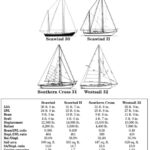
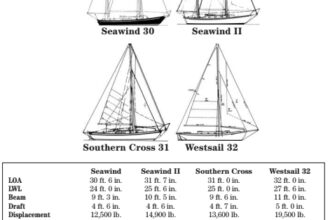
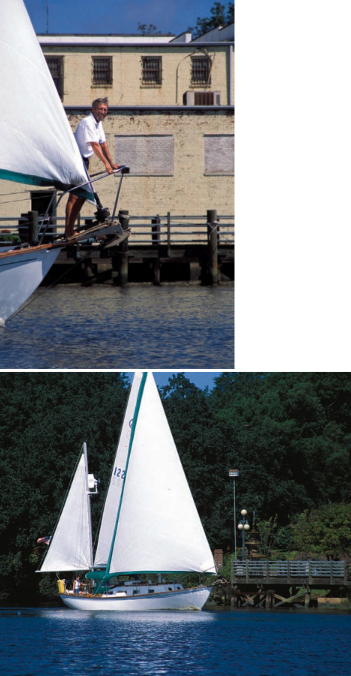
“I began looking for an Allied Luders 33 like Robin Lee Graham had at the end of his voyage. I didn’t really know how to go about selecting a cruising boat, so I figured that going with the same boat Graham chose for completing his voyage couldn’t be too bad of a choice,” Don says. The trouble was that Allied didn’t build very many Luders 33s (approximately 100), but Don found an Allied Seawind and liked that boat, too. It was a 1969 model that had already had two owners by the time Don bought it in 1973. “The Seawind was a boat I settled for at the time,” Don notes. “Now I think how fortunate I was to have bought it.” Thirty years later, Don’s wife, Olga notes, “This boat is part of the family.”
He named the boat Richard Cory after the poem by Edwin Arlington Robinson that was popularized by Simon and Garfunkel. He thought the name would help remind him “that I could leave school and spend my life accumulating wealth, or I could leave school and live my life.”
Honeymoon afloat
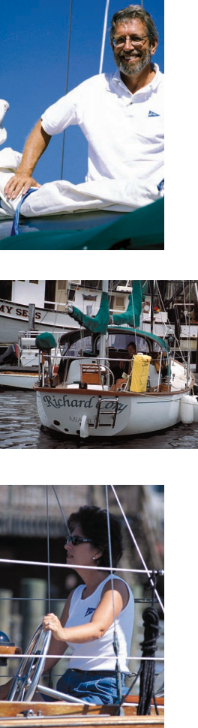
Olga, by the way, came to work at the Federal Reserve where she met Don. Before long the two were honeymooning on Richard Cory. Don stayed with the Federal Reserve for 11 years, advancing to the position of chief operating officer. But it was time to live his life. He started with a sabbatical leave in 1978. He and Olga cruised in the Bahamas for six months. Some- time during those years Don discovered that he valued his independence more than a paycheck. In 1983 Don escaped from the corporate world permanently and became an author, writing sailing articles and books and a couple of detective novels as well. Over the years, Olga became a legal assistant and kept the two covered with corporate benefits.
How does a guy who discovers sailing in his 20s and essentially teaches himself how to sail become one of the most prominent writers in the field? Serendipitously, of course, just the way he discovered sailing and settled for the boat that he and Olga have been happily sailing for 30 years.
Don and Richard Cory were captured in a photo in 1979 in the Sailors’ Gazette, a St. Petersburg publication no longer in existence. A friend sent Don and Olga that issue. Don wound up corresponding with the editor and before long was a regular contributor. Soon he was selling cruising articles to several publications. “In five years I never had an article that didn’t sell,” he says. There may not be another author alive who can make that claim.
Unpublished novel
During this time Don sat down to write a short detective tale. “And 60,000 words later I had a novel,” he says. “It was magical. I had a basic structure outlined, but writing it was like watching a movie.” The words flowed from his fingers to the keyboard, one of those experiences that many novelists only dream about. The book sold, but the publisher was a casualty of a corporate merger before the book was printed. Don has the rights back and may do something with it again, but time has not stood still, he notes, and parts of the book seem dated to him. But he now believed in his ability to start and finish a project as time-consuming as a book.
Another touch of serendipity was about to occur. Don had written an article for the Sailors’ Gazette called “1 + 1 = 35 or Less,” an argument against three-footitis. Don sums up the concept: “Larger boats provide more interior space, but that does not translate into a better sailing experience. On the contrary, smaller boats are nearly always more fun to sail. Smaller boats are easier to handle, cost less to sail (and, just as important, less to not sail), and the consequences of a mistake or just bad luck increase geometrically with boat size. I advocate sailing in the smallest boat you can be comfortable in, not the biggest boat you can afford.”
Lew Hackler saw this article and asked Don to collaborate on a book championing this concept. Sensible Cruising was the outcome. As time goes on, Don is often rewarded by younger sailors who tell him, “We discovered your book, and it changed our lives.” And thus, Don returns to the sailing community what he received from Robin Lee Graham.
Modifying things
Meanwhile, Don the tinkerer was doing what every other sailor does on his boat: he modified a few things, sewed some new canvas covers, added a few things, and generally made it his own. “No one else has put a wrench on this boat,” he says. Not long ago, he replaced the engine, possibly the highest level of achievement for do-it-yourself cruising sailors. Over the years, he became known as the do-it-yourselfer’s guru.
The publication of This Old Boat in 1991 launched Don Casey as the answer guy for the rest of us. Since then he’s written a series of six do-it-yourself books for the International Marine Sailboat Library Series, writes a question-and-answer column for Sail magazine, and shows up as an expert on the SailNet and BoatUS sites. He also wrote a book aimed at the hesitant sailor. This one, Dragged Aboard: A Guide for the Reluctant Mate, came out in 1998. Of this book, Don says that Olga is not at all a reluctant crewmember, but on the last cruise they were astounded, “It’s incredible to us how many couples were out there singlehanding, essentially,” he says.
What led to the writing of This Old Boat? Serendipity, of course. “Olga and I were about to go cruising,” Don recalls. “I needed instructions for a particular project. I knew I had seen exactly the information I needed in an article somewhere. I was sitting on the floor with about 50 magazines spread around me in a fan when it came to me: ‘There’s got to be a better way.’ ”
Don figured someone should write a book and approached International Marine with the idea. It took him 14 months to compile the information. Now, even 10 years later, the annual sales of This Old Boat remain as strong as the year it came out.
Time for changes
Somehow, nearly 30 years have gone by since Don bought a nearly new Allied Seawind. The boat had seemed to need very few modifications in 1973, but as Don and Olga began to contemplate their latest cruise (which began in August 2002), they decided it was time to make some major changes.
“Before previous cruises we typically went through the catalogs and asked ourselves, ‘Gee, do we really want to spend $1,000 for this improvement or that one?’” Don says, adding, “‘Do we really want a new roller furler for a six-month cruise? Is it going to be that much better?’” At the time their standard response to that question was to save the money. But things were different when they contemplated the current cruise.
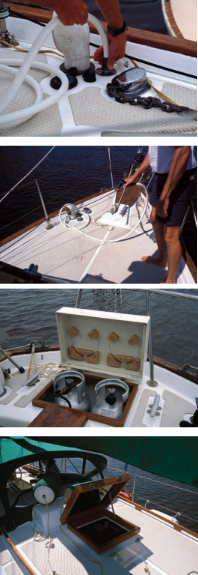
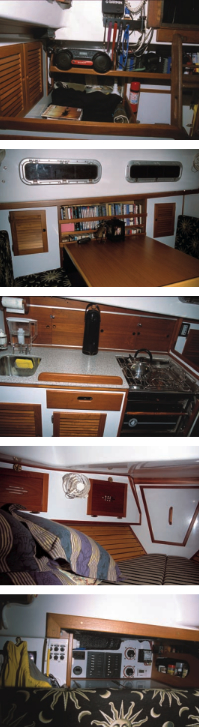
“This time we made a list of everything that irritated us on the last trip: water, ventilation, fans, lack of power, and so on,” Don says. Richard Cory now has opening ports in the main saloon. Since they were not a direct replacement, Don had to reglass and recut the cabin sides. He also added an overhead hatch, replaced the engine, added 55 gallons of additional water tankage below the V-berth (the Seawind already had around 40 gallons under the sole). They added a wind generator, solar panel, and an inverter. They put in a water washdown system on the foredeck.
Don rewired the boat entirely, updated the head, put a new Corian counter and a propane stove in the galley, constructed a new refrigerator, changed the dinette from U-shaped to a booth, reconfigured the dinette table (building the new one of teak and ash), added six feet of bookshelves, completely redid the V-berth, added a teak-and-holly sole, painted the topsides and deck, installed Treadmaster on the decks, and on it goes. “It’s still a work in progress,” he says.
Matter of inches
“If there’s a title to what we’ve done,” Don says, “it is that it’s all ‘a matter of inches.’ We are optimizing a small space.” He goes on to point out that the new dinette is four inches longer and four inches wider, which makes the guest sleeping accommodations infinitely more comfortable. “I also raised the dinette about two inches, which allows for four golf-cart batteries under the settee and makes a tremendous difference in the size of the other under-seat lockers,” he adds. Even the lifeline stanchions were moved 2 1⁄2 inches farther outboard. “That small change increases the on deck width by nearly five percent, and it makes all the difference with getting past the Bimini from the cockpit,” Don says.
Most of the woodworking was done not at the boatyard but rather on the 18th floor of a highrise condominium overlooking Biscayne Bay. “We had a cheap table saw on the marble-tiled terrace,” Don says with a grin, pointing out the ash strip hull liner on Richard Cory. “I bought bulk ash and ran it through the table saw. I had to pre-rout each strip.”
Eventually, Don determined that the refit was done enough, and the couple sold everything including the condo and the table saw. They headed out for a cruise that began by heading north up the East Coast from Miami.
How long will the cruise last? Don and Olga leave that question unanswered but not out of coyness. They don’t yet know the answer themselves. They have many land-based interests also and can envision themselves being just as happy someday living in Paris while Don writes another book or two. Since it’s too soon even for them to predict what will come next, the rest of us will have to be content with reading Don’s current collection of books, all of which are still in print.
In every book Don’s humble message has been that if he can do it, you can, too. His tone is warm, and his emphasis on simplicity and common sense come through between the useful tips.
Don summarizes his philosophy when he reminds others of the need to go with the smallest and simplest boat they can, “If it’s called pleasure boating, you ought to try to configure it so it is a pleasure,” he says.
Thank you to Sailrite Enterprises, Inc., for providing free access to back issues of Good Old Boat through intellectual property rights. Sailrite.com