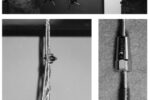
We’ve finally made the dreaded eye-splice
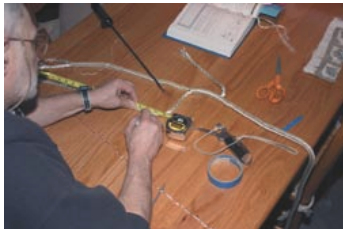
Issue 42 : May/Jun 2005
When I was a very young boy, my father told me a story about two snakes. They formed a circle, heads to tails, with each snake eating the other. As this progressed, the circle got smaller until finally it disappeared altogether. I think it was a piece of folklore from his childhood. Even as a little kid, I didn’t think the snakes would disappear.
The first time Karen and I tried to put an eye-splice in double-braided rope was about 10 years ago. All we lost were a few frustrating hours and a few feet of anchor line. As it turns out, you really shouldn’t even try to splice double-braid unless it is very new. First lesson.
Over the intervening years I have paid others for these splices. They went for $20 a pop, which — after our one and only attempt — I considered extremely reasonable. I was happy to splice three-strand, and even 12-strand single-braid, but I stayed clear of double-braid.
Eventually, as fate would have it, we found ourselves in possession of a whole spool of nylon double-braid that was just enough to make dock and anchor lines for the Mega. It was time for a rematch. At least this time the rope was new. Karen had the first go at it. She used the instructions in Chapman’s Piloting and Seamanship. It seemed easy. She banged out four eye-splices in no time. I was impressed. Then she said she was not so sure about the quality of the double-braid eye splice in Chapman’s. It is indeed easier to do, but near the base of the loop there is no core at all. Only the cover remains. To our way of thinking, since half the strength of the rope is in the core and half in the cover, the splice was down to half strength. We learned that there are eye-splices and then there are eye-splices. You bet your boat on these lines. We started over.
I looked for other references. Clifford W. Ashley had the great good fortune not to have to deal with double-braid. I think the technology came after his time. I started printing out directions from cordage manufacturers taken from their Internet sites.
One-pagers
Still operating on the assumption that this ought to be simple, we favored the shortest explanations … we liked the one-pagers. We made more splices but did not like the looks of those either, although we could see that if we could make them correctly they would be stronger than the splice in Chapman’s. At this point it was a tag-team grudge match. Us against the ropes. We would clear the kitchen table, get out all the fids, wands, knives, several sets of instructions, and what was left of the spool. One would read the directions. The other would destroy more rope. Then we’d change roles and try again. Slowly more good rope moved from the spool to the trash can. Even after I’d seen the splice done several times, I could not claim to understand it. I began to have dreams and then nightmares about the double-braid eye-splice. The snakes came back. I still thought $20 a pop was cheap, but Karen and I can be very stubborn.
I looked for more references. The Rigger’s Apprentice by Brion Toss has a section called “The Double-Braid Eye-splice Made Human.” It runs to eight pages. It employs a special tool. I already had the tool, but we did not want to believe it takes eight pages to describe how to make this splice. On the other hand, we had tried shorter versions and were not willing to trust our boat to what we had produced. At this point, we were getting pretty familiar with various versions of this splice. Brion’s instructions are lengthy and involve different techniques, but they wind up making about the same splice that the cordage companies’ instructions do. The difference is that the first one we made turned out pretty well. As of this writing, we have made three more. We tend to limit ourselves to one a night. That way I don’t have nightmares. We read the instructions word for word with each splice. There is no memorizing this thing. We have already learned that Karen is good at some parts; I am better at others. A pattern is emerging.
I do not claim conquest or even mastery at this point. Way too much rope has gone under the knife for that. If there were to be a 100th splice I’m sure we would still be reading Brion’s instructions word for word. Still, we have come a long way. Thank you, Brion.
Thank you to Sailrite Enterprises, Inc., for providing free access to back issues of Good Old Boat through intellectual property rights. Sailrite.com