Lingering fair weather is irresistible
Issue 92 : Sept/Oct 2013
Past Labor Day, through October and well into November, there’s some fine sailing to be had in Puget Sound — warm 75-degree days that turn into 45-degree nights. There will be sun and what’s left of the summer wind and there will be wind with some back in it. These are days for sailing in less company, days that beg turning a sprightly daysail into an overnight anchorage.
If the weather’s reasonably settled, I’ll take a loaf of bread, butter, some fruit, eggs, and a couple of my wife’s casseroles. Most anchorages are only a short hike from a grocery store, or Beth will join me by car and we’ll either take the dinghy to a picnic site or find a good restaurant. Sometimes she’ll stay the night.
As the sun drops below the tree line, I’ll take a last look around to check alignments between chimneys and treetops to make sure we’re well dug in, ready for the tidal swing and the possible surge of a cold front moving through. This is the time to pay out another 50 feet of scope and bring the dinghy up amidships, tethered fore and aft. Dropping below, I’ll put in a couple of companionway dropboards and fire up the wood stove to take the gathering chill out of the air. Long evenings provide plenty of time for a good hot supper prepared slowly with a glass or two of wine while listening to the radio.
Instead of sleeping in the fo’c’s’l or the quarter berth on these solo cruises, I’ve taken to pulling out the starboard settee berth and making up the double, closer to the stove. Bolsters made up of sleeping bags stuffed into large “pillow cases” make good backrests. I sleep under a medium-weight duvet and sometimes pull on a wool blanket or two. November nights are long and a hot water bottle is a welcome friend when the fire goes out.
Mornings are dark and cold, but when it’s light enough to read the barometer, I’ll put the kettle on to boil and make a pot of tea, replacing the kettle with a flowerpot upside down over the burner to generate a little warmth before diving back into bed. If the morning fog is thick and wet, I’ll cook up a hearty bacon-and-egg breakfast with toast and coffee. Other mornings, I launch the dinghy first thing and set off through the mists, rowing close along the shore, sometimes following a great blue heron breakfasting in the mud flats.
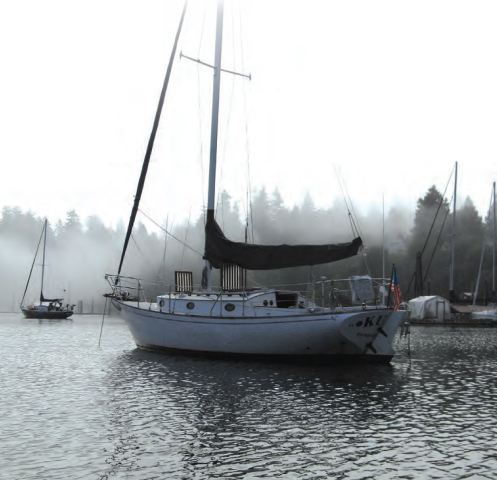
If an interesting boat appears out of the fog, I’ll row over that way. A lone crew member may appear in the cockpit and a friendly wave will bring me over to his rail where we’ll whisper of prospects for the day: when this fog might burn off, the likelihood of sun and wind, and so forth. We’ll exchange comments about the origin of his lovely schooner, where he’s headed, and the pleasures of rowing a wooden dinghy you’ve built yourself. After a few minutes, we’ll nod and I’ll push off. Moving through the gray water, an occasional glimpse over my shoulder will tell me I’m on course for Kuma waiting at anchor a quarter mile away.
A pair of harbor seals may follow in my wake. In time, one will disappear, leaving his partner to carry on forging ahead with a body twist, steering this way and that with arm-like fore flippers, submerging and surfacing over to port, diving and coming up again over to starboard. When I look away she’ll be gone.
Finally, I’ll pull to line up with the big boat, moving against the current with one oar shipped, ready to land. But the seal will pop up again, closer than ever, bobbing straight up and bringing her glossy head and narrow shoulders fully out of the water as if springing from a submerged rock. She’ll move outsized lashes over globular eyes and breathe heavily through V-shaped nostrils. Sweeping long antenna-like bristles across her chest with her whiskery muzzle, she may almost touch a floating blade of varnished spruce. One last look and she’ll roll over backward, twisting her winsome shape to reveal the brown and spotted creaminess of her breast before swimming away.
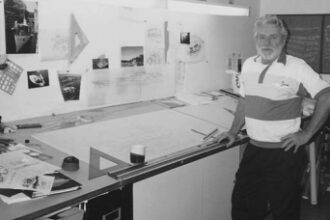
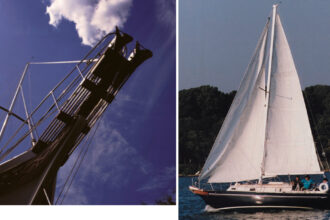
Richard Smith, a contributing editor with Good Old Boat, is an architect. He specializes in designing and building very small houses and has built, restored, and maintained a wide variety of boats. He and his wife, Beth, sail their Ericson Cruising 31, Kuma, on the reaches of Puget Sound.
Thank you to Sailrite Enterprises, Inc., for providing free access to back issues of Good Old Boat through intellectual property rights. Sailrite.com