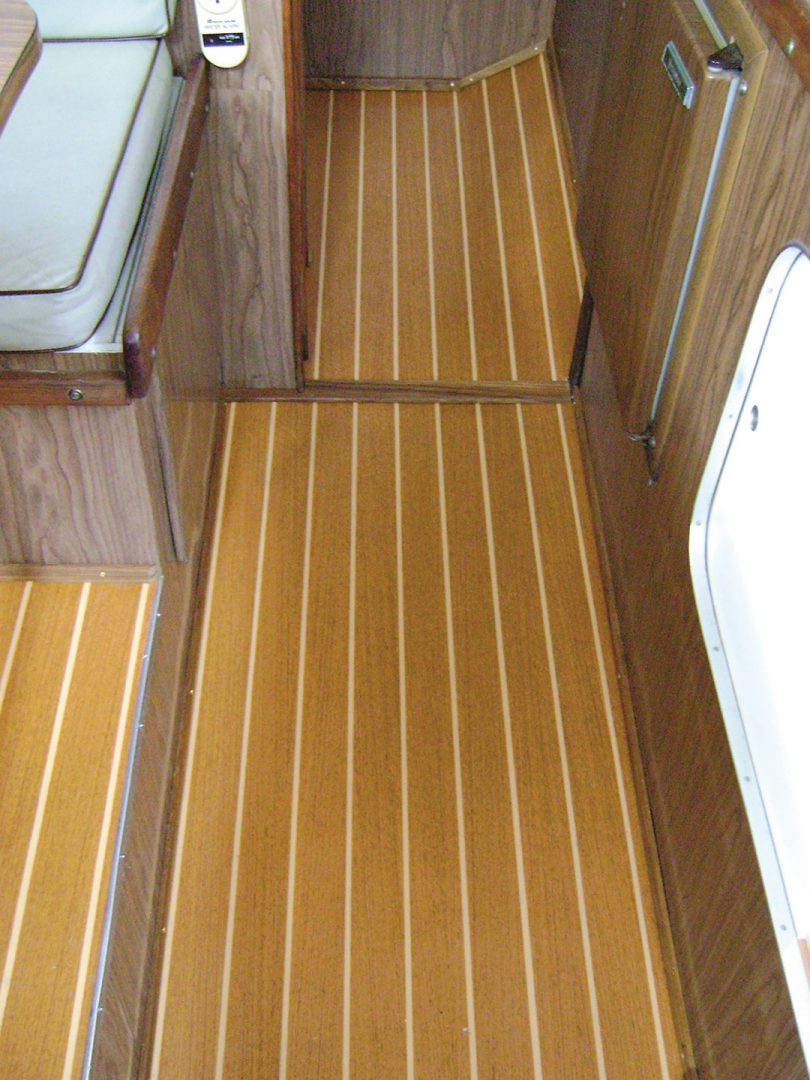
A recycled plastic vinyl overlay brings new life to a worn-out cabin sole.
Issue 131: March/April 2020
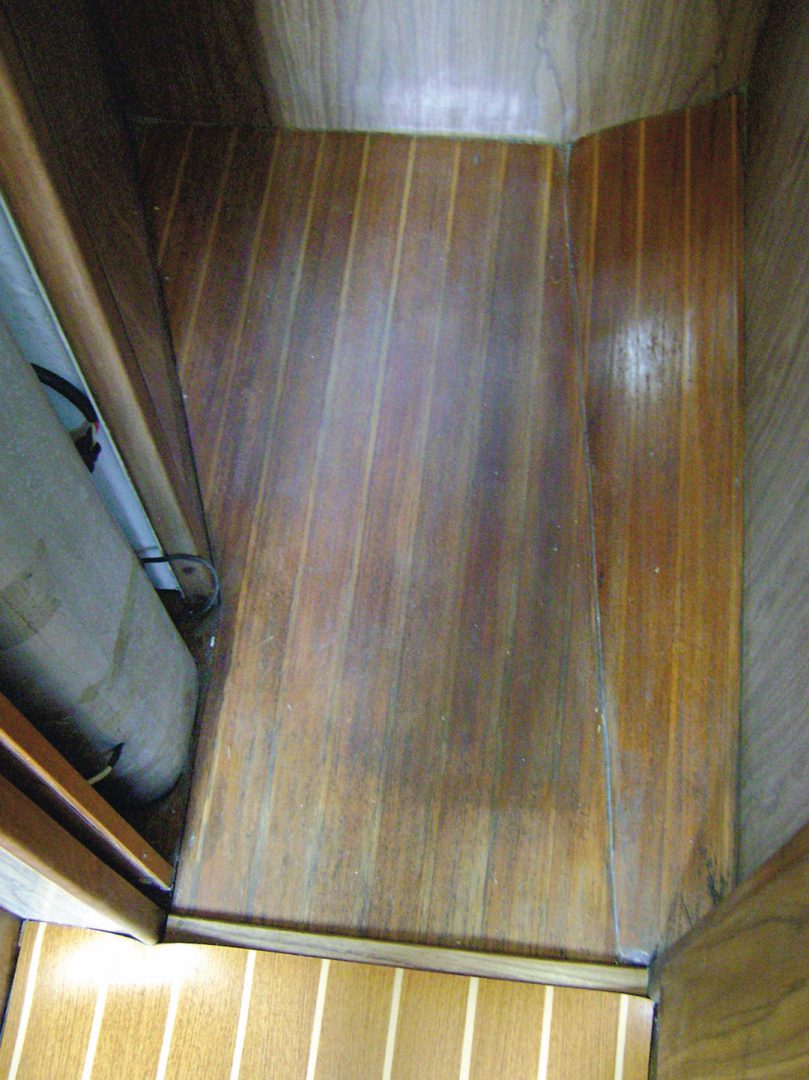
After 45 years, the teak-and-holly cabin sole of Captiva, my 1970 Morgan 33, was not looking so great. I couldn’t imagine that refinishing the sole was going to give me the like-new look I wanted, and for a while I considered replacing the sole with new teak-and-holly plywood laminate. Then I learned that for the same price I could install Plasteak vinyl flooring. Reasoning the Plasteak would be easier to clean and maintain, that’s what I went with.
The material—which is made from recycled plastic—has a satin finish and promises good resistance to water damage while always looking fresh. The manufacturer sells 6-foot-wide sheets by the linear foot. I purchased 8 linear feet to ensure that the three cabin sole levels would have a grain pattern running in a common direction. The cost, at $50/linear foot, came to $400.
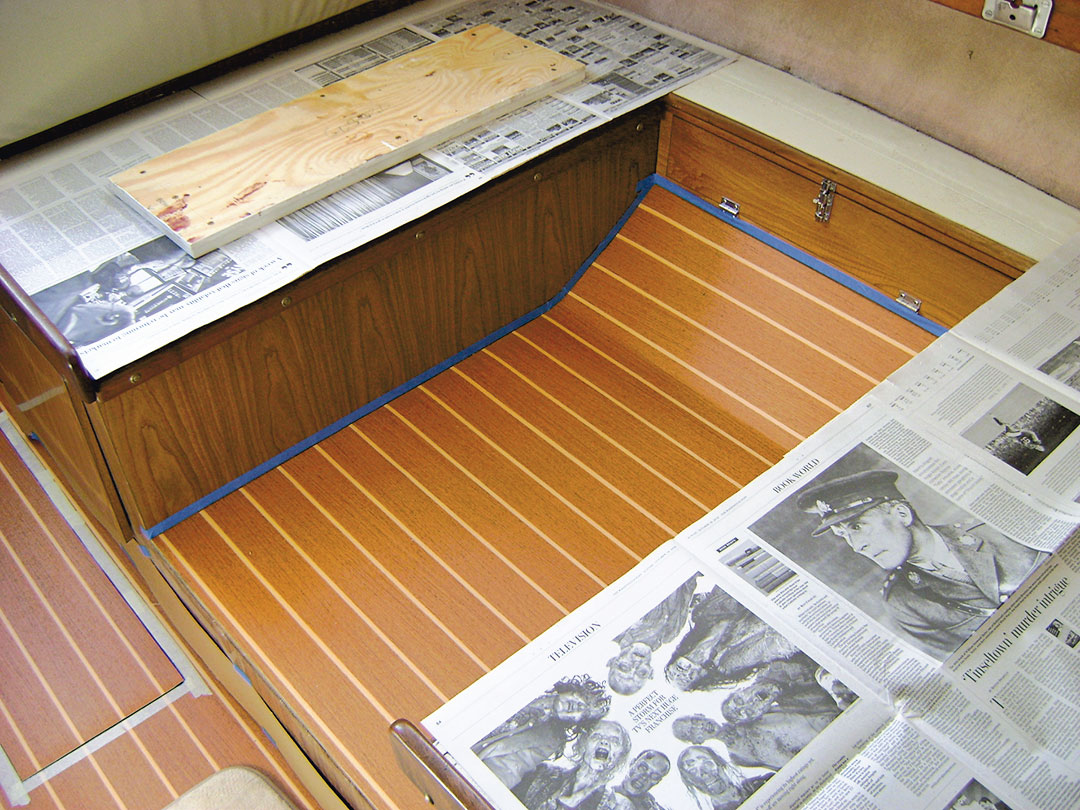
My Morgan 33 has three separate cabin sole sections, and all three have canted floor portions. I did not want any open-joint interfaces that could encourage abrasion or water intrusion, so after testing the idea I determined I could score the vinyl backing with a mat knife and achieve a perfect unbroken angle bend on the exposed surface.
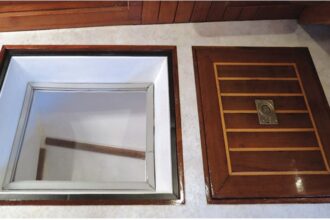
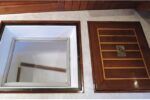
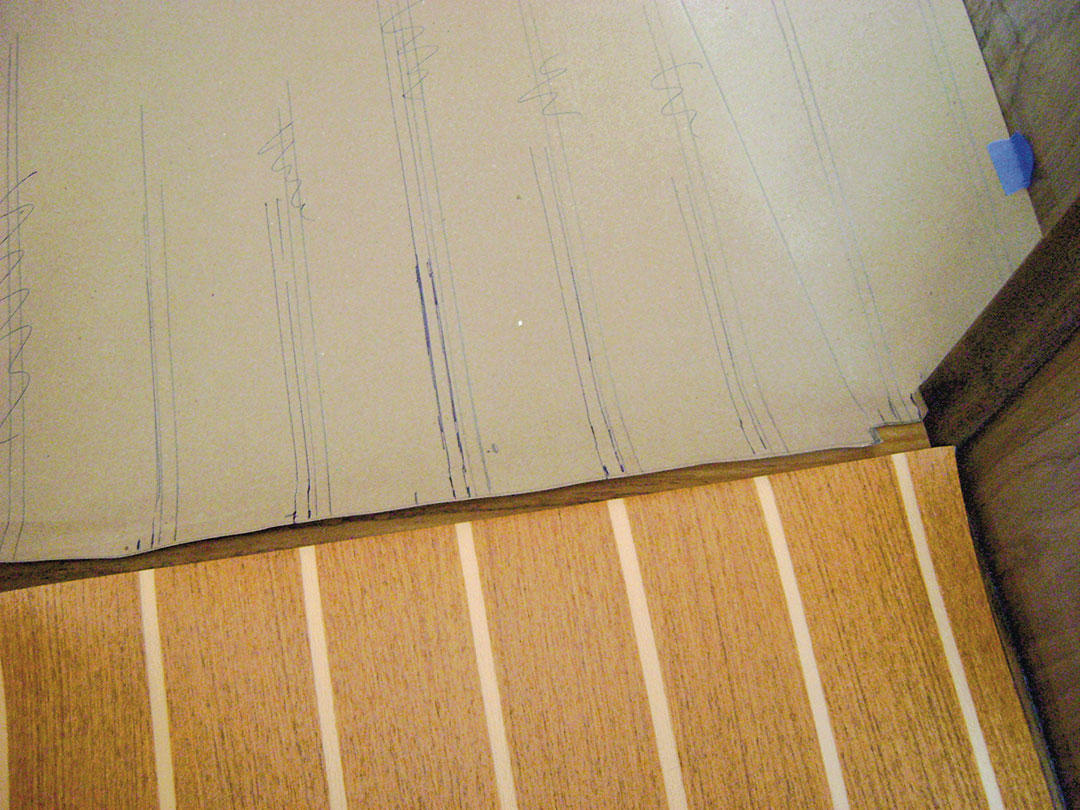
I made full-size, craft-paper patterns of each of the three areas and test fit the paper patterns on the sole. I then laid the paper patterns on the vinyl stock and used a mat knife and metal rule to cut each piece. I traced the cant score on the underside of the forward cabin piece, the dining piece, and the main sole piece. The main sole section also had a rectangular area for the lift-out bilge access panel.
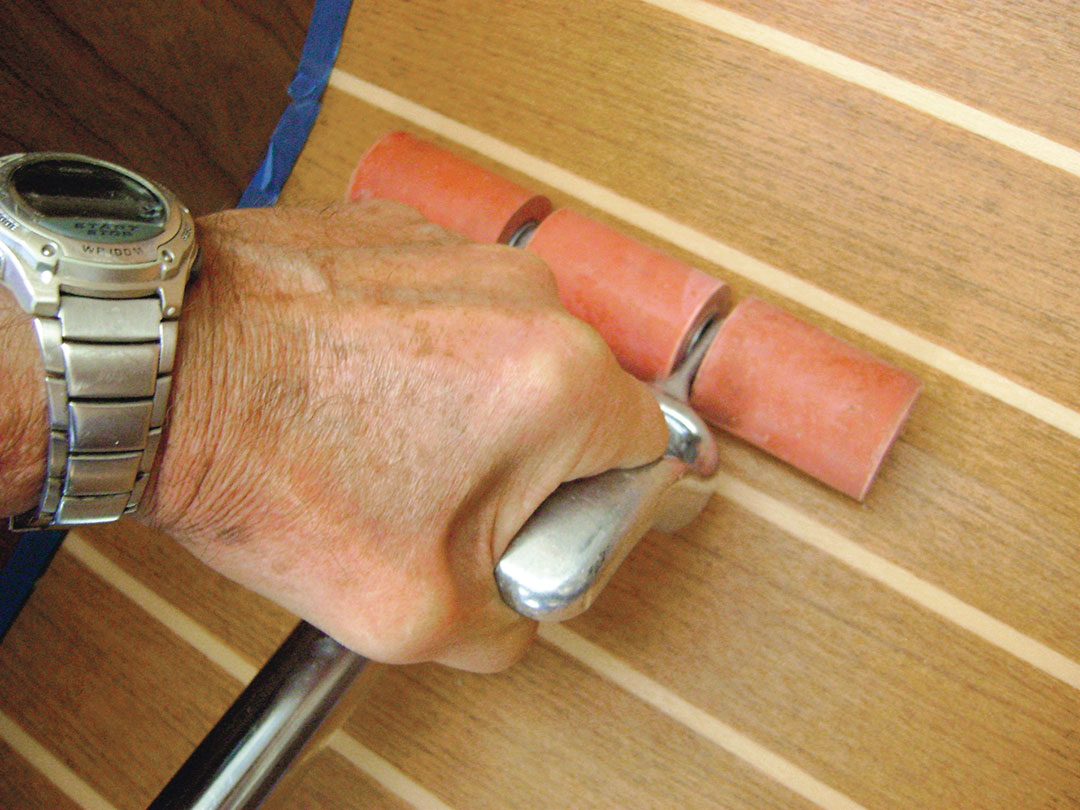
After cleaning the original sole with heavy-duty soap, rinsing with water, and allowing it to dry, I sanded every square inch to scuff the surface. Next, I applied blue painter’s tape on the vertical surfaces at the floor edges to protect them from the adhesive I planned to use to glue down the floor. I mixed two-part Lonseal epoxy adhesive and spread it evenly on the floor surfaces, one section at a time. With assistance, I carefully placed each cut vinyl piece and used a pressure hand roller to insure good adhesive bonding and no bubbles.
I faced the lift-out bilge access panel (3⁄4-inch-thick marine plywood) the same way and then used tan plastic T trim to finish the edges.
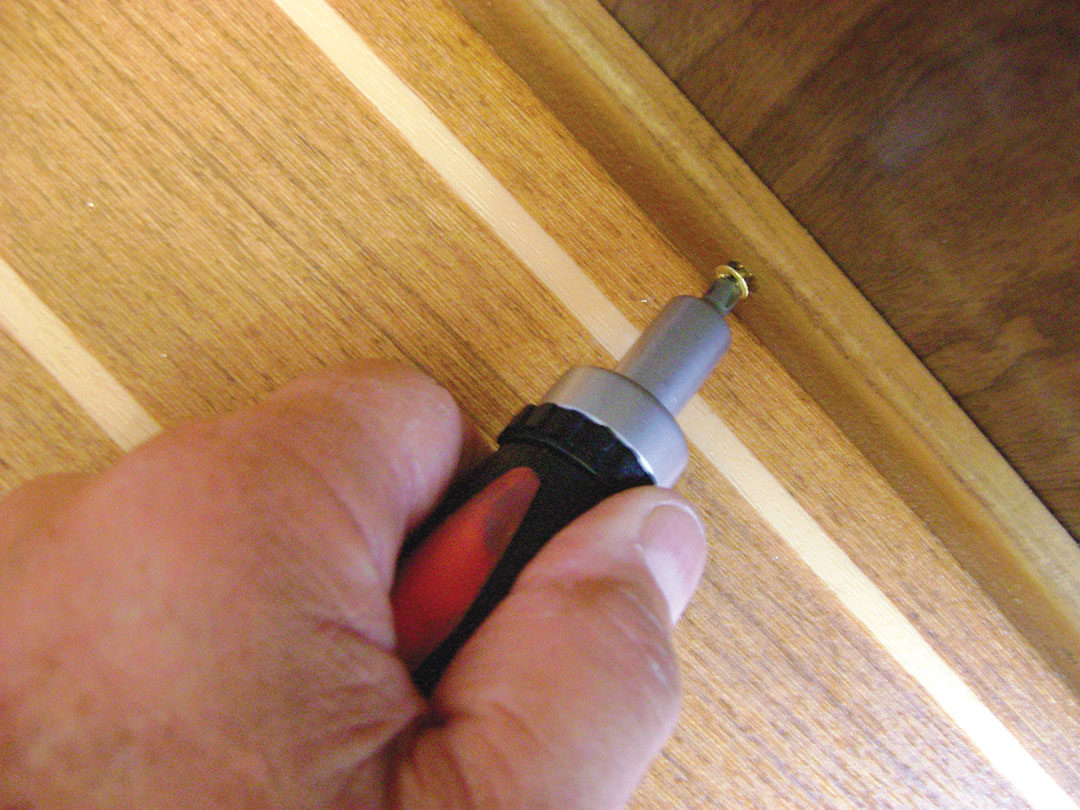
Because the 1970 Morgan does not have a molded fiberglass floor section, I did not want the cut vinyl to simply butt against vertical surfaces. To finish these intersections, I purchased solid teak battens (3/8 x 1 1/2-inch) and ripped the lengths in half to 3/8 x 5/8 inches. I custom cut each piece to fit in place as baseboard trim, covering the entire perimeter of the cabin sole. I secured the trim using flat-head brass screws.
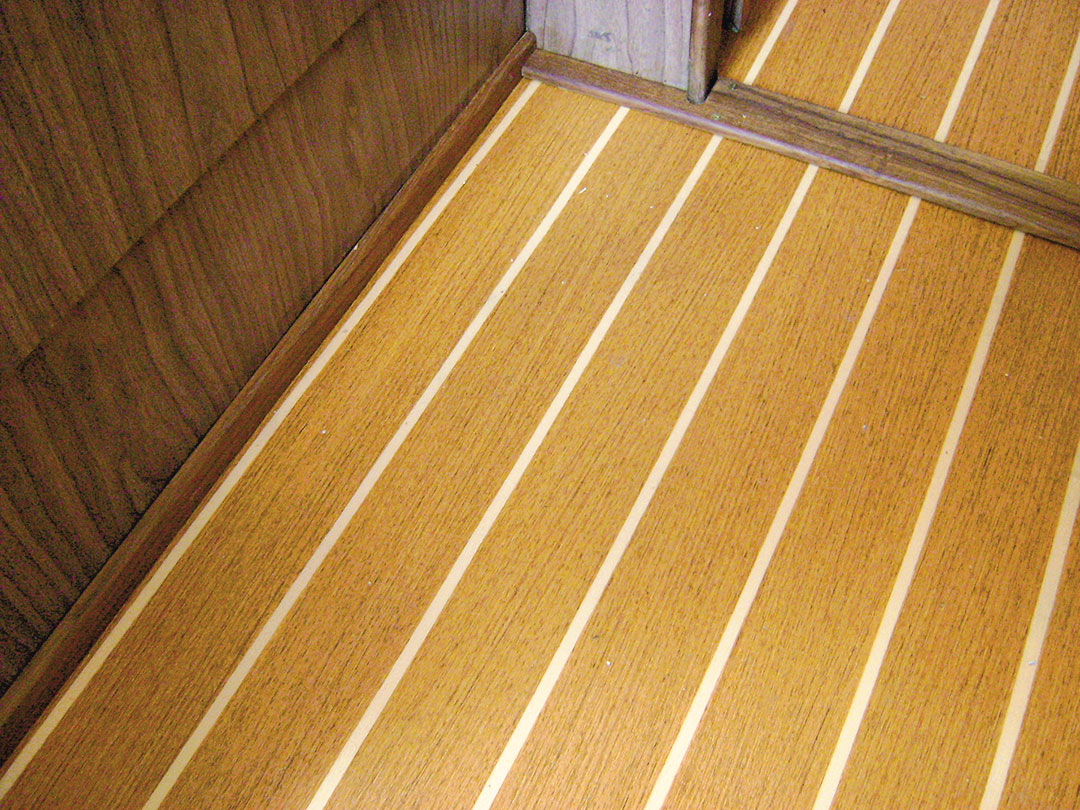
I finished this installation three years ago, and the cabin sole looks as good today as the day it was installed.
Gary Gerber, a retired industrial designer, has been sailing for more than 45 years in coastal New England, the Caribbean, and the Mediterranean. He lives in Annapolis and sails his 1970 Morgan 33 on Chesapeake Bay.
Thank you to Sailrite Enterprises, Inc., for providing free access to back issues of Good Old Boat through intellectual property rights. Sailrite.com