Issue 9 : Nov/Dec 1999
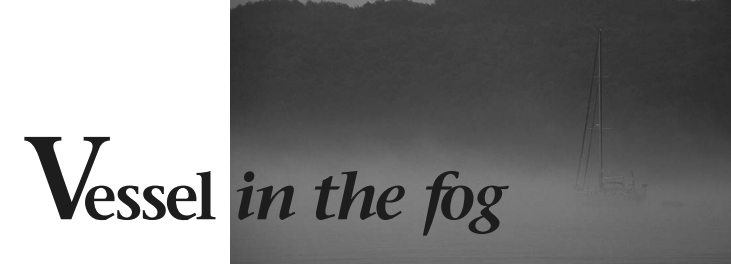
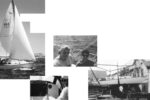
We delayed our departure from Loon Harbor as long as we could. It is among our favorite anchoring holes along the raw and secluded Canadian north shore of Lake Superior. We went ashore to sit and admire the serenity and take some photos of Kiwa with her brilliant red hull in contrast to the subtle shades of green, gray and brown of the islands. Perhaps our next Christmas card would result.
Finally, we wrestled the anchor from the thick blue clay and motored out. It could be a long slog. As usual, what wind there was was on the nose. We beat in light air for nearly an hour before giving up and turning on the motor.
We had a choice. We could go inside past Number 10 light. If there was no fog, the obstructions are easily avoided. Or we could pass outside and probably make some long tacks when the wind picked up. There were fewer obstacles if fog should set in. We chose the outside route — and the winds did pick up.
We had some of the best sailing of the trip as we approached Porphyry Light. The winds were 15 to 20 with moderate seas. We were close-hauled, but could hold a good course without tacking. Once we rounded Porphyry, we intended to find Horseshoe Cove where we would set a stern anchor and tie the bow to a tree.
But as we approached Porphyry, we sailed into a fog that thickened as we held our course. We lost sight of landmarks. We both fell immediately into our customary roles. Judy took over navigation; I stayed at the helm and kept a close watch “and listen.”
Judy began to plot Loran fixes, watch the depth sounder, and take an occasional compass bearing during brief periods of lighter fog. She also handed me the little brass fog horn to blow announcing our presence to any other vessels negotiating the fog. I blew hard, hung it around my neck then took the wheel and stared into the fog and listened.
The fog thickened as we rounded Porphyry — too close for Judy’s liking. I was ordered to tack immediately to avoid the reef lying off the point. I tacked, blew my horn, steered, glanced at the compass, and stared into the nothingness that surrounded us. Again I blew, stared, and listened. The wind continued strong, frequently topping 20 knots, a perfect wind for our boat. Suddenly, I heard another horn. I called to Judy. “There is someone out there!”
“Where?” she said, as she scrambled into the cockpit, and I gestured vaguely off to starboard. I blew again, dropped the horn and clasped the wheel. We both strained to see the other boat. It was out there somewhere, but sound plays tricks in the fog. I heard it just forward of the starboard beam, but Judy was just as convinced that it was astern, slightly to starboard and over my shoulder.
We couldn’t hear a motor, so it must be another sailboat. I blew, and the other boat answered almost immediately. They were also using a mouth powered horn. Blow and listen to the answer. I would blow a good five- to six-second blast, and the answer was easily as long or longer. I tried a couple of short toots and got a long blast as a reply. This could not be an echo. At least we were not bumbling into a cliff. The sound stayed off the starboard beam, but Judy insisted that it was astern. We both strained to see our fellow traveler.
We continued along our course blowing and listening, squinting into the fog, leaning into the wind, then blowing and listening again. Check the depth sounder; plot another loran fix. Could it be someone on shore playing with us? We struggled to grasp what our senses were telling us.
I lifted the horn for another long blast. The other horn stopped immediately. I dropped it back onto its lanyard — just as the other horn started its blast. Then I noticed that the answering blast stopped when I clapped my glove over the bell of my horn and started when I pulled back my hand.
Our phantom vessel was the wind blowing over the horn as it hung from my neck. It was strong enough to vibrate the reed — which explains why it came from forward as I turned to listen. And why Judy heard it back over my shoulder.
As the tension broke, we had a good laugh and resumed a more routine journey through the fog.
Larry Carpenter has been sailing good old boats on Lake Superior for 12 seasons — first on Kiwa, a C&C 30, and more recently on Allegro, a Mason 33 requiring “extensive deferred maintenance.” A guitar and flute are standard equipment on Allegro, and Larry and partner, Judy Taylor, can often be heard playing music at anchor in the Apostle Islands. When not sailing, Larry researches nautical history and has developed a series of talks for sailing organizations.
Thank you to Sailrite Enterprises, Inc., for providing free access to back issues of Good Old Boat through intellectual property rights. Sailrite.com