Rainy day projects become priorities
Issue 51 : Nov/Dec 2006
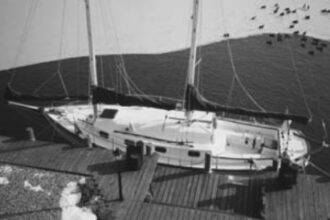
As I slid back the hatch upon my return to Maruska, steady rain revealed new problems: she leaked like a sieve. All but one port and two out of three deck hatches wept.
Painting priority
My goal for the weekend was to epoxy-coat the bilge, engine bed, and fuel tank areas. The rain continued throughout the first day causing frustration, as the bilge remained too wet to paint. While waiting for the rain to stop, I rebuilt the hot water heater platform and exhaust muffler base, rein- forcing and retabbing both to the hull.
After a thorough vacuuming and with a quality respirator strapped to my head, I slithered back into the cockpit lockers to apply a coat of epoxy paint. With the engine out of the way, this was the time to revive these lockers if ever there was one. I used a high-build, low-sheen epoxy primer that filled and sealed the rough areas. Many hours later, the fuel tank bulkheads, engine bed, and anything else in the aft part of the boat that was dry and I could reach had been completely sealed and was looking good.
Water tank removal
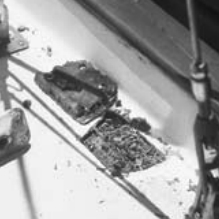
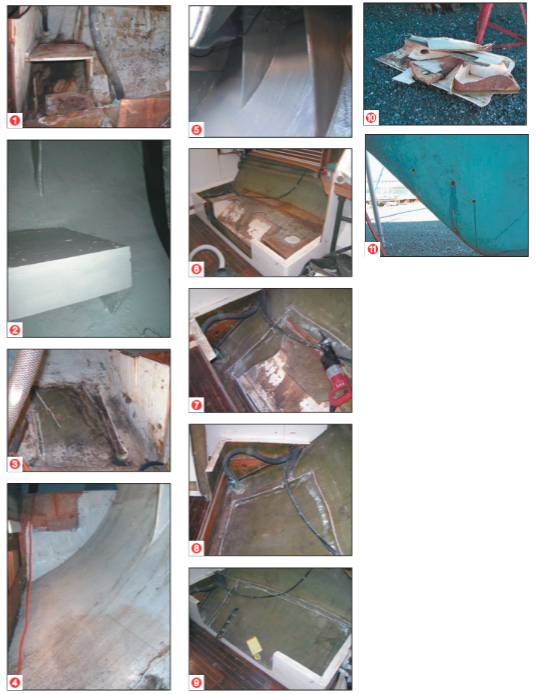
To begin the reconstruction in the main cabin, I would first have to do something with the port and starboard water tanks. They apparently did not fit into the previous owner’s plans; he had cut out the fronts of the settees as well as the fronts of the tanks. After concluding that the tanks were beyond salvage, I removed what remained of the starboard tank with the help of the Sawzall. Undoubtedly, the blade manufacturer’s stock dividends will increase. The awkward positioning and unforgiving nature of the fiberglass tanks ate blade after blade. A stretched string, straightedge, and tape measure produced the basic dimensions for a sketch of a new water tank.
My intention was to have these tanks built by a sheet metal shop from 316 stainless. I soon learned that the cost to have custom-fit stainless tanks made would be $1,800 each. The cost of stainless has gone through the roof! Instead, I located an individual who welds polyethylene. We agreed that I would fabricate flat sheets of polyethylene and he would weld them together.
The tanks will be foamed into place using pour-in-place polyurethane foam. This foam works best in 80-degree weather; the warmer it is, the better it expands. Naturally, the better it expands, the better it insulates. Installation would have to wait until warmer weather, but the tanks and associated plumbing could be fabricated and fitted in place so I could continue reconstruction on the surrounding cabinetry.
Keel and skeg leaks
I believe the nonstructural factory fiberglass covering over the rudder skeg was a dry layup and porous. Over time, water either entered the rudder skeg from the top down (the rudder post packing gland is uphill from the area) or the rudder skeg itself developed a leak and filled from the outside in. While painting, I discovered one unanticipated problem: the rudder skeg was full of water.
Why more sailboats don’t have a keel sump drain is beyond me. If you store them up north, ice in the bilge can cause lots of damage. A careful measurement, a sharp drill bit, and two weeks’ worth of accumulated rainwater became a worry of the past. To prevent this from being a problem in the future, I installed drains in the keel and rudder sumps.
Boat show time!
Since we were in the Annapolis area and it was boat show time, we buttoned Maruska up and headed to the Annapolis Sailboat Show. There is nothing like tent after tent of marine distributors and suppliers to make the time-consuming task of selecting equipment a little bit easier. Short on time, we did not set foot on one single boat. We had the boat. It was gear we needed. A show is also a great place to hunt down “boat-show specials” and collect every catalog and distributor’s business card available.
We made decisions on replacement batteries, an upgraded alternator and charging system, replacement ports, and even some dressy items like stainless Dorades. For every item that was crossed off of the need list, 10 were added to the wish list.
I was taught a valuable lesson this trip: you can’t count on the weather to cooperate. On a project like this, it became obvious that it is necessary to have a backup set of tasks, plans, and materials for when the weather does not cooperate. I did not waste any valuable time, but I headed home with a different list of completed items than I had originally planned. It goes without saying that the master schedule was a bit disrupted.
Thank you to Sailrite Enterprises, Inc., for providing free access to back issues of Good Old Boat through intellectual property rights. Sailrite.com