Issue 19 : Jul/Aug 2001
Consider for a moment ball valves and seacocks . . . the plastic variety, specifically, the stuck plastic variety. What do you do when you buy a boat with stuck plastic ball valves/seacocks on the through-hulls? Your first thought may be to replace them with bronze. But wait a minute. The specs on Marelon valves are impressive. The big advantage is that they don’t suffer from corrosion in salt water. And, if they’re mounted on plastic through-hulls, you’re going to do quite a bit of yard work to switch back to bronze.
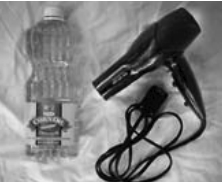
You could replace them with new plastic valves. If yours are the pre-Forespar model, the valve stems are a bit weak anyway. But first try just one more thing. You’ll need a couple of tools probably not currently in your toolbox – unless you’re a hairdresser who moonlights as a salad chef. Stop at your local discount store and buy a hair dryer. Then swing by the supermarket and pick up a bottle of vegetable oil.
What you are dealing with is friction. Plastic, even Marelon, is slightly hydroscopic. It makes the ball swell inside the socket. Because of the limited tolerance inside a valve, slightly is too much, unless the valve is exercised periodically. Exercising the valve polishes the two surfaces against each other. The plastic surface is not uniformly dense, and if the valve is not turned periodically, each surface tends to push into the other ever so slightly.
Now, to free the ball, try heat to expand the valve socket ever so slightly. The expansion will cancel out the swelling, and you can turn the valve handle without breaking it. A dose of water-soluble lubricant between the two surfaces, and you will have a functioning valve without all that Travelift and wrench stuff.
Heat the valve until it’s almost too hot to touch. Heat that does not go beyond the surface of the valve body will tighten the socket on the ball. You’re trying to penetrate the body of the valve to the socket. Don’t worry about melting it. It’s made of tougher stuff than the hair dryer. Besides, you’re going to replace it if this doesn’t work, anyway.
Heat the body of the valve on both sides of the stem. That is where the ball has the greatest surface contact with the body. I used a 1,500-watt unit with the heat set on high and the air set on low. I freed three pre-Forespar one-inch valves with several heat cycles. Try to turn the handle periodically as you heat the valve. Take into account the weaker valve stems on the early valves. Exercise a working plastic valve if you want to see how much pressure it takes to turn a normal valve.
Lubricate the valve as soon as it is freed up. Use something EPA-safe and plastic-friendly. Corn oil works fine. Once the valve is free, remember that the manufacturer’s recommended maintenance schedule assumes that you have normal valve surfaces. The book suggests you rotate the valves every six months, but the surfaces of your valve are not polished. They need regular exercise. I turn mine every time I’m on the boat.
Now walk down the dock with the hair dryer. No one is going to be able to resist asking what you’re up to. Offer to tell them the story for a beer. You’ll drink a lot of free beer on this one. You might even sell someone that hair dryer. You don’t think that you’re the only one with a stuck valve, do you?
Peter raced Lightnings during his formative years. Now he’s returning a Newport 27 MK II to like-new condition.
Thank you to Sailrite Enterprises, Inc., for providing free access to back issues of Good Old Boat through intellectual property rights. Sailrite.com