A cost-effective way to convert a mountain bike
Issue 28 : Jan/Feb 2003
For our forthcoming trip to the Mediterranean, we wanted folding mountain bikes. But with prices ranging from $600 to more than $1,000, we looked around for a model we could convert ourselves. The 18-gear Apollo with its fully sprung frame, fit the bill nicely.
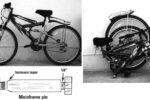
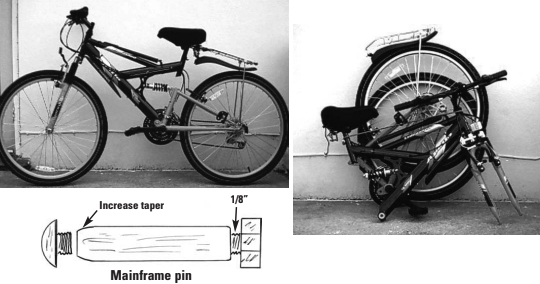
All that was needed was to remove two securing pins. One fixed the frame suspension spring to the rear section of the frame and the second was the mainframe pivot pin.
The suspension spring pin was removed using two hex keys (remember to replace the pin in the spring for safekeeping). The mainframe pivot required some minor engineering. First a small groove had to be ground in the pedal chain sprocket to allow access for the hex key. Once this was done, the two securing screws could be undone using two hex keys. The pin was then gently tapped through, using one of the hex keys as a drift. Note: not all bikes are suitable for conversion. You must be able to gain access through the main chain sprocket to the pin.
The next minor alteration was to replace one of the hex screws with a bolt of suitable size, in this case a 10-mm bolt. This was epoxy glued into one end of the pivot pin, leaving approximately a 3-mm gap between the pin and the bolt head. The taper on the screw end was slightly increased by grinding, to allow easier insertion into the frame.
Remove pivot pin
With the bolt fitted, it was possible to remove the pivot pin easily using a wrench or a pair of locking pliers, since tapping the pin out will eventually damage the screw thread. Store the pin in the front section of the frame to avoid loss.
The front wheel could be removed easily using a standard wrench or quick-release wing nuts. The brake cable was lifted out of its bracket to release the brake. The cables are all long enough to allow the two sections to be secured together with two shock cords.
Note the standard luggage rack, which is fixed to the rear seat springs with two D-shackles. This also allows a standard fender to be fitted.
This project took one hour. The cost was approximately $15 for one bolt, some epoxy glue, a small grindstone to fit the electric drill, and two shock cords. We bought the bike on special offer for $200.
It takes approximately three minutes to assemble or disassemble each bike. This is best done with the bike turned upside down. Although it is a bit more complicated than folding a production folding bike, taking a couple of minutes longer, I feel it is well worth the extra time involved. The incentive is a big savings when compared with folding bicycles. After all, what’s the hurry?
Thank you to Sailrite Enterprises, Inc., for providing free access to back issues of Good Old Boat through intellectual property rights. Sailrite.com