The liquid that creeps along cracks and cures ’em
Issue 33 : Nov/Dec 2003
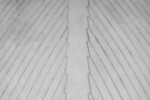
Persistence was a 40-year-old classic wooden ketch, designed by a master and built in Taiwan by folks who knew what they were doing. In the fashion of the time, she had teak decks laid over plywood. They had lasted well but the caulking was getting old, and I had an uncomfortable feeling that the few leaks I knew about were only the tip of the iceberg. I surely didn’t want slow, insidious seepage to the plywood below. Neither did I want to take on the enormous job of reefing out and recaulking a whole deck for the sake of a few leakers. Here’s what works.
The next time you wash the decks down, preferably on a nice warm day, stand by as they dry with a piece of school blackboard chalk in your hand. As the decks dry, you will notice that wetness lingers along some seams. Some of it will dry off in just a few minutes, but the wood alongside some seams or around some plugs will stay wet for quite a long time. These are the leakers. Mark them with a swipe of the chalk along the length of the wet edge.
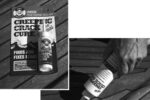
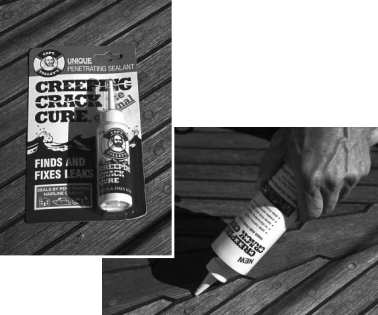
Later, when all has dried out, come back with Captain Tolley’s Creeping Crack Cure. No joke, there is such a product, and it’s available at marine stores. It’s a thin, milky material that comes in a small white plastic bottle, and it is the only thing for leaky windows, failing bedding around deck hardware, or failing caulking on laid decks.
It seems to work by virtue of having a peculiar quality of surface tension. As you squeeze out a line of it along a seam or around a fitting, you will see it will lie on top except where it encounters a crack or fissure, however small. Any place that it can penetrate, it will, and you will see it being dramatically sucked into the crack. Let the first application dry for a few minutes, then repeat a time or two. It seldom takes more than two or three applications before the crack is filled; you will see any subsequent application lie on the surface.
Captain Tolly’s dries to a hard, thin, glue-like state. Before it dries hard, it cleans up with water. After that you will need to scrape or sand off any that did not disappear into a crack. It isn’t a caulk or bedding by itself — it looks more like a thin glue or epoxy — so don’t expect it to fill large voids. For the small stuff, though, it’s the best. Because it is so easy to use, it became a regular part of my boat washing. The old deck? Oh, it’s just fine, thank you.
Thank you to Sailrite Enterprises, Inc., for providing free access to back issues of Good Old Boat through intellectual property rights. Sailrite.com