Docking in a storm brings near-calamity
Issue 68 : Sept/Oct 2009
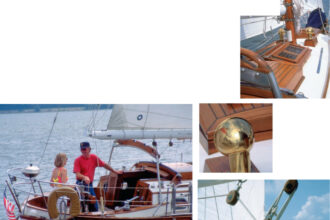
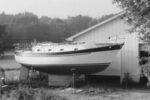
The deal was done. I handed the check to the yacht broker, and she was mine: a classic New England sloop, designed by a famous marine architect, only 65 of her kind ever built. Her lines were the reason sailors write poetry, her rigging an intricate maze of total functionality. Fast on any point of sail, steady in any state of sea. She was beautiful, if not perfect, lying in the haulout slip where the yard crew had deposited her after the survey. The frenzy of formalities required to close the deal was concluded and I, at last, had a moment alone to stand on the dock and admire my new sailboat.
“Scuze me, Cap’n. Really need her outta there. Got a 50-foot trawler comin’ in for a haul fi rst thing tammara mornin’,” the harbormaster yelled as he and the yard hands left for the day.
I swung a leg proudly over the starboard lifeline and stepped aboard what was now my sailboat. At that instant, it hit me. I had never handled such a large vessel single-handed. Not even close. I had crewed aboard similar-sized boats but always under the guidance of an experienced skipper. This boat was 35 feet long. Beneath her was a full keel and 6,000 pounds of lead ballast. Was I ready to do this? Could I do this . . . by myself?
I took a deep breath in an effort to expel trepidation. “Relax,” I thought, “you only have to move her to a transient slip on the other side of the marina. That’s all.” I began to visualize my plan, knowing that once I had decided on a course of action, everything would begin to make sense.
Approaching storm
BOOM! A loud clap of thunder shattered my concentration. I looked to the south to see a sky the color of a black eye. The afternoon sun was disappearing behind a wall of billowing cumulus. No more time for visualization or relaxation techniques. It was time for action.
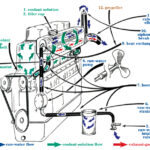
Remembering the steps the surveyor had used, I prepared to start the diesel: raw-water seacock open, key-switch on, ignore the loud buzzing noise, press the starter switch. Nothing! Retrace the steps. Yes, everything is . . . wait! Battery switch! Battery switch to what? OK, number one should work. I pressed the starter switch again and the old Perkins rumbled to life. The previous owner had bragged about how reliable it was. I looked over the stern and saw seawater surging from the exhaust outlet. The deep drumming of the engine was reassuring. My confidence was building.
BOOM! More thunder, closer, and more resonant. No time to waste. I hopped onto the dock, released the stern lines, and tossed them aboard. My plan was to cast off the spring line last, then quickly return to the cockpit. BA-BANG! Another clap of thunder, this one shook the concrete pier where I stood.
Suppressing a tremble of terror sparked by the close proximity of the storm, I retrieved the spring line and clumsily made my way to the cockpit, stumbling over deck fittings still foreign to me. I took another deep breath and shifted into reverse. Nothing. The old boat remained motionless. I looked around hoping the reason would be obvious. Then, she began to evince the very slightest degree of sternway.
Remembering prop walk
As we crept backward I tried to remember what I had read about prop walk: left-turning prop . . . hmm . . . will push the stern . . . let’s see . . . My mental review of Chapman’s was broken by the solid thump of the hull against the tractor tires serving as fenders along the seawall. I abandoned the helm, which seemed totally ineffective anyway, and began vigorously fending off.
Finally, we cleared the slip under another deafening clap of thunder and the fi rst breath of a rising breeze. I shifted ahead and steered hard to port, hoping the rudder would be more effective going forward than it had been going astern. My heart raced. Adrenaline surged through my body. We began to crawl down the fairway flanked by beautiful yachts, the dollar value of which suddenly seemed more pertinent than ever before. The smell of the approaching rain reached my nostrils, but I resisted the urge to rush, knowing it would only invite disaster.
My confidence grew with every yard we put behind us. Soon, I spotted the transient slip where my beautiful ship would remain until my friend John, a seasoned skipper and my teacher and mentor of all things nautical, would arrive to help deliver her to her new home port. Remembering my Sunday-school upbringing, I muttered a prayer that the storm would remain at bay until we were docked. As if to remind me of my long absence from the family pew, the first drops of rain splashed on deck just as I signed off with the Almighty.
Blown off course
Wincing from the stinging raindrops, I forced myself to wait until just the right instant, then gave the helm a quarter turn to starboard. Perfect. The geometry aligned with computer-like precision as the bow rounded up toward the slip. Then, it came — that powerful gust of cold wind that rolls from beneath a mature thunderstorm. In that instant I was reminded that a sailboat need not be flying sail to obey the wind. I rolled in another quarter turn, then hard to starboard, but to no avail. The turn would be too wide. I would miss the slip and ram the sailboat at the neighboring dock, a vessel obviously worth three years of my current salary.
I shifted into astern and commanded full power, hoping I could back away from disaster. It worked. I was spared. We came slowly to a stop but then pivoted as gracefully as a figure skater.
I shifted into neutral and centered the wheel, totally devoid of ideas. The rain came down in buckets. The old boat finished her pirouette, pointing in the direction from which we had just come.
More certain of my ability to steer going forward, I shifted into ahead. After gathering some steerageway, I rolled the helm hard to port and held my breath as we swung in a graceful arc and once more headed for the transient slip. The storm was fully upon us now. The rain was blinding; the wind screamed from every direction. Yet my new old boat was teaching me the first of many lessons. So long as I kept her moving, that huge keel was little bothered by those shifting gusts.
Entered smartly
This time, as we approached the slip, I spun the wheel to its starboard limit. Obediently, she rounded up. I spun the wheel back to port, then amidships as we smartly entered the slip. The rain intensified, but by now I couldn’t get any wetter and the rush of adrenaline allowed me to ignore my discomfort. I shifted into astern momentarily to halt our forward motion, then hopped onto the finger pier, retrieved the port bow line, and gave it a half wrap around a dock cleat.
Sweet relief flooded over me with such warmth that I was totally oblivious to the downpour that engulfed me. I muttered a silent prayer of thanks, but then felt the line tightening in my grip. I tugged against it to check what I thought to be the force of the wind, but the tension only increased.
Then it struck me: she was still in reverse. I stared in disbelief as the boat began to creep rearward, the line slowly paying out of my rain-soaked hands. An image of my 40-year-old sloop piled into one of the yachts moored across the marina flashed before me.
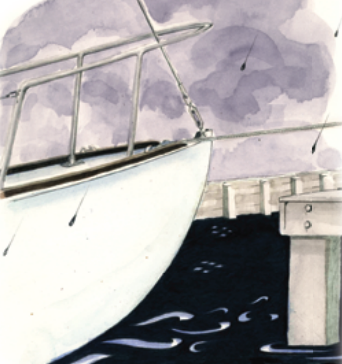
I had one fleeting chance. I let the line go slack, then snapped a figure-eight hitch over the cleat with the art of a master mariner. A second later the line snapped tight with a force that wrung a stream of rainwater from the braided nylon. I climbed over the bow pulpit, now lying even with the end of the pier, walked back to the cockpit, and shifted into neutral. Just to be sure, I pulled the handle labeled “Engine stop,” knowing I surely had used up all my luck for this day.
The rain continued to pound down, as my adrenaline ebbed. Suddenly I was aware of how exhausted, drenched, and cold I was. I found a jacket left as a goodwill gesture by the previous owner and put it on, wishing I had remembered it an hour before. I began to warm, mentally cataloging the many disasters I had escaped by inches and sheer luck.
Was it luck or magic
It took months for the events of that first day to move from the embarrassing calamity category into cautionary tale and finally to lighthearted sea story. Most say it was just beginner’s luck that saved me, but one old-timer swore the old sloop, grateful to have a new owner, used her own magic to keep us both out of trouble.
As for me, I’m not sure, but if this old boat did save her skipper that afternoon, I doubt it was the first time, nor will it be the last.
Vern Hobbs and his wife, Sally, sail a 1974 35-foot Bristol cutter along Florida’s Atlantic coast and the Intracoastal Waterway. Their day jobs pay the rent, but money for boat projects comes from Vern’s work as an artist — he specializes in maritime subjects.
Thank you to Sailrite Enterprises, Inc., for providing free access to back issues of Good Old Boat through intellectual property rights. Sailrite.com