How to keep newcomers to sailing calm and engaged
Issue 120: May/June 2018
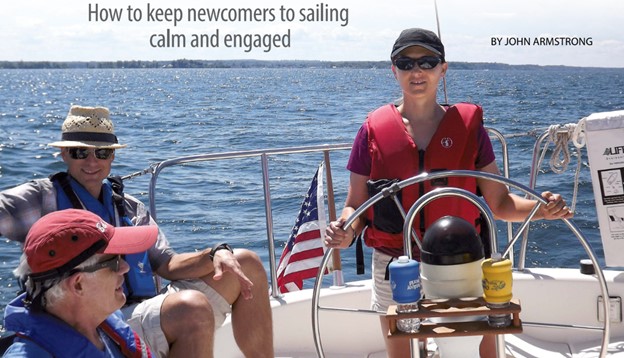
Now you’ve done it. A week after talking up sailing at the office party or neighborhood barbecue, you’re surprised that your casual invitation has turned into an actual sailing date. A very nice couple trusts you to take them sailing for their very first time. Good for you! The best way to keep sailing alive is to introduce newcomers to the pastime we all so enjoy. It’s up to each of us. But how do you proceed?
During my 41 years of sailing, I have taken a lot of people out for their first sailing experience (and I look forward to taking out more each year). I’ve condensed what I’ve learned doing this into 25 tips for making these experiences fun, safe, and comfortable.
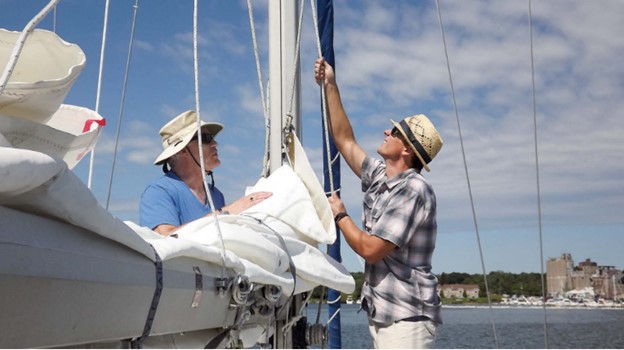
1 I invite people sailing only when the weather forecast is favorable. I make sure everyone understands I’ll have to reschedule the trip if the weather turns foul.
2 I bring along at least one experienced crew member to help me handle the boat and look after the guests. My wife, Kerryanna, is a terrific sailor who also welcomes folks aboard for their first taste of sailing. Over the course of the day, the two of us share the roles of skipper and crew so we can manage the boat while giving our guests the best possible experience.
3 Enthusiasm is often contagious, but bottling your love of sailing, your fascination with all the variables involved with Mother Nature, and the intricacies of your vessel, and then serving that concoction to newbie guests on their first outing, may not be the most effective approach. An overzealous host may distract people from enjoying the experience on their own terms, or prevent them from enjoying it altogether. When planning an outing, I take time to determine the nature of my guests’ interest. Are they looking for a sailing experience, or just an opportunity to get out on the water? Are they eager to be learning participants, or will they be more content with a boat ride? Sometimes it’s best to highlight the exhilarating power of harnessed wind on a first sail. Sometimes it’s best to simply make sure they enjoy the day while we work our magic to keep them safe and comfortable.
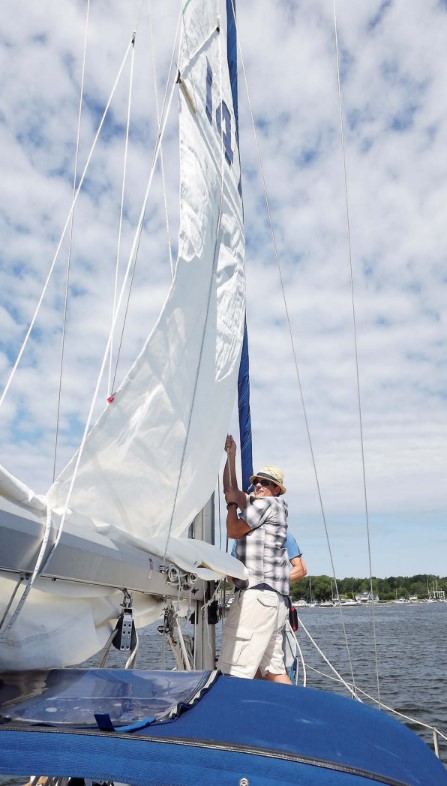
4 If guests are interested in being active crew members and learning all they can about sailing, we ask them to leave their devices in the car or stow them in the cabin with the ringers off. I emphasize that for me, sailing is about getting away from shoreside trappings and engaging with the boat.
5 Regardless of what a novice crew is into, our three goals are always the same: do not frighten, do not bore, do not induce seasickness. We keep the boat on her feet and simplify each process as much as possible. Even in light air, we rarely pop the ’chute on the first trip, and only when folks seem relaxed and engaged.
6 The space on any boat is too small to share with folks who don’t want to be there. Everyone is welcome aboard, but we encourage any interested guests not to bring a spouse or children who aren’t themselves interested. There’s nothing fun about forcing someone to sail.
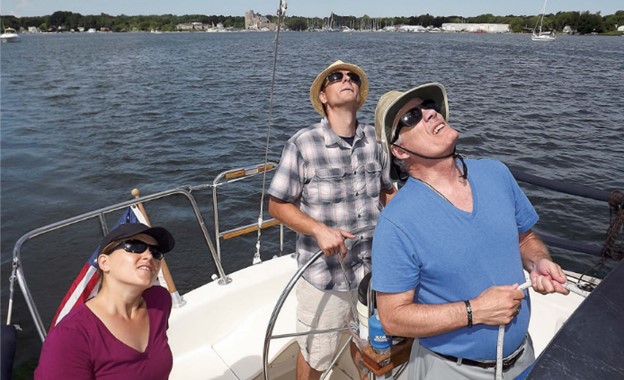
7 It’s hard to enjoy any activity for which you’re not adequately dressed or prepared. Depending on where you sail, a hot day ashore can be a cold day on the water, and much of what we take for granted when packing for a sail, guests may not consider. We provide guests with a list of what they should bring. That list covers clothing, shoes, sun protection, eye protection, water, and food items. We advise them that, on our boat, we do not drink alcohol while sailing.
8 We always set expectations with regard to timelines, and we try to avoid agreeing to a fixed return-to-the-dock time. My first boat had no engine, so I made sure our guests understood the fickleness of winds: “We can’t control Mother Nature, we simply work with whatever she offers, so I can’t promise a precise return time!” If a guest has an unavoidable time-sensitive commitment, I’ll either try for another day or plan to not sail far from the dock or to return to the dock at least an hour before necessary, leaving room for the unexpected.
9 I’ve learned that guests appreciate detailed driving directions to the marina or mooring area. (I try not to chauffeur them myself, to allow me time to arrive early and prepare the boat before they arrive.)
10 Preparation is important. When my boat is lying to a mooring, I move it to a dock before guests arrive. Shore-to-dinghy-to-boat can be disconcerting for many neophytes. When the boat is in a slip, I often warm up the engine in advance; a balky engine can make people nervous. I always have the mainsail ready to hoist, and if the breeze is fresh, I’ll reef it ahead of time.
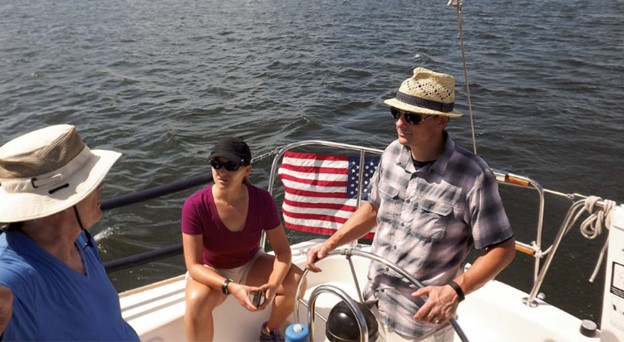
11 When time and location permit, I’ll take guests on a quick tour of the yard, show them keel and hull shapes, explain heeling moment, and point out the massive amount of ballast in keels and how the keel provides righting moment. People who’ve never been aboard a boat that is intended to heel may not anticipate their own reaction, and this introduction to what’s below the waterline might help matters.
12 I ask whether anyone needs to use the shoreside bathroom before we cast off.
13 Kerryanna and I board first, offer a hand, and point out where feet should go, where feet can go, and where feet should never go (such as on that rolly roller-furling line that runs alongside the toerail). I give a tour of the boat and point out the key features — and definitely the boom.
14 This is a good time to show guests the head and demonstrate how to use it, knowing I’ll probably have to follow up later.
15 Without sounding like Captain Bligh, I explain that sailing is quite different from driving a car or a powerboat. We sailors are sensitive to Mother Nature’s nuances, yet what seems obvious to us — such as a puff of wind approaching — might not be apparent to a first-timer. I challenge them to “be there in the moment.” I explain the importance of this awareness, not only for safety reasons, but for appreciating all that sailing has to offer. Regardless of how engaged they become, I let everyone know they’ll likely be moving about a bit, that no perch is safe from being in the way.
16 To ensure everyone knows how to put one on, we all don life vests before we leave the dock.
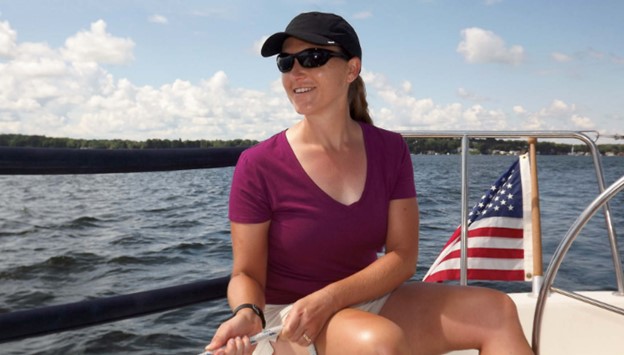
17 For motivated types interested in helping us leave the dock, I show them what to do before I start the engine. If someone is eager to help guide the boat out of her slip, I hand her a dockline, show her how to keep the vessel parallel, and, unless guiding from the deck, one of us demonstrates how/when/where to board safely. With crew involved, we practice each dockline task carefully before getting under way.
18 Under power, we like to keep the speed at 3 knots or so. If we motor out at 5 knots on a light-air day, sailing at 3 knots might be a disappointing affair.
19 At the start, I ask guests to look around and point out vessels under way or at anchor, as well as buoys or obstructions, to help me keep clear of them. This focuses their awareness of our position in a constantly changing environment. I’ll often explain how this awareness, and looking forward from that point, helps me to avoid situations when I’m driving a vehicle that has no brakes.
20 I avoid barking orders. I do explain how I might use vocal inflection to accelerate pace. If I say “ease . . . ease…EASE!” I’m urging a more dramatic action, to avoid excessive heel, for instance. I’m not angry. I also warn guests that I may need to interrupt conversations to communicate timely requests.
21 Under way, I take occasional pulse checks. Is everyone OK? Do they have questions? I answer every question without delivering a detail-filled lecture. I know that some people may lose their sense of security when we turn off the engine or when the boat begins to heel, so I watch for reactions at those points. “Say something if you feel queasy or anxious, OK?” It’s always better to have a short sail than to forever ruin the experience for someone.
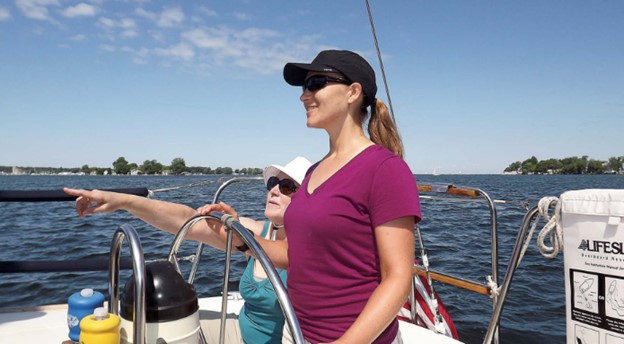
22 To start sailing, I hoist the mainsail only. I draw people’s attention to the position of the sail as I play the mainsheet between a stall and some luffing, then I find the groove so they can appreciate the drama of sailing physics. Guests sometimes marvel at how persnickety I am about sail trim, so I help them understand why I keep adjusting it. If they’re interested, I let them make adjustments.
23 I practice tacking under main alone, reach-to-reach, then from close reach to close reach, and eventually from beat to beat. Before each tack, I point out landmarks we target when setting a new course. This is a great time to have an eager, attentive newbie steer, and I find it’s best if I or my crew can sit right beside the novice helmsman. I avoid jibing during a first sail unless we’re in light air and everyone is relaxed.
24 Provided the breeze is not overpowering, we set the jib when everyone is happy and when they’re eager to keep sailing. I remind guests that everything is in flux when under sail, the reason we continually monitor and adjust, responding to Mother Nature’s whims. (We also watch for an all-too-quiet demeanor, which may indicate someone may not be responding well to the boat’s motion.)
25 We head back to the marina sooner rather than later. Along the way, we explain what we need to do when landing the boat, and find out which of our guests is willing to help with the lines. We ask for quiet attention when approaching the dock. If we give someone a bow or stern line to handle, we ask them to curb any instinct to pull that line too tightly, and instruct them to use the line to keep the vessel parallel to the dock, as we did when leaving.
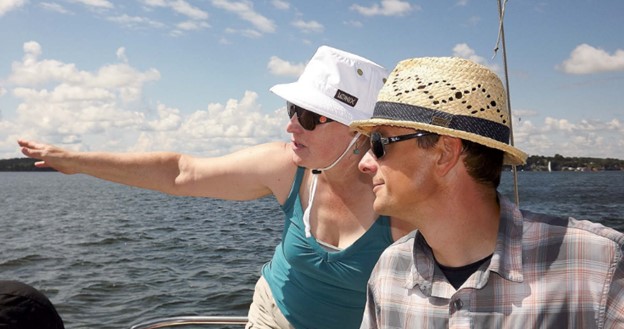
When the sail is over, I often invite guests to help pack up the boat. I’ve found that this is a great time to learn how much or whether they enjoyed their experience. I listen for clues that they would like to return another time. Some are eager to sail again, and are looking for a mentor figure to help them gain competency. Others are glad they tried it, but one sail is enough. Both are good outcomes.
Learning to sail is a gift passed from one person to another. If that gift is passed correctly, it’s likely to be warmly received and the recipient might even come back for more. By being patient and generous, you might offer a soul or two their ticket away from the fragmentation of modern life, for a day or for a lifetime.
John Armstrong, composer, conductor, and teacher, is director of the American Music Literacy Association. He likens sailing to a cappella singing, his other lifelong passion. He and Kerryanna sail the waters of Lake Ontario out of Great Sodus Bay aboard Bel Canto, their 1985 Pearson 34.
Thank you to Sailrite Enterprises, Inc., for providing free access to back issues of Good Old Boat through intellectual property rights. Sailrite.com