A family business makes old boats good again
Issue 84 : May/Jun 2012
Cayuga Lake, located in upstate New York’s Finger Lakes Region, is home to a large and active fleet of good old boats based in the small university city of Ithaca. Also in Ithaca, a stone’s throw from Cayuga Lake, stands Finger Lakes Sailing Services, a father-son business gaining a national reputation for high-quality boat restorations and repairs. Bob Haney and his son John will tackle anything related to fiberglass sailboat construction. Bob and John will re-do your decks, replace your good old Atomic 4, install a keel, or apply an Awlgrip paint job. If you need a new tiller, a set of dropboards, or a bit of teak trim, they’ll supply that too. “If it’s on a sailboat, we can fix it,” says John with a smile.
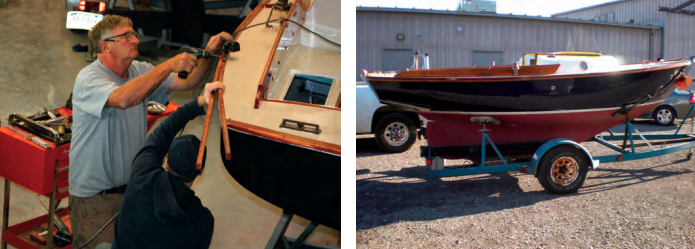
On a burning hot midsummer day, I found the two men hard at work in their shop. Bob left his butterfly hatch construction and John set his holding tank project aside for an interview. They told me the business began in 2003 and soon found a niche market for fully restored small classic daysailers and pocket cruisers.
There is considerable interest in, and demand for, boats like the graceful 19-foot Cape Dory Typhoon, the mannerly Rhodes 19, and the Pearson Ensign design of the 1960s. Boats dating from the ’60s and ’70s with solid fiberglass hulls that are capable, seaworthy, and easy to sail are proving worth the time and labor for major makeovers. “We want the classic boats by the masters — Phil Rhodes, Carl Alberg, and the Herreshoffs — boats like that just aren’t being built new in fiberglass anymore,” Bob explained.
Family ties
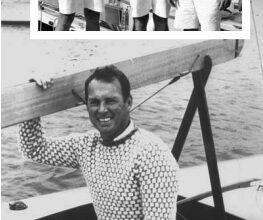
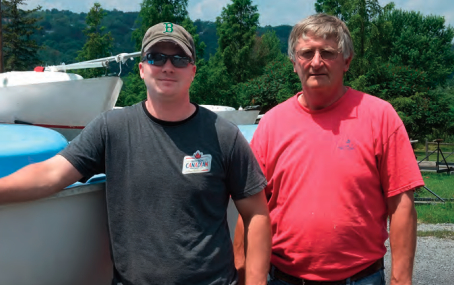
Bob was a building contractor. He had been doing commercial and industrial work for 30 years when John graduated from college and was ready to “retire” and start a new business to indulge his lifelong interests of sailing and woodworking. During a long summer cruise along the New England coast, he and John talked of future dreams and plans. Eventually, they decided to start a business working together on boats.
Having sailed the coast of Maine for years, Bob admires its living tradition of craftsmanship in small independent shops and the father-to-son transfer of skills that still prevails here. At first, he considered buying an existing boatyard on the coast. He and John looked at businesses in Maine and down on the Delmarva Peninsula. But family roots in Ithaca and John’s recent marriage to a local girl resisted the appeal of salt water. Bob recalled, “One day, I was checking on my boat (at its dock in Ithaca) when I noticed this property and building were for sale. Three months later, we were moved in and at work.”
A few months after that, John’s father-in-law, Paul Pytel, an electrical engineer recently retired from IBM, joined them. With his American Boat and Yacht Council (ABYC) certification, Paul does all the shop’s electrical work.
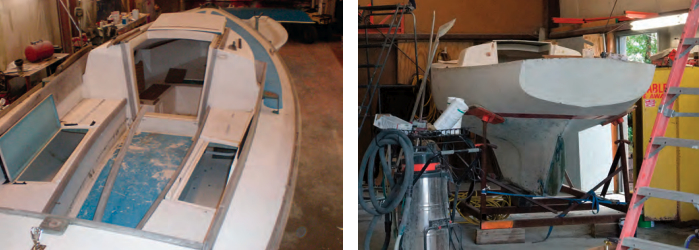
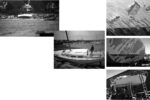
Finger Lakes Sailing Services includes a brokerage business, a small but well-stocked marine store, and is a dealer for new Hunter sailboats, but classic-boat restorations continue to be their main interest. A stroll around the grounds revealed a considerable inventory of “spec boats” waiting a turn in the shop. Several Cape Dory Typhoons and Rhodes daysailers, a Corinthian, and a sweet-lined little Herreshoff were among them. John pointed out an Ensign with a 6-foot sapling growing out of the rotting leaves and muck in her cockpit. With her solid glass layup, the long-neglected boatyard waif was eminently salvageable . . . grime and mildew notwithstanding. Bob showed me Pearson Triton hull #1, John’s personal boat, Joy, awaiting a makeover. The bottom and hull of this 50-something full-keel classic are still solid with nary a blister to be seen. Before joining the Haneys, she had been on Cayuga Lake since the 1980s.
Candidates for restoration
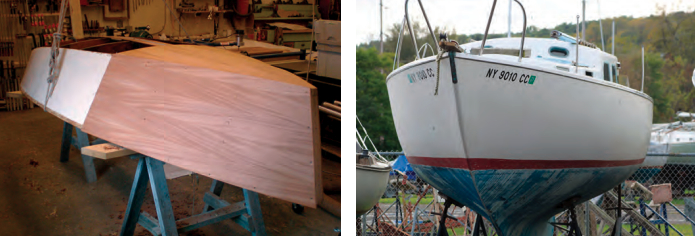
The Triton was typical of the boats the Haneys seek out on speculation for “recycling” — a strong hull, freshwater origins, drawn by a well-known designer, and small enough to be readily daysailed and also transported on a trailer without special permits. These diamonds in the rough can be transformed into refurbished daysailers and weekenders that appeal to experienced sailors who understand the value of well-made full-keel classics. Bob, though he sells new Hunters, makes clear his preference for “old school boats.” The modern big-beam, high-freeboard, and wide-sterned cruiser holds little appeal for him. “I’ve taken my Cape Dory Typhoon 10 miles offshore on the coast of Maine in an 8-foot swell and never gave it a thought. But I wouldn’t do that with many modern 18-footers,” he says. John, who worked summers as a lobster fisherman in Maine during high school and college, echoes his father’s feelings about classic plastic: “Our goal is to work into more restorations.”
He and Bob explain that, in their region in upstate New York, few shops will tackle major structural repairs to sailboats. However, the Haneys enjoy the restoration and rebuild projects and aren’t afraid to do whatever it takes to complete them. “We have a unique product here,” Bob says, referring to the restored spec boats. There’s no doubt about that. Last year, the Haneys went to the United States Sailboat Show in Annapolis, Maryland, with two rejuvenated Cape Dory Typhoons. Both sold within hours of the show’s opening.
At a cost of roughly half that of a comparable new boat, these tough, easy-to-sail little boats appeal to well-heeled knowledgeable yachtsmen who have little time or inclination to make long voyages in a 40-footer. In the less-than-lively economic climate that prevails in much of upstate New York, the weed-grown corners of boatyards are a good hunting ground for little boats that quickly find new homes after a session in the shop
Filling a growing void
Bob says their business exists in part because the quality of craftsmanship has gone generally downhill over the past 20 years. “Skill sets have declined . . . and few repair shops around here will even deal with sailboats.” The problem-solving, improvisation, creativity, and variety of manual skills needed to rejuvenate a boat long out of production that needs custom-fabricated parts simply are not being taught in today’s education system.
Not every boat owner has the time or inclination to fix up an old classic with rotten bulkheads, mushy decks, and holes in the bottom. But finding a competent professional to do such work isn’t easy in many parts of the country. The Haneys cheerfully serve customers with smaller bank accounts too. “We’ll work with the customer,” says Bob. He and John will do partial restorations or major repairs that the owner can then complete or spruce up on his own. Bob pointed out a small daysailer with a newly Awlgripped deck nearing completion: “We’ll do the hull for him next winter.”
John does the painting, plumbing, much of the engine work, and other repairs. He also has a small, but comprehensive, rigging shop. Bob presides over the well-equipped woodshop. Here he creates a variety of aftermarket wood products. “If you have a funky piece of wood on the boat, send it or a drawing to us, and we’ll make an exact copy,” he says. “We send wood parts all over the country.”
One of their recent projects was re-powering a boat with an Elco electric motor. John noted the task included placing 200 pounds of batteries, fitting custom-made engine beds, and finding space for everything. Another recent job was a bulkhead replacement on a Sabre 28. After a chainplate ripped out, the Haneys did some quick temporary repairs to get the boat through the sailing season. The following winter, the owner had them install new bulkheads, a new compression post, a new cabin sole, and — while all that was ripped out — “Why not redo the holding tank and head plumbing while you’re at it?” No problem.
John and Bob are genial and easy to talk to. They are generous with their considerable store of boating knowledge and share it freely with customers. Often, their small ship’s store serves as an entry point for someone who comes in looking for a #10 stainless-steel wood screw and ends up getting some help and direction with the project. That boat owner may come back the next winter for more help with another repair that’s beyond his ability.
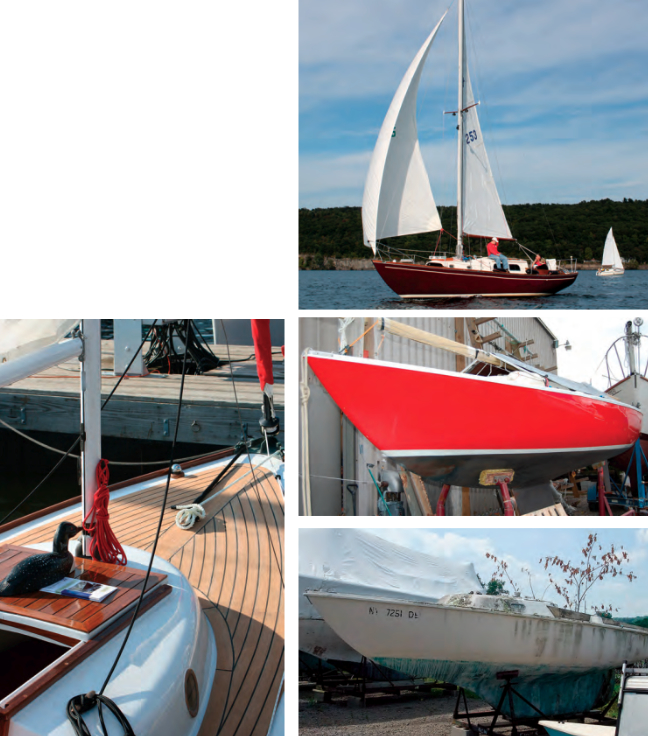
In a throwaway age of planned obsolescence in which the practice of land-filling unwanted fiberglass boats is increasing, it’s heartening to see the thrift and craftsmanship of Finger Lakes Sailing Services recycling good little classics for appreciative buyers. Thanks to John and Bob Haney, some fortunate little yachts will be serving new owners for many years to come.
Susan Peterson Gateley has sailed and written about sweet waters with occasional saltwater forays for 30 years. She raced, daysailed, and camp-cruised a Lightning on the Chesapeake and traveled Lake Ontario with a Crosby Osprey for 25 years before acquiring a fiberglass boat and a husband in 1997. In 2004, she agreed to add “one last woodie” to the family: the schooner Sara B, which is now the main character in her latest book, Living on the Edge with Sara B. Her blog is www.silverwaters.com.
Thank you to Sailrite Enterprises, Inc., for providing free access to back issues of Good Old Boat through intellectual property rights. Sailrite.com