Now it’s on the level, it’s a straight steerer
Issue 115: July/Aug 2017
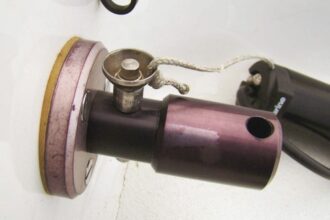
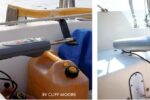
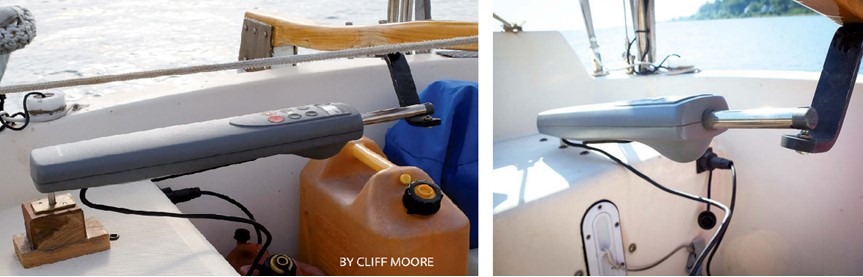
Pelorus, my AMF Paceship 26, sustained a bit of damage in her brush with Hurricane Joaquin in 2015. In the spring of 2016, I rebuilt the rudder, repaired the transom and, in the process, raised the tiller a little so it wouldn’t rub on the top of the transom when it’s hard over. When I took Pelorus sailing, I found that, except when the tiller was hard to port, the Autohelm 2000 push/pull autopilot was no longer anywhere close to level. This diminished the ability of the autopilot — an essential piece of gear for a singlehanded sailor — to work as designed and steer a straight line. Worse, on occasions when I found it necessary to quickly disengage the autopilot and steer by hand, the ball on the tiller pin would lock up in the socket in the autopilot arm, making it difficult to physically disconnect them.
I had long ago installed a bracket on the underside of the tiller to keep the autopilot level, but it was no longer low enough. It was clear that, to level the autopilot, I needed to raise the other end that was mounted on the starboard cockpit seat.
The autopilot manufacturer sells a riser that would elevate the autopilot enough to bring it level with the tiller bracket, but it’s pricey for what it is and not really useful for my boat — and I might have needed three of them. I had, over time, installed in the cockpit seat three of the sockets provided by the maker to receive the autopilot’s mounting pin. The sockets were in a line. The center one was the most useful, but I used the outboard and inboard sockets to compensate for extreme weather helm on either tack. Also, I’d epoxied them into the deck and they were in for life. I had to come up with my own solution.
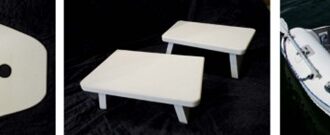
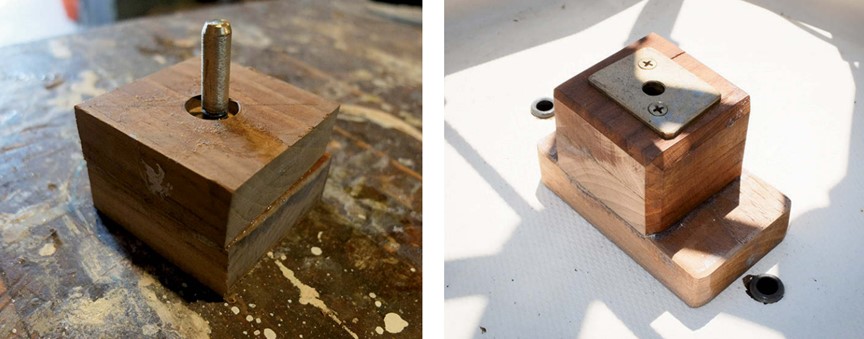
Happily, I had a nice piece of 4/4 teak. I cut three pieces, glued them together with epoxy, and pinned them with two 2-inch stainless-steel screws. (Because the autopilot has a built-in compass, I tested the screws to make sure they were non-magnetic — you can never be sure with stainless steel.)
I drilled a shallow 3/4-inch-diameter recess in the bottom of the block to go over the heads of the sockets, which are about 1/4 inch proud, and allow my riser to sit flush on the seat. In the center of the recess, I drilled a 3/8-inch-diameter hole all the way through the block. Next, I cut a length of 3/8-inch bronze rod that happened to be threaded at one end and ran it, thread side up, halfway up the hole in the block, where I bedded it in epoxy — the threads enhance the grip. The rod extends from the bottom of the block and fully engages the socket. I attached a bronze plate, with a 3/8-inch hole in the center, to the top of the block to offset any wear from the autopilot pivot pin.
My new riser supports the Autohelm without wobbling, and I can easily shift it from one hole to another.
Cliff Moore’s first boat was a Kool Cigarettes foam dinghy with no rudder or sail. Many years and many boats later, he’s sailing Pelorus, a 26-foot AMF Paceship 26 he acquired and rebuilt after Hurricane Bob trashed it in 1991. He is the editor of a community newspaper.
Thank you to Sailrite Enterprises, Inc., for providing free access to back issues of Good Old Boat through intellectual property rights. Sailrite.com