Couple rejects professional life for peace, simplicity
Issue 19 : Jul/Aug 2001
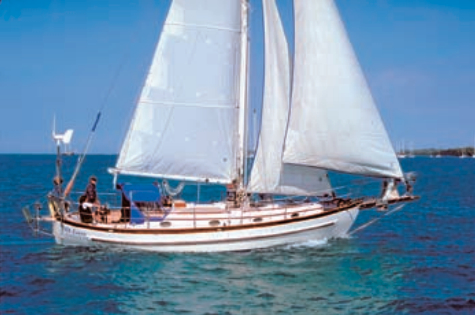
Full sails draw as the cutter rhythmically dips and rises in the swells. Moonlight sparkles on the water, then gives way to the pink- and orange-streaked sky that signals a new day. The aroma of fresh coffee wafts from the cabin, and Bill Martin knows breakfast isn’t far behind. And a new harbor is just over the horizon.
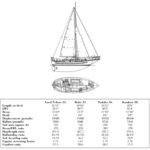
This is the life Bill and his wife, Shirley, have chosen. Last fall, the Arkansas couple quit their jobs, cut their land ties, and moved aboard a 1986 Lord Nelson 35 with their golden retriever, Saylor. They first headed east on the Gulf Intracoastal Waterway from Biloxi, Miss., to Pensacola, Fla. “It’s boring where the Waterway’s just a big ditch, though Pirates Cove in Perdido, Ala., was a neat cruising stop,” they recall.
Their voyage across the Gulf of Mexico from Pensacola to Tampa began perfectly under a full moon. They alternated four-hour night watches while the autopilot and GPS maintained the course. From a cushioned chair by the companionway the helmsman followed their progress on the computer screen in the main cabin. Dolphins swam so close along- side that the Martins could hear their breathing and were sometimes spattered when they blew. Their presence unnerved Saylor, who considers the cockpit her territory. “She went bonkers: barking, quivering, and shaking, but we loved watching the dolphins,” says Shirley.
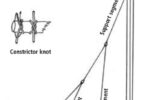
“After 38 hours of perfect sailing, we paid our dues. The last 18 hours were stormy and miserable,” says Bill, a relaxed, agile 59-year-old. Adrenaline kept them alert and neither got seasick. Reefing was simple, because sheets, halyards, reefing, and roller-furling lines run to the cockpit. Luckily, conditions never deteriorated enough to deploy the 300-foot drogue with 120 tiny parachutes they had made.
After Tampa’s massive commercial harbor, they relished gunkholing down Florida’s southwest coast. “We found we liked the self-sufficiency of being at anchor,” says Bill. While anchored in the Little Shark River’s mangrove wilderness, Shirley produced a full traditional Thanksgiving dinner on their gimbaled two-burner propane stove. In Key West, they were surprised to find another Lord Nelson 35 anchored nearby, for only 36 or 37 were ever built. The companionship of Canadians Per and Kay Hansen aboard Change of Pace outweighed the discomfort of 15- to 25-knot north winds buffeting the anchorage for days. “Every dinghy ride was a saltwater shower,” Bill recalls.
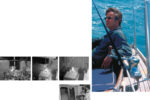
We caught up with Bill and Shirley at Key West Marina, where they were preparing for a voyage to the Bahamas and beyond. Cruising wasn’t a spur-of-the-moment decision for Bill, who grew up messing about in boats on the Ohio River. “I realized as a child that I liked to fish only because I was out in a boat,” he says. He sailed a bit some 25 years ago, but life intervened — marriage, two children, a house, Naval Reserve duties, and his career as a clinical psychologist.
Fifteen years ago, Bill began sailing again and loved it. He bought a 25-foot MacGregor, then a 28-foot O’Day and honed his skills. “Soon it became ‘hurry up and retire so I can cruise full-time,’ ” he says. Luckily, Shirley, 53, whom he met on a friend’s boat in 1991, liked the idea. Though she had never sailed before, she became an eager partner. Shortly after their marriage in April 1994, they found the perfect cruising boat in Houston, Texas: Lord Nelson 35 hull #17, a solid fiberglass cutter with extensive interior teak-and-rosewood joinery.
“The boat’s history was sketchy and hard to unearth until we met Loren and Lani Hart in the Bahamas,” says Bill. “Loren was a partner in the Hans Christian company, but disagreed with the design of the 33-footer and left to start the Lord Nelson company in the 1980s. He designed the 35-foot Lord Nelson, plus the interior of the 41-footer. The three dozen or so Lord Nelson 35s and about 90 41-footers were built in Ocean Eagle Yard, Taiwan, from about 1981 till 1990. Loren Hart still owns the molds.”
Before embarking on a sea voyage, Bill wanted to get comfortable with life aboard At Ease, a name encompassing both military and civilian meanings. For five years, they lived aboard almost every weekend on DeGray Lake, near Arkadelphia, Ark. “We sailed in all conditions, year-round,” says Shirley. “We’d see a storm coming up and sail out to see what the boat could do. We found it was real stiff and would sail upright under full main in 20 knots of wind. The time we sailed eight hours in 25 to 30 knots we were exhausted, but the boat handled it real well. Once we had a knockdown, and water poured into the cockpit and through the portlights. Before I could get below, the pump had sucked the cabin dry,” she says. “Now I shut all portlights before sailing.”
In July 2000, Bill closed his psychology practice and retired as a Naval Reserve captain with 30 years of service. Now they have no land base, only a self-storage room of books. They communicate with a cell phone, mail service, email, and single-sideband radio. The more Bill sails At Ease, the greater his admiration for what he calls their wonderful bluewater boat. He points out the external rubrail molded into the solid fiberglass hull, adding structural strength. Bolts and screws for the teak deck fasten into fiberglass bedding plates or battens and do not penetrate the hull. The cabin, above the deck, is balsa-cored to reduce weight. A layer of foam between the hull and interior teak ceiling reduces condensation and adds insulation. They have three independent steering systems: manual wheel, a Monitor windvane, and an electric self-steering gear connected to the main GPS and the computerized charts of The Captain mapping software. (Backup is a hand-held GPS.)
Their wind generator and two new 3.1-amp solar panels aid in charging the batteries. The 44-hp Yanmar diesel has an isolated 12-volt starting battery. Four 6-volt golf-cart batteries power the windlass, electronics, and all the comforts of home: lights, hot running water, a 30-gallon-a-day watermaker, refrigerator/freezer, stereo, TV/VCR, and computer.
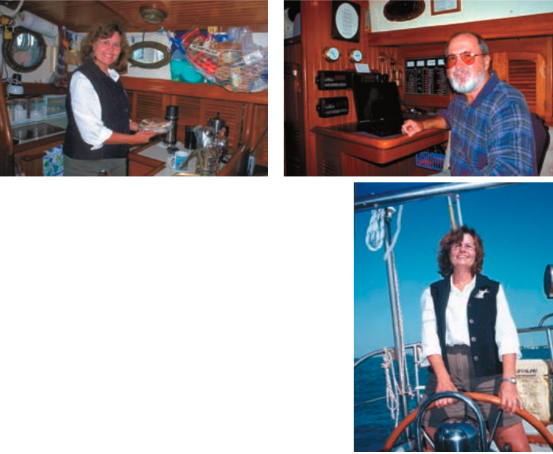
“Living aboard is more similar to a house than I expected, and I am learning to put things away securely so they don’t bang around,” says Shirley. “I love the simplicity of living on a boat. The sails are of manageable size for the two of us, yet we have plenty of room to spread out below.” Shirley, who graduated from college after two decades as a homemaker and mother, found leaving her three children and their families difficult. Leaving her job was even more difficult. “I was in charge of a program placing 130 senior volunteers as reading tutors in area school systems, a program with travel, prestige, and national recognition,” she says. “I loved my work and being the boss. To move to a boat that has a single captain was a challenge. I had to find how to be creative, be useful, and have my own domain — and not just in traditional ‘woman’s work.’ ”
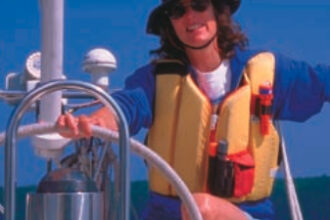
The two share helm duties. Bill steers while Shirley drops the anchor. She steers while he raises it. Her other jobs include checking the batteries, keeping the teak shipshape, and sheeting the headsails. A self-professed Internet and digital-camera addict, Shirley wants to be a knowledgeable first mate, so she is learning about the engine, GPS, radar, and how to operate the boat in an emergency. Bill teaches with clear explanations, without panic or shouting, even if things don’t go perfectly, as when the new fully battened main hung up in the topping lift. Later, as they tacked across Key West’s busy channel, he said, “We’re going in to the slip now. Let’s talk about it. The worst thing is to ram the dock. So, as we enter very slowly, I’ll just kiss the starboard piling, and you loop that line over it. That will stop us. Then I’ll go forward to secure the bow lines.”
An apt student, Shirley listened, repeated her duties, then slipped the line over the piling as requested. The boat slowed and stopped, inches from the dock. Bill went forward, “Well done, Shirley.” Once secured, he set up the cockpit awning that extends aft from the custom hardtop dodger protecting the companionway. “We can sail with the awning up, but not coming in to port,” he says. Detachable side screens stop 90 percent of sun and blowing rain.
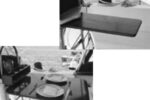
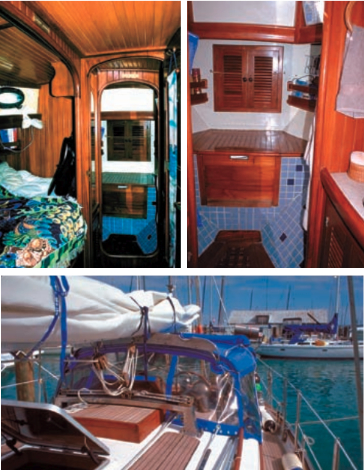
Below, homey touches — real dishes, books, photos, and fluffy pillows — soften the teak-lined main cabin and U-shaped galley. “Loren Hart told us the interior teak was milled from the same log to ensure consistent color and grain, then finished with seven or eight coats of two-part epoxy, which has stood up remarkably well over time,” says Bill. “Our boat is one of only two with the center folding table Loren Hart prefers. The others have a U-shaped settee. He said the engine and all tanks can be removed without damaging the interior joinery. Also shelves, hand holds, and fixtures were designed so that a 220-pound man could fall against them and not structurally damage the boat.”
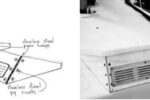
The Martins rave about the cutter’s well-engineered details. These include a grating-topped removable pan beneath the companionway for catching sand and drips. Mirrored doors. The double-berth cabin separating the main saloon from the tiled, teak-trimmed head in the forepeak. Ample drawers, lockers, and cupboards. Nooks and crannies for all needed spares. A cabinet for Bill’s Sailrite sewing machine. Adequate space in the main saloon’s nav station for the laptop computer and electronics.
They mention a few weaknesses. When the main is broad off, it rubs on the shrouds. The electric autopilot is inadequate. The cramped engine space has poor access.
“We depend on our dinghy for freedom,” says Bill, adding, “I’d like to replace our 9-foot inflatable and 5-hp outboard with a larger rigid bottom inflatable and bigger motor.” They’re planning to cruise the Bahamas this winter, possibly with their sistership or other new friends. At present, they’re thinking of summer in the Chesapeake Bay, next winter in the Caribbean and Venezuela. But the cruising life, not the destinations, is most important.
“Our dog makes lots of friends for us, especially when Shirley calls down the dock, ‘Saylor, come here,’” says Bill. “So does Shirley’s guitar playing.” A songwriter, folksinger, and longtime Gospel singer, Shirley frequently performs for friends. Bill “just watches her adoringly.”
“I meet such interesting people boating, and I enjoy the heck out of it,” says Bill, who especially enjoys being “just a person, not a psychologist.” In his previous land life he didn’t socialize with neighbors, for they might be or become his patients. “Here I meet people from all walks of life, many of whom I wouldn’t meet ashore, because land society is stratified. Boaters have a commonality — a love of boats, so they have more similarities than differences. College professors on sabbatical, carpenters, retired engineers. . . their diversity enriches the boating community.”
Bill and Shirley relish that richness of experience. “We’ve had so many great times aboard,” he says. “Particularly at sunset, when the temperature is just right, the drinks are just right, and everything is peaceful, I know life doesn’t get any better than this.”
After ocean voyaging separately with their respective families for years, Bob and Mary Drake returned home to Connecticut where they married and sailed their Cape Dory Typhoon and 23-foot Sailmaster on Fishers Island Sound. They now summer in Maine and winter in the Florida Keys. Mary does the writing. Bob is the photographer.
Thank you to Sailrite Enterprises, Inc., for providing free access to back issues of Good Old Boat through intellectual property rights. Sailrite.com